

Climbing Everest without oxygen sounds like it shouldn't be survivable and for most of human history, scientists agreed. Then, on 8 May 1978, Reinhold Messner and Peter Habeler stood on the summit of the world's highest mountain having carried no bottled oxygen at all, and the impossible became a documented fact. Since then, fewer than 250 climbers have repeated the feat, out of more than 11,000 successful Everest summits overall. Pulling that off means gradually forcing the body to adapt to air with roughly a third of the oxygen it gets at sea level, while staying sharp enough to make life-or-death decisions the entire way up. It takes years of acclimatization, elite physical conditioning, deep high-altitude experience, and a body that can withstand extreme-altitude physiology most people never come close to testing. This guide breaks down exactly what "without oxygen" means, who's done it, and how.
Can You Climb Everest Without Oxygen?
Yes , it's possible, but it sits at the very edge of what a human body can do. There's an important distinction to make first: everyone breathing on Everest is breathing naturally occurring atmospheric air. Oxygen isn't absent up there; it's just present in far smaller quantities than your body is used to. At sea level, air is about 21% oxygen. That percentage doesn't change much on Everest but atmospheric pressure drops so sharply at extreme altitude that the air becomes roughly a third as dense. Every breath delivers a fraction of the oxygen molecules it would at sea level, which is why the summit region is so punishing even for climbers using supplemental bottled oxygen.
What Does "Without Oxygen" Actually Mean?
"Climbing without oxygen" specifically means climbing without a bottled, supplemental oxygen system no mask, no regulator, no tank strapped to the pack. Climbers who go this route are still breathing, just like everyone else on the mountain; they're breathing only what the atmosphere naturally provides. As altitude increases, that available oxygen thins dramatically, which is exactly why an oxygenless ascent is treated as the purest, hardest version of the climb.
Why Is Everest Without Oxygen So Difficult?
Extremely Low Oxygen Availability
Air pressure at the summit is around a third of sea-level pressure. Every lungful contains far less oxygen, forcing the heart and lungs to work dramatically harder just to keep the body functioning at rest, let alone while climbing.
The Death Zone Above 8,000 Metres
Above 8,000 metres, the human body can no longer acclimatize it starts dying, slowly, regardless of fitness or experience. This stretch, known as the Death Zone, is where the real risk of an oxygenless attempt concentrates.
Extreme Cold and Wind
Summit-day temperatures regularly drop well below freezing, and jet-stream-force winds are common. Combined with thin air, the body loses heat faster than it can generate it.
Physical Exhaustion
Every step above 8,000 metres without supplemental oxygen can require several breaths just to move a single leg forward. Climbers describe summit day as one of the most physically punishing days a human being can survive.
Altitude-Related Illness
Without the buffer supplemental oxygen provides, climbers face a sharply higher risk of High Altitude Pulmonary Edema (HAPE) and High Altitude Cerebral Edema (HACE) fluid buildup in the lungs and brain that can turn fatal within hours if a climber doesn't descend immediately.
Reduced Decision-Making and Coordination
Hypoxia doesn't just slow the body down it fogs the mind. Confusion, poor judgment, and slower reaction times are common at extreme altitude, which is exactly why so many oxygenless-climbing deaths involve a climber who couldn't recognize their own deterioration in time to turn back.
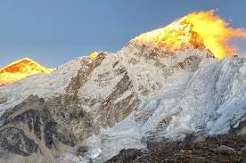 Everest Without Oxygen: Records, Climbers & How It's Possible
Who First Climbed Everest Without Oxygen?
Reinhold Messner and Peter Habeler
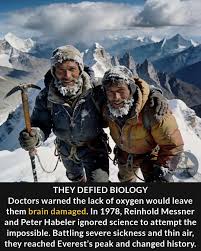
On 8 May 1978, Italian climber Reinhold Messner and Austrian climber Peter Habeler reached Everest's summit without a single breath of supplemental oxygen. At the time, much of the medical establishment believed it was physiologically impossible some doctors predicted permanent brain damage or death above 8,000 metres without bottled oxygen. Messner and Habeler proved otherwise, and their ascent reset what was considered achievable in high-altitude mountaineering. It remains one of the most significant moments in the sport's history.
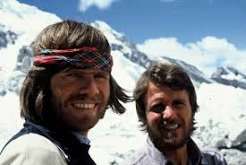 Who First Climbed Everest Without Oxygen?
Reinhold Messner's Everest Without Oxygen Records
Messner didn't stop in 1978. Two years later, on 20 August 1980, he returned to Everest alone and completed the first solo ascent of the mountain without bottled oxygen a feat many consider even more extraordinary than the 1978 climb, since he had no climbing partner to share decision-making or logistics with at extreme altitude. Messner went on to become the first person to summit all fourteen of the world's 8,000-metre peaks, and he did every one of them without supplemental oxygen a body of work that still defines the outer limits of oxygenless mountaineering.
Famous Climbers Who Reached Everest Without Oxygen
Reinhold Messner
First to summit Everest without oxygen (1978, with Habeler); first solo ascent without oxygen (1980); first to climb all fourteen 8,000ers without bottled oxygen.
Peter Habeler
Co-achieved the historic 1978 ascent with Messner, proving the feat was possible for more than one climber under the right conditions.
Ang Rita Sherpa
Known as "The Snow Leopard," the Nepali climber summited Everest ten times between 1983 and 1996 without bottled oxygen including the only winter ascent of Everest ever completed without supplemental oxygen, on 22 December 1987.
Lydia Bradey
The New Zealand climber became the first woman to summit Everest without supplemental oxygen in 1988, at a time when her claim was initially disputed a reminder that even confirming these records has historically been difficult.
Other Notable Oxygenless Everest Climbers
Ed Viesturs became the only American to climb all fourteen 8,000-metre peaks without oxygen, including Everest. Nirmal "Nims" Purja set a modern speed record in May 2022, summiting Everest and neighboring Lhotse without supplemental oxygen in roughly 25 hours combined. Tashi Sherpa, at 19 years old in 2005, became the youngest person to summit without bottled oxygen. Some historical claims from this era carry disputed details or unclear documentation always worth noting that "first" and "record" claims in early high-altitude mountaineering weren't always independently verified the way they are today.
Everest Without Oxygen Records
Achievement | Climber(s) | Year |
|---|---|---|
First Everest ascent without supplemental oxygen | Reinhold Messner & Peter Habeler | 1978 |
First person to climb Everest & K2 without supplemental oxygen | Reinhold Messner | 1979 |
First solo Everest ascent without bottled oxygen | Reinhold Messner | 1980 |
First woman to summit without supplemental oxygen | Lydia Bradey | 1988 |
Most summits without supplemental oxygen (10 total) | Ang Rita Sherpa | 1983–1996 |
First winter Everest climb without supplemental oxygen | Ang Rita Sherpa | 1987 |
Youngest to summit without supplemental oxygen | Tashi Sherpa | 2005 |
Fastest Everest + Lhotse ascent without supplemental oxygen | Nirmal "Nims" Purja | 2022 |
How Is It Possible to Climb Everest Without Oxygen?
Acclimatization
Climbers spend weeks moving between progressively higher camps, forcing the body to gradually produce more red blood cells and adapt to lower oxygen levels a process that can't be rushed without risking serious illness.
Increased Breathing
At extreme altitude, the body compensates by breathing faster and deeper, and the heart pumps harder to circulate what little oxygen is available. Even simple tasks like putting on boots can leave an oxygenless climber breathless.
Physical Conditioning
Elite cardiovascular fitness, exceptional lung capacity, and years of endurance training are baseline requirements not advantages. Strength and efficient, energy-conserving movement matter just as much as raw fitness.
Experience and Pacing
Oxygenless climbers move more slowly and rest more deliberately than climbers using bottled oxygen. Conserving energy for the descent which is where many high-altitude deaths actually happen is as important as the summit push itself.
Favorable Weather Conditions
A calm, stable weather window can be the difference between a successful summit and a forced retreat. Without supplemental oxygen, climbers have far less margin to wait out a storm at altitude, since every hour spent above 8,000 metres accelerates physical deterioration.
 Everest Without Oxygen: Records, Climbers & How It's Possible
What Happens to Your Body on Everest Without Oxygen?
Above 8,000 metres, an oxygenless climber's body starts to break down in real time: breathing becomes rapid and labored, the heart rate climbs well above resting levels even while stationary, and fatigue sets in far faster than lower-altitude experience would suggest. Headaches and dizziness are near-universal. Confusion and poor decision-making follow as hypoxia deepens and this is the most dangerous stage, because impaired climbers are often the least able to recognize they need to turn around. Left unmanaged, this progression can escalate into severe altitude illness, including HAPE and HACE, both of which can be fatal within hours without immediate descent. Interestingly, research on elite acclimatized climbers has found they can perform better at extreme altitude than laboratory hypoxia simulations would predict one reason a small number of exceptionally well-prepared humans can still make this climb happen.
What Is the Death Zone on Mount Everest?
The Death Zone refers to elevations above roughly 8,000 metres, where atmospheric oxygen is so limited that the human body can no longer acclimatize it simply begins deteriorating, regardless of how well-prepared the climber is. No one can safely remain there indefinitely; every minute spent in the Death Zone comes at a physiological cost, which is why climbers plan their summit pushes to minimize time spent at that altitude.
Why the Death Zone Is So Dangerous Without Supplemental Oxygen
Climbers using bottled oxygen get a partial buffer against the Death Zone's effects effectively simulating a lower, safer altitude. Without that buffer, an oxygenless climber is exposed to the Death Zone's full physiological toll, with a much smaller margin for error and a far shorter window before things can go seriously wrong.
Everest Without Oxygen vs Everest With Oxygen
Factor | Without Supplemental Oxygen | With Supplemental Oxygen |
|---|---|---|
Oxygen source | Atmospheric air only | Atmospheric air + bottled oxygen |
Physical difficulty | Extremely high | Reduced, but still severe |
Breathing | Significantly harder | Partially supported |
Risk exposure | Very high | Still extremely high |
Experience required | Exceptional, elite-level | Exceptional |
Using supplemental oxygen makes the climb more survivable it does not make Everest safe. Climbers die on Everest every season regardless of whether they're carrying bottled oxygen.
How Long Can a Person Survive on Everest Without Oxygen?
There's no single number that applies to every climber. Survival time in the Death Zone depends on altitude, weather, individual health, acclimatization level, and how much physical exertion the body is under at any given moment. What's consistent across every account is that the Death Zone is not a place the human body can safely occupy for long which is exactly why experienced oxygenless climbers structure their entire summit push around minimizing time spent above 8,000 metres, rather than around any fixed survival window.
Is Climbing Everest Without Oxygen More Dangerous?
Yes, meaningfully so. Oxygenless climbers face greater physiological stress, faster-onset fatigue, slower overall movement, and heightened vulnerability to cold, since the body has fewer resources to spare for maintaining core temperature. The consequences of even small mistakes are magnified a short delay, a missed weather window, or a moment of impaired judgment can escalate quickly when there's no supplemental oxygen buffering the situation. This isn't a challenge to be attempted casually; it's reserved for climbers with exceptional acclimatization, conditioning, and Himalayan experience.
Everest Without Oxygen vs Other 8,000-Metre Peaks
Everest isn't the only mountain climbed without supplemental oxygen it's part of a broader tradition across the world's fourteen 8,000-metre peaks. K2, often considered technically harder and more dangerous than Everest, has been climbed oxygenless by a smaller number of elite mountaineers. Annapurna carries one of the highest fatality-to-summit ratios of any 8,000er. Lhotse, Everest's close neighbor, has been paired with oxygenless Everest ascents in the same expedition window, as Nims Purja demonstrated in 2022. Manaslu and Kangchenjunga round out the list of peaks regularly attempted without bottled oxygen by climbers building toward, or already holding, a full 8,000-metre resume. Messner's completion of all fourteen without supplemental oxygen remains the benchmark against which oxygenless mountaineering is measured.
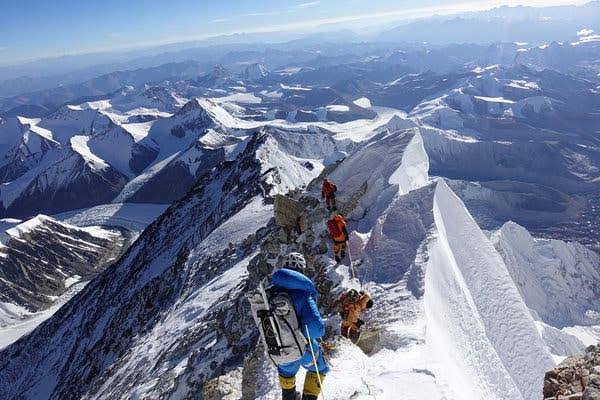 Everest Without Oxygen: Records, Climbers & How It's Possible
The History of Oxygenless Everest Climbs
- 1953 — Edmund Hillary and Tenzing Norgay make the first successful Everest summit, using supplemental oxygen.
- 1978 — Messner and Habeler complete the first Everest ascent without supplemental oxygen.
- 1979 — Messner becomes the first person to climb both Everest and K2 without supplemental oxygen.
- 1980 — Messner completes the first solo Everest ascent without bottled oxygen.
- 1987 — Ang Rita Sherpa completes the first winter Everest climb without supplemental oxygen.
- 1988 — Lydia Bradey becomes the first woman to summit without supplemental oxygen.
- 2005 — Tashi Sherpa becomes the youngest climber to summit without supplemental oxygen, at 19.
- 2022 — Nirmal "Nims" Purja sets a modern speed record, summiting Everest and Lhotse without supplemental oxygen within roughly 25 hours.
What Makes an Oxygenless Everest Climber Different?
It isn't fitness alone. The climbers who succeed combine deep high-altitude experience, a proven ability to acclimatize efficiently, exceptional endurance, mental resilience under extreme physical stress, efficient climbing technique that conserves energy, sharp risk management, and sound weather judgment all backed by meticulous expedition planning. Strong fitness without that full combination has repeatedly proven insufficient; an oxygenless Everest attempt is never safe simply because a climber is in excellent physical shape.
Frequently Asked Questions
Can you climb Everest without oxygen?
Yes. It's been done by fewer than 250 climbers since 1978, out of more than 11,000 total Everest summits, making it one of the rarest achievements in mountaineering.
Who first climbed Everest without oxygen?
Reinhold Messner and Peter Habeler, on 8 May 1978.
Who climbed Everest solo without oxygen?
Reinhold Messner, who reached the summit alone without bottled oxygen on 20 August 1980.
How many people have climbed Everest without oxygen?
Estimates put the number at under 250 climbers, a small fraction of total Everest summiteers.
Why is climbing Everest without oxygen so difficult?
Extreme oxygen scarcity, the physiological effects of the Death Zone, brutal cold, exhaustion, and heightened risk of altitude illness all combine to make it one of the hardest physical challenges a human can attempt.
What happens to your body without oxygen on Everest?
Faster breathing, elevated heart rate, rapid fatigue, headaches, dizziness, impaired decision-making, and in severe cases life-threatening conditions like HAPE and HACE.
What is the Death Zone on Everest?
The region above roughly 8,000 metres, where oxygen is too scarce for the human body to acclimatize and instead begins to deteriorate over time.
How much oxygen is available on Mount Everest?
Oxygen still makes up about 21% of the air on Mount Everest, the same as at sea level but air pressure is so much lower that each breath delivers only about a third of the oxygen molecules it would at sea level.
Is Everest harder without supplemental oxygen?
Significantly. Every stage of the climb breathing, movement, decision-making, and cold tolerance becomes more difficult without a bottled-oxygen buffer.
Can anyone climb Everest without oxygen?
No. It's reserved for elite, highly experienced high-altitude mountaineers with years of acclimatization training not something achievable through fitness or ambition alone.
Plan your trek
Want to Plan Your Holiday in Nepal?
Tell us your dates and fitness level. A local expert replies within a day with a private itinerary and price.
Conclusion
Climbing Mount Everest without oxygen is one of the most demanding achievements in mountaineering. The thin air, extreme cold, strong winds, and limited oxygen at high altitude make every step a serious physical and mental challenge. Yet, a small number of highly experienced climbers have successfully reached the summit without supplemental oxygen, proving what the human body can achieve under extraordinary conditions.
These remarkable records also highlight that climbing Everest without oxygen is not simply about strength or determination. Acclimatization, experience, careful planning, favorable weather, and excellent physical conditioning all play an important role. For most climbers, supplemental oxygen remains an essential safety tool above extreme altitudes.