

Lesser-Known Facts of Mount Everest
While Mount Everest is renowned for its extreme altitude and the challenges it poses to climbers, its history and geology contain many surprising and lesser-known facts. From its ancient origins as part of a seabed millions of years ago to its early, less iconic name “Peak XV,” Everest is far more than simply the highest mountain in the world—it is a remarkable story of geological transformation and exploration.
Here are some of the most fascinating lesser-known facts about Mount Everest:
Ancient Origins & Continuous Growth
- It was once underwater: Even though Mount Everest is known as the “roof of the world,” its summit contains marine limestone filled with ancient fossils. This shows that the mountain was formed from rocks that originally lay on an ocean floor around 450 million years ago, later uplifted by powerful tectonic forces.
- It is still rising today: Everest continues to grow slowly due to the ongoing collision between the Indian and Eurasian tectonic plates. As a result, the mountain is still getting taller at a rate of about 4 mm (0.16 inches) each year.
- The Naming Controversy: Before it became known as Mount Everest, the peak was first labeled “Peak B” and later “Peak XV” during the Great Trigonometrical Survey of India. In 1865, it was officially renamed in honor of Sir George Everest, the British Surveyor General of India. Ironically, George Everest himself opposed the decision, arguing that the mountain should retain its local Nepali or Hindi names instead of being named after him.
Local Names & Cultural Significance
- Sagarmatha: In Nepal, Mount Everest is called Sagarmatha, often interpreted as the “Goddess of the Sky” or “Forehead of the Sky.”
- Chomolungma: In Tibet, it is known as Chomolungma, meaning the “Goddess Mother of the World.”
The Climbers & Records
- The “Everest Man”: The record for the most successful ascents of Mount Everest is held by Nepali climbing guide Kami Rita Sherpa, who has reached the summit an extraordinary number of times—32 ascents and counting. His achievement reflects both exceptional mountaineering skill and the vital role of Sherpa guides in Himalayan expeditions.
- Genetic Advantage: The indigenous Sherpa communities living in the Everest region have developed unique genetic adaptations over generations, allowing their bodies to utilize oxygen more efficiently in extremely high-altitude conditions.
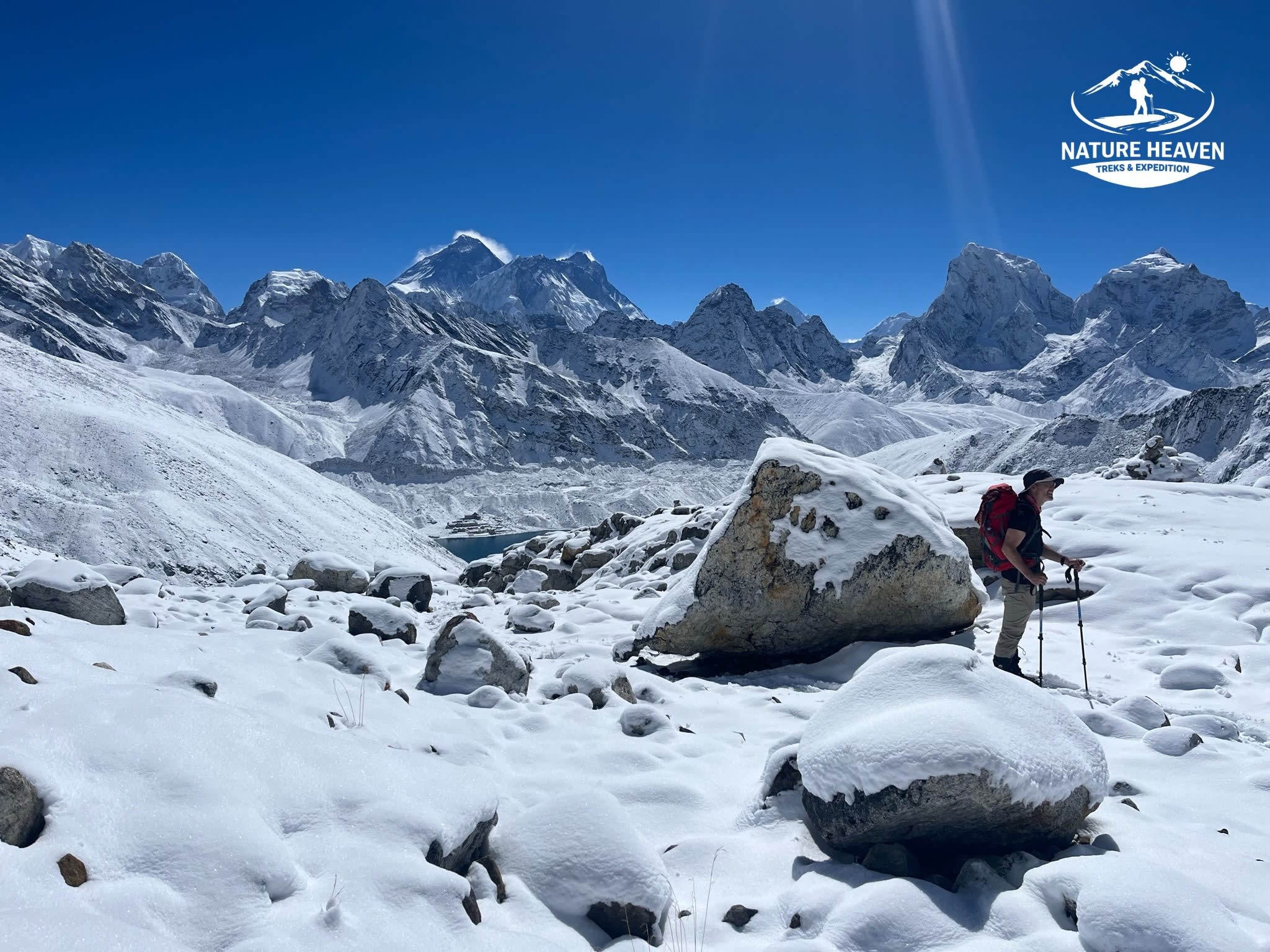
- You cannot see Mount Everest’s summit from Base Camp. From the main South Base Camp in Nepal, the peak is completely hidden behind surrounding mountains, making it invisible from that location.
Logistics & The "Death Zone"
- A post from the “Roof of the World”: The Everest region has one of the highest post offices on Earth, located at Gorak Shep near Everest Base Camp.
- The “Death Zone”: Altitudes above 8,000 meters (26,247 feet) are known as the “Death Zone” because the air pressure and oxygen levels are extremely low—only about 8% of what is available at sea level. In this region, the human body cannot properly recover or function for long, making survival and climbing extremely dangerous.