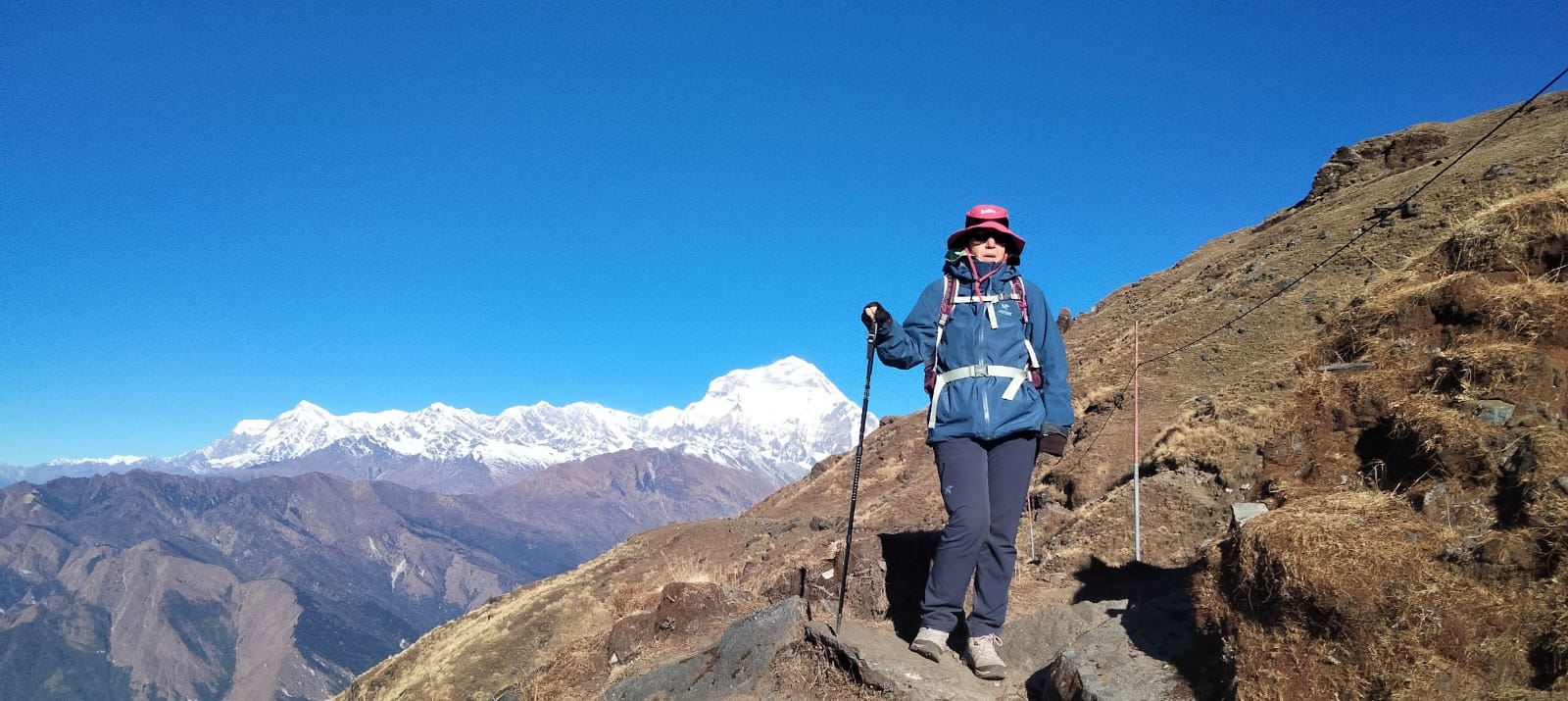


Poon Hill Trek Highlights
- Poon Hill Sunrise (3,210m) is the highlight of the trek, with a magnificent sunrise over the Himalayas. You get to watch the sun rise and golden light spill over Dhaulagiri, Annapurna, Machapuchare (Fishtail) and Nilgiri in a truly spectacular mountain view.
- Vibrant rhododendron forests - in spring the trails are in full bloom with red, pink and white rhododendrons creating a stunning natural scene.
- Cultural immersion in Ghandruk: a traditional Gurung village with stone houses, very warm people and magnificent views of Annapurna South and Hiunchuli.
- Stone Staircase Adventure: climb the famous stone steps to Ulleri and Ghorepani to be rewarded with beautiful terraced fields, waterfalls and mountain scenery.
- Annapurna Conservation Area: trek through a variety of landscapes, cross some beautiful suspension bridges and enjoy the area's flora and fauna as well as the sheer beauty of the place.
- Teahouse Experience: stay in a cozy local teahouse, have your traditional Dal Bhat and experience the very real, very genuine Nepali hospitality.
Poon Hill Trek Overview
The 7 day Ghorepani Poon Hill trek is one of the most iconic of the Himalayan treks and is very much a trek for the beginner. It takes you up to 3,210m (10,531ft) through rhododendron forests, traditional Gurung and Magar villages and spectacular stone stair landscapes. The highlight of the trek is of course the 360 degree sunrise view over the Annapurna and Dhaulagiri massifs.
The highlight of the trek is the early morning hike to Poon Hill (3,210m) which is a famous viewpoint and provides absolutely stunning views of the sunrise over the Annapurna and Dhaulagiri ranges. The view from Poon Hill as the sun rises over the snow peaks is one of the most memorable mountain views in Nepal.
With Nature Heaven Treks and Expeditions we arrange your journey very carefully to ensure that you have a safe, comfortable and memorable trekking experience. This is a short Himalayan adventure starting and finishing in Pokhara and is ideal for those who want to see some spectacular scenery, meet some local people and get a feel for trekking in Nepal.
Poon Hill Trek Photo Gallery


Plan Your Poon Hill Trek Dates
Pick Your Start Date
Click any date below to select your departure day. The calendar will automatically highlight your full 7-day trip window. Use the arrows to browse months.
Poon Hill Trek Itinerary
On arrival at Tribhuvan International Airport in Kathmandu (1300 m/4,260ft) our Nature Heaven Trek representative will be there to meet you and welcome you. You will then be transferred to your hotel in a comfortable vehicle.
After check in you can just relax and recover from the journey. Our team will have all the information you need about the trek ahead and will be able to assist you with any final bits of preparation.
If you've got the time you can take a short walk around the area and just get a feel for the atmosphere in Kathmandu. Alternatively you can just relax at the hotel and get ready for the adventure.
In the evening you can enjoy a comfortable stay at the hotel and get a good night's rest before you start your Himalayan adventure.


What is Included in This Package
Transportation
- Private airport pick-up and drop-off service in Kathmandu
- Tourist bus transportation from Kathmandu to Pokhara and return
- Private transfer between Pokhara and the trek starting/ending points (Nayapul or as per itinerary)
Accommodations
- 8 nights total accommodation during the trip
- 2 nights in Kathmandu at a tourist-standard hotel with breakfast
- 2 nights in Pokhara at a tourist-standard hotel with breakfast
- 4 nights in traditional teahouses during the trek on a twin-sharing basis
Food & Drinks
- Full-board meals (breakfast, lunch, and dinner) during the trekking period
- 8 breakfasts, 7 lunches, and 7 dinners as per the itinerary
- Daily seasonal fresh fruits during the trek
- Water purification tablets for safe drinking water
- Farewell dinner in Kathmandu after the successful completion of the trek
Guide & Porter
- Licensed, experienced, and English-speaking trekking guide
- 1 assistant guide for groups of more than 6 trekkers
- Porter service (1 porter for every 2 trekkers, carrying up to 18 kg in total)
Permits & Fees
- Annapurna Conservation Area Project (ACAP) Permit
- Trekkers' Information Management System (TIMS) Card (if required)
- All applicable local and government taxes
- Official paperwork and trekking permit processing fees
Other Info
- Comprehensive first-aid medical kit carried by the guide
- Daily oxygen saturation (oximeter) monitoring during the trek
- Assistance with emergency rescue coordination (covered by your travel insurance)
- Company T-shirt and trekking map
- Poon Hill Trek completion certificate
- Sleeping bag, down jacket, and duffel bag (available upon request and subject to availability)
- Free luggage storage at our Kathmandu office during the trek
- Government taxes and company service charges
What is Excluded from This Package
Accommodations
- Meals and hotel stays in Kathmandu before/after the trek
Guide & Porter Tips
- Tips for trekking guides and porters
Personal Expenses & Gear
- Mandatory travel insurance covering emergency evacuation
- Personal trekking equipment and warm clothing
- Nepal entry visa fees
Other Exclusions
- International flight tickets to and from Nepal
Poon Hill Trek Route Map

Poon Hill Trek — Important Trip Info
The Poon Hill Trek is in the Annapurna region of north central Nepal (Myagdi and Kaski districts of Gandaki Province). It's at 3,210m (10,531ft) and is one of the most popular viewpoints in the Annapurna Himalayas. The trek itself provides absolutely stunning views of the major Himalayan peaks (Annapurna South, Annapurna I, Hiunchuli, Machhapuchhre (Fishtail), Dhaulagiri etc). It's a very popular trek for a number of reasons, principally its location and the relatively short distances you have to walk.
The trip typically starts in Pokhara (a lovely lakeside city some 200km west of Kathmandu). You can get to Pokhara by tourist bus, by private vehicle or by domestic flight from Kathmandu. From Pokhara you then take the road to Nayapul, Hile or Ulleri (depending on the itinerary and the current state of the roads) which are all the usual starting points for the Poon Hill trek.
The trail runs through traditional Gurung and Magar villages, terraced farms, beautiful rhododendron forests, stone staircases and some very scenic mountain villages. The main overnight stops are Tikhedhunga, Ulleri, Ghorepani and Ghandruk. Ghorepani is of course very significant as it's the gateway to Poon Hill (one of the most popular treks in the region) and from there you can have an absolutely spectacular sunrise over the Annapurna and Dhaulagiri massifs.
One of the big benefits of the Poon Hill Trek is that it's so much more accessible than a lot of the other high altitude trekking in Nepal. You don't need a domestic mountain flight and you don't need an extremely long trek. It's ideal for the complete beginner, for families and for people who simply don't have a lot of holiday time. There are established teahouses, road access all the way up, well marked trails and it's a very good way of getting a feel for the Himalayas, the mountain culture and the beauty of the landscape.
Poon Hill is in the Annapurna region of Nepal (Myagdi and Kaski districts, Gandaki Province). It's at about 3,210 m and is one of the most popular viewpoints in the Nepalese Himalayas. The trek generally takes you through the villages of Tikhedhunga, Ulleri, Ghorepani and Ghandruk, a very gradual trek from the lower river valleys up into the alpine foothills of the Annapurna and Dhaulagiri ranges.
The natural landscape of the Poon Hill area is very varied indeed with subtropical forests, terraced agriculture, green hills, deep river valleys and traditional mountain villages. As you ascend the hill you'll see the vegetation change from the dense subtropical forest at lower levels to the temperate woodlands of rhododendron, oak and pine which dominate at higher altitudes. In the spring (March to April) the rhododendron forests are particularly striking with the hillsides in a riot of red, pink and white.
One of the real highlights of the Poon Hill trek is the view from the viewpoint itself. You get a magnificent view of Annapurna South (7,219m), Machhapuchhre (6,993m), Dhaulagiri I (8,167m), Nilgiri and Hiunchuli. The sunrise from Poon Hill is absolutely legendary. You can watch the first rays of sun come up and slowly illuminate the snow capped Himalayan peaks.
The area is also very rich in biodiversity and natural ecosystems, particularly in the Annapurna Conservation Area which is Nepal's largest protected area. The forests are home to a range of wildlife and Himalayan birds and there are rivers, waterfalls and mountain streams throughout. The mix of different terrain, vegetation, mountain scenery and traditional rural landscape makes Poon Hill an ideal destination for nature lovers, photographers and trekkers looking for a worthwhile Himalayan experience.
The Ghorepani region, located in the Annapurna Conservation Area of western Nepal, is rich in history, traditional lifestyles, and cultural diversity. Historically, this region served as an important resting point for traders, travellers, and local communities moving between the hills and the higher Himalayan settlements. The name Ghorepani is traditionally associated with a place where horses and mules could find water during their journeys. Over time, this small settlement developed into a popular stop along the historic trekking routes connecting Pokhara, Beni, and the surrounding mountain villages.
The region is particularly known for its strong Gurung and Magar cultural heritage. These communities have preserved their traditional customs, languages, festivals, music, and distinctive village lifestyles for generations. Traditional stone houses, slate-roofed buildings, terraced farmland, and welcoming local communities reflect the cultural identity of the Annapurna foothills. Visitors can experience authentic Nepali hospitality while learning about the daily lives, farming practices, and traditional values of the local people.
Ghorepani and nearby villages such as Ghandruk, Ulleri, and Tadapani also reflect the historical influence of the Gurkha soldiers, particularly the Magar and Gurung communities, who have a long association with military service. Traditional dances, including Ghatu and Sorathi, along with local festivals and religious celebrations, remain important parts of community life. Hindu and Buddhist traditions coexist throughout the region, creating a unique cultural environment where temples, monasteries, prayer flags, and local shrines form part of the everyday landscape.
Today, the Ghorepani region is an important destination for cultural tourism and Himalayan trekking. The famous Ghorepani–Poon Hill route allows visitors to explore traditional mountain settlements, interact with local communities, and discover the cultural heritage of the Annapurna region. Beyond its spectacular mountain scenery, Ghorepani offers a meaningful opportunity to understand Nepal's traditional hill communities, their historical connections, and their enduring relationship with the Himalayan landscape.
The Poon Hill Trek is one of the most popular of the shorter treks in the Annapurna region and is a fantastic combination of Himalayan scenery, traditional mountain villages and culture. The highlight of the trek is the spectacular view of the Annapurna and Dhaulagiri ranges. You get to see Annapurna South, Machhapuchhre (Fishtail), Hiunchuli, Nilgiri and Dhaulagiri so it's a very rewarding trek for people who are into the natural environment and who like to take photographs.
One of the most memorable things is the early morning hike up to Poon Hill (3,210m) to watch the sunrise over the Himalayas. As the first rays of sun hit the snow peaks the whole landscape turns gold. It's widely regarded as one of the very best sunrise viewpoints in the Annapurna region and is a great spot for landscape photography.
Another big draw is the chance to go into the traditional Gurung and Magar villages (Ghandruk, Ghorepani and Ulleri). You get a real feel for the way of life in these villages, the traditional architecture, the mountain hospitality and the culture of the hill people. Along the trek you'll also have the rhododendron forests, the terraced fields, the rivers, the stone steps and the general peace of the mountain. In the spring (March to April) the forests are particularly lovely with the rhododendron in full bloom.
The Poon Hill Trek is also notable for its easy trails, comfortable teahouse accommodation and fairly gentle walking. It's very much a trek for the beginner, for families and for people who simply don't have the time to do a proper trek. It's a very rewarding short trek indeed with spectacular mountain views, some cultural encounters, a good bit of forest trail and absolutely unforgettable sunrise.
The Annapurna region is one of Nepal's most biodiverse areas, with a tremendous range of flora and fauna across the many altitudes and climatic zones. You have subtropical forests and terraced hillsides down to alpine meadows and the high Himalayan areas. The variation in altitude, temperature and rainfall produces a variety of different ecological habitats and the Annapurna Conservation Area is a major centre of biodiversity in the Himalayas.
The lower down the Annapurna area it's all forested with rhododendron, oak, pine, bamboo and all sorts of other native vegetation. In the spring the rhododendron forests are particularly beautiful and give the trekking trails a real splash of colour, especially around Ghorepani, Tadapani and the like. As you go higher the forest gives way to alpine vegetation, grasslands and then high altitude shrubs. All of these different plant communities are vital for the wildlife and are a key component in maintaining the ecological balance of the Himalayan environment.
The Annapurna area is also home to a rich variety of wildlife including Himalayan tahr, musk deer, barking deer, langur monkeys, Himalayan black bears and the elusive snow leopard in the appropriate high altitude habitat. The bird life is no less impressive with the Himalayan monal (Danphe) being Nepal's national bird, blood pheasants, eagles, vultures and a host of other Himalayan birds. Whilst many of the animals are of course very difficult to see on the trek, their presence is a testament to the area's ecological significance.
The Annapurna Conservation Area is fundamental to the conservation of Nepal's natural heritage through biodiversity conservation, sustainable tourism and community based environmental management. It is Nepal's largest conservation area (approx 7629 sq km) and was established in 1986. It is a place where responsible trekking, waste management, forest conservation and respect for the local wildlife are all important. For the trekker it's not just about the views, it's about experiencing the natural diversity and ecological significance of the Himalayas.
The Poon Hill Trek is in the Annapurna area of Nepal and you'll need permits to do it. The two main ones are the Annapurna Conservation Area Permit (ACAP) and the TIMS card (subject to current regulations). The ACAP is required as the trek route runs through the Annapurna Conservation Area which is a protected area established to conserve the area's natural environment, its wildlife, its forests and its traditional mountain communities.
The Annapurna Conservation Area Permit is all about environmental conservation, local infrastructure and sustainable tourism development. You can obtain the permit from an authorised office in Kathmandu or Pokhara or via a registered trekking agency. A valid passport and passport sized photos will be required to apply. The permit fee and requirements are subject to change so it's always worth checking for the most up to date information prior to departure.
Foreigners should of course follow the current Nepal Tourism Board and Department of Immigration guidelines. The TIMS requirements and rules for independent trekking and for licensed guides are subject to change at any time depending on the latest government decisions and route specific regulations. It is absolutely essential to engage an experienced local trekking guide for the purposes of navigation, cultural insight, safety and in the event of an emergency.
Trekkers should be mindful of local customs, not leave any litter behind, be very careful not to disturb the wildlife and abide by all the conservation rules that apply. The right permits will of course be required and you should stick to the marked trails at all times. It's all about being a responsible trekker and with the right permits and preparation the Poon Hill trek is a very worthwhile way of experiencing the natural beauty and the cultural heritage of the Annapurna region.
What our travellers say
“The Manaslu trek is incomparable. It's suitable as a first trek in the Himalayas — plenty of time for acclimatisation and such captivating views that spending time on "altitude sickness" would be a pity. And it's a special pleasure to walk with Krishna. He is a knowledgeable, reliable and brave guide, and a very pleasa…”
Kafle
Senior Himalayan Specialist
“Namaste! I have been guiding in the Himalayas for over 15 years. Contact me directly to customize your itinerary or check live trail conditions.”
Secure Booking System
Your checkout session is secure and encrypted by 256-bit SSL. Associated with TAAN, KEEP, NMA, and registered with Nepal Tourism Board.