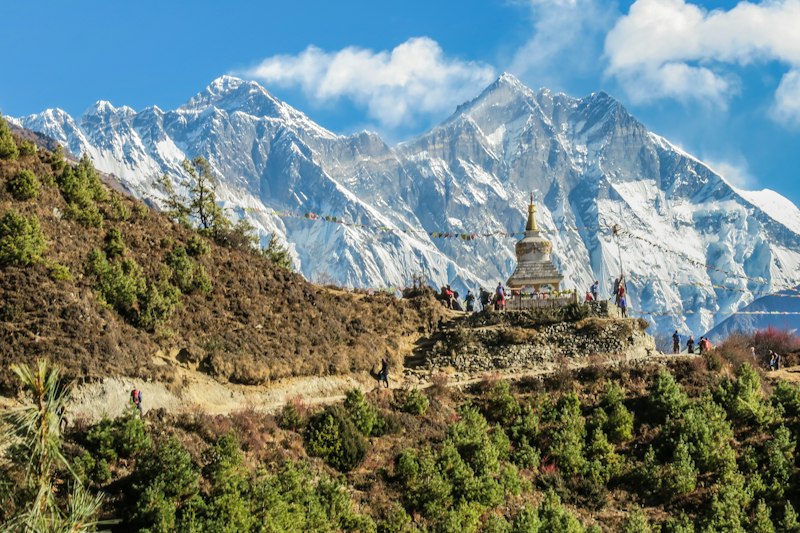


Ama Dablam Base Camp Highlights
- Reach Ama Dablam Base Camp at approximately 4,600m beneath the spectacular Ama Dablam.
- Experience breathtaking views of Ama Dablam, Everest, Lhotse, Nuptse, Thamserku, and Kangtega.
- Enjoy the scenic mountain flight between Kathmandu and Lukla.
- Explore the lively mountain town of Namche Bazaar and experience authentic Sherpa culture.
- Visit the renowned Tengboche Monastery, an important spiritual centre of the Khumbu region.
- Follow peaceful trails through rhododendron, pine, and juniper forests.
- Experience spectacular Himalayan landscapes while trekking through Sagarmatha National Park.
- Enjoy a quieter trail toward Ama Dablam Base Camp away from the busier Everest Base Camp route.
- Complete a rewarding high-altitude Himalayan trek without climbing the technical summit of Ama Dablam.
- Trek through the famous Sherpa settlements of Phakding, Namche Bazaar, Tengboche, and Pangboche.
Ama Dablam Base Camp Overview
The Ama Dablam Base Camp – 15 Days is an exciting Himalayan trekking adventure through Nepal's spectacular Khumbu region. The journey combines scenic mountain trails, Sherpa culture, Buddhist heritage, and close-up views of Ama Dablam. The trek is designed for travelers who want to experience the dramatic surroundings of Ama Dablam without undertaking a technical mountain expedition.
The adventure begins in Kathmandu before heading toward Lukla, the gateway to the Everest region. From Lukla, the trail follows the Dudh Koshi valley toward Phakding and Namche Bazaar. The route passes through traditional Sherpa settlements, suspension bridges, forested trails, and spectacular mountain scenery. Namche also provides an important opportunity for acclimatization before heading toward higher elevations.
From Namche, the trail continues toward Tengboche and Pangboche. Tengboche is famous for its monastery and panoramic Himalayan surroundings. Pangboche provides an ideal base for the approach to Ama Dablam Base Camp. The landscape gradually changes as the trail leaves the main trekking route and enters quieter alpine terrain.
The major highlight is the hike from Pangboche to Ama Dablam Base Camp at around 4,600m. The trail crosses the Imja Khola before climbing through open hillsides, yak-grazing areas, rocky terrain, and alpine landscapes. From Base Camp, Ama Dablam rises dramatically overhead, while surrounding peaks create an impressive Himalayan panorama.
After spending time at Base Camp, you descend back toward Pangboche and continue through the Khumbu valley. Depending on the itinerary, the return route can include quieter trails through Phortse before reconnecting with Namche Bazaar. The descent allows you to gradually return to lower elevations while enjoying different views of the mountains and villages.
The Ama Dablam Base Camp – 15 Days concludes with the return trek to Lukla and a flight back toward Kathmandu. The itinerary balances trekking, acclimatization, cultural experiences, and rest. It is important to understand that this is a base camp trek, not a technical ascent of Ama Dablam, so mountaineering experience is not required for the trekking route.
Lukla Flight Information
The Ama Dablam Base Camp Trek begins with a scenic mountain flight from Kathmandu to Lukla, the main gateway to the Everest region. The flight usually takes around 30–35 minutes and offers spectacular aerial views of Nepal’s hills, valleys, and Himalayan peaks. Lukla is situated at approximately 2,860 meters and marks the starting point of the trek into the Khumbu region.
Ramechhap to Lukla FlightDuring busy trekking seasons, flights to Lukla may operate from Ramechhap (Manthali) Airport instead of Kathmandu due to increased air traffic. Trekkers generally travel by road from Kathmandu to Ramechhap, a journey of approximately 4–5 hours, before taking a short flight to Lukla. The Ramechhap–Lukla flight usually takes around 20 minutes.
Lukla to Kathmandu FlightAfter completing the Ama Dablam Base Camp trek, you will return to Lukla and take a scenic flight back toward Kathmandu. The flight normally takes around 30–35 minutes when operating directly. Depending on the season and flight arrangements, the return flight may also operate through Ramechhap, followed by a road transfer to Kathmandu.
Weather and Flight DelaysFlights to and from Lukla are highly dependent on weather and visibility in the Himalayan region. Fog, strong winds, cloud cover, and changing mountain weather can cause delays or cancellations. We recommend keeping some flexibility in your itinerary and allowing buffer time after the trek for possible flight disruptions.
Ama Dablam Base Camp Photo Gallery


Plan Your Ama Dablam Base Camp Dates
Pick Your Start Date
Click any date below to select your departure day. The calendar will automatically highlight your full 15-day trip window. Use the arrows to browse months.
Ama Dablam Base Camp Itinerary
Welcome to Kathmandu, the vibrant capital city of Nepal, situated at an altitude of approximately 1,400m. Upon your arrival at Tribhuvan International Airport, you will be welcomed by our representative and transferred comfortably to your hotel.
After checking into the hotel, you can take some time to rest and recover from your journey. If you feel comfortable, you may take a short walk around the nearby area and experience the lively streets, local shops, and unique atmosphere of Kathmandu.
Your guide will provide a brief introduction to the upcoming itinerary and explain important details about the journey. You will also have time to check your belongings and make any necessary preparations for the days ahead.
The rest of the day is free for relaxation. Enjoy your first evening in Nepal, have a comfortable rest, and prepare for the exciting adventure ahead. Overnight stay in Kathmandu.
What is Included in This Package
Transportation
- Airport arrival and departure transfers in Kathmandu
- Domestic flight between Kathmandu and Lukla
- Ground transportation as mentioned in the itinerary
Accommodation
- Kathmandu hotel accommodation
- Teahouse or mountain lodge accommodation during the trek
- Twin-sharing accommodation during the trekking portion
Food And Drinks
- Breakfast during the Kathmandu stay
- Breakfast, lunch, and dinner during the trek
- Tea or coffee with meals where available
Guide and Porter
- Experienced, licensed English-speaking trekking guide
- Porter service according to group requirements
- Guide and porter accommodation, meals, and insurance
Permits and Fees
- Sagarmatha National Park entry permit
- Local trekking permits and applicable fees
- Government taxes and service charges
Travel Insurance
- Basic first-aid kit
- Emergency assistance and coordination
- Trekking route guidance
- Company duffel bag where applicable
- Trek completion certificate where provided
What is Excluded from This Package
Other Info
- International airfare
- Nepal tourist visa
- Travel and medical insurance
- Emergency helicopter evacuation
- Personal trekking equipment
- Personal expenses
- Bottled drinks and alcoholic beverages
- Hot showers and charging fees where applicable
- Laundry services
- Snacks and personal refreshments
- Extra accommodation caused by delays
- Tips for guides, porters, and support staff
- Any services not specifically listed under inclusions
Required Equipment List
🧢 Headwear
🧥 Clothing Layers
🥾 Footwear & Handwear
🎒 Personal Gear
🧴 Toiletries & Medicines
📄 Important Documents
🥜 Snacks & Hydration
🏔️ Recommended High-Altitude Gear
Ama Dablam Base Camp — Important Trip Info
Arrival in Nepal
Your Ama Dablam Base Camp adventure begins in Kathmandu, the capital city of Nepal.
Upon arrival at Tribhuvan International Airport, our representative will warmly welcome you and assist with your transfer to the hotel.
Kathmandu provides an excellent introduction to Nepal's diverse cultural heritage, with ancient temples, Buddhist stupas, traditional markets, and historic neighborhoods.
We recommend arriving at least one day before the trek departure to allow sufficient time for rest, equipment preparation, permit arrangements, and the pre-trek briefing.
Accommodation in Kathmandu
Before and after the trek, you will stay in comfortable tourist-standard hotels in Kathmandu.
Most hotels provide facilities such as private rooms, Wi-Fi, hot showers, restaurants, and luggage storage.
Thamel is a popular base for trekkers because of its restaurants, cafés, trekking equipment stores, travel services, and cultural attractions.
History of Ama Dablam
Ama Dablam is one of the most recognizable mountains in Nepal's Everest region.
The mountain rises to approximately 6,812 meters and is famous for its dramatic pyramid-shaped summit and long ridges that resemble the arms of a mother protecting her child.
The name "Ama Dablam" is commonly associated with the Sherpa understanding of a mother and her protective necklace or sacred ornament.
Ama Dablam has become one of the most admired mountains in the Khumbu region and is an important landmark for trekkers traveling through the Everest area.
The mountain is also well known within the mountaineering community because of its technically demanding climbing routes.
The Ama Dablam Base Camp Trek, however, is a trekking adventure and does not require technical climbing of the mountain itself.
Geography of the Ama Dablam Region
Ama Dablam is located in the Khumbu region of northeastern Nepal within the Everest area.
The landscape is characterized by dramatic mountain valleys, glaciers, alpine meadows, rocky terrain, deep river gorges, forests, and snow-covered Himalayan peaks.
The trek passes through several elevations, allowing travelers to experience a remarkable transition from forested valleys to high-altitude alpine environments.
Major Geographical Highlights
• Ama Dablam – approximately 6,812m
• Ama Dablam Base Camp – approximately 4,600m
• Namche Bazaar – approximately 3,440m
• Tengboche – approximately 3,860m
• Dingboche – approximately 4,410m
• Pangboche – approximately 3,985m
• Sagarmatha National Park
• Imja Valley
• Dudh Koshi Valley
• Khumbu Himalayan Range
• Lhotse and Nuptse
• Everest region
The combination of dramatic mountain peaks, glaciers, valleys, forests, and traditional villages creates some of Nepal's most spectacular trekking scenery.
Ama Dablam
Ama Dablam is one of the most beautiful and recognizable mountains in the Himalayas.
Its distinctive pyramid-shaped summit rises dramatically above the surrounding Khumbu landscape.
The mountain is particularly impressive from Pangboche, Dingboche, Tengboche, and the trail toward its base camp.
Ama Dablam Base Camp provides trekkers with an extraordinary close-up perspective of the mountain and its surrounding glaciers, ridges, and Himalayan peaks.
The base camp area is also used by mountaineering expeditions preparing to climb Ama Dablam.
Tengboche Monastery
Tengboche Monastery is one of the most important Buddhist monasteries in the Everest region.
Located at approximately 3,860 meters, the monastery is surrounded by spectacular mountain scenery and is closely connected with the spiritual traditions of the Sherpa people.
Visitors can experience the peaceful atmosphere of the monastery and learn about the Buddhist traditions practiced throughout the Khumbu region.
Culture and Traditions of the Khumbu
The Everest region is home to the Sherpa people, whose culture and traditions are deeply connected with Tibetan Buddhism and the Himalayan environment.
Throughout the trek, visitors encounter prayer flags, mani walls, chortens, monasteries, prayer wheels, traditional stone houses, and other cultural landmarks.
Villages such as Namche Bazaar, Tengboche, Pangboche, and Dingboche provide insight into traditional Sherpa lifestyles.
Many local communities continue to maintain traditions related to Buddhism, farming, livestock, mountain tourism, and community life.
Respect for monasteries, religious monuments, prayer wheels, mani walls, and local customs is an important part of responsible trekking.
Food & Beverages on the Ama Dablam Base Camp Trek
Trekkers can enjoy a variety of nutritious meals throughout the journey.
Food options are generally more diverse in Kathmandu and Namche Bazaar, while menus become simpler at higher elevations.
Popular Food Options
• Dal Bhat (rice, lentils, vegetables, and pickles)
• Tibetan bread
• Noodles
• Fried rice
• Pasta
• Potato dishes
• Soups and garlic soup
• Momos (dumplings)
• Pancakes
• Porridge
• Eggs
• Chapati
• Sandwiches
• Sherpa-style meals
Popular Beverages
• Black tea
• Milk tea
• Tibetan butter tea
• Coffee
• Hot lemon
• Ginger tea
• Hot chocolate
Drinking Water
Safe drinking water options are available along the trekking route.
Trekkers are encouraged to use reusable water bottles together with water purification tablets, filtration systems, or other appropriate purification methods.
Staying properly hydrated is especially important at higher elevations.
Health & Risk Prevention on the Ama Dablam Base Camp Trek
Because the trek reaches approximately 4,600 meters, proper acclimatization and preparation are essential.
The primary altitude-related concern is Acute Mountain Sickness (AMS), which can affect trekkers as altitude increases.
Common Symptoms of AMS
• Headache
• Nausea
• Dizziness
• Fatigue
• Loss of appetite
• Difficulty sleeping
• Shortness of breath during exertion
Prevention Measures
• Ascend gradually
• Stay properly hydrated
• Follow the planned acclimatization schedule
• Eat nutritious meals
• Avoid alcohol and smoking at altitude
• Maintain a steady walking pace
• Get adequate rest
• Inform your guide immediately if symptoms develop
Safety Guidelines for the Ama Dablam Base Camp Trek
Safety remains a major priority throughout the journey.
The high-altitude environment, changing weather, remote mountain trails, and Lukla flight conditions require careful planning and responsible trekking.
Essential Safety Guidelines
• Trek with an experienced and licensed guide
• Follow your guide's instructions
• Maintain a steady walking pace
• Stay hydrated throughout the trek
• Wear appropriate clothing and footwear
• Carry necessary personal medications
• Avoid unnecessary risks at high altitude
• Stay with the trekking group
• Inform your guide about any health concerns
• Follow local environmental and cultural guidelines
Altitude Acclimatization
The itinerary includes acclimatization days in Namche Bazaar and Dingboche to help the body adapt to increasing elevation.
These rest days are an important part of high-altitude trekking.
The general principle of gaining altitude gradually while allowing the body time to adapt helps reduce the risk of altitude-related illness.
The Golden Rule
"Climb high, sleep low."
This widely used acclimatization principle encourages trekkers to gain some additional altitude during the day while returning to a lower elevation to sleep when appropriate.
Accommodation During the Trek
Accommodation varies according to the location and availability of facilities.
Lower Region Accommodation
In villages such as Phakding and Namche Bazaar, trekkers generally stay in local teahouses and lodges offering comfortable basic facilities.
Higher Region Accommodation
In Tengboche, Dingboche, Pangboche, and other higher-altitude settlements, accommodation is generally provided in local teahouses or mountain lodges.
Rooms are usually simple and commonly arranged on a twin-sharing basis.
Facilities Available
• Twin-sharing rooms
• Dining halls
• Shared bathroom facilities
• Hot showers where available for an additional fee
• Charging facilities where available
• Wi-Fi where available and subject to local conditions
• Traditional heating in some dining areas
How Transportation Works
Kathmandu to Lukla Flight
The journey to the Everest region normally begins with a domestic flight toward Lukla.
The flight offers spectacular aerial views of Nepal's hills, valleys, and Himalayan mountains.
Lukla to Kathmandu Flight
After completing the trek, travelers return to Lukla for the flight back to Kathmandu.
Flight schedules are highly dependent on weather and operational conditions.
Important Flight Information
Weather conditions can occasionally cause delays or cancellations.
Trekkers should maintain flexibility when connecting their Lukla flights with international flights.
A buffer day is recommended when planning international departures.
Helicopter Transportation
Helicopter transfers may be arranged when required, subject to availability, weather conditions, and additional costs.
Emergency helicopter evacuation is normally handled through appropriate rescue coordination and travel insurance arrangements.
Essential Gear
Proper equipment is important for a safe and comfortable Ama Dablam Base Camp Trek.
Recommended Equipment
• Sturdy trekking boots
• Warm down jacket
• Four-season sleeping bag
• Thermal base layers
• Fleece jacket
• Waterproof jacket and trousers
• Trekking trousers
• Warm gloves
• Sun hat
• Warm winter hat
• UV-protection sunglasses
• Sunscreen
• Lip balm
• Headlamp with spare batteries
• Personal first-aid kit
• Reusable water bottles
• Water purification tablets or filtration system
• Trekking poles
• Backpack
• Duffel bag
• Personal toiletries
• Quick-drying clothing
• Warm socks
• Lightweight gloves
• Camera and spare batteries if required
Physical Preparation
The Ama Dablam Base Camp Trek requires good physical fitness because of the duration, daily walking, altitude gain, and rugged Himalayan terrain.
Previous high-altitude trekking experience is helpful but not necessarily required for well-prepared trekkers.
Recommended Training
• Hiking with a backpack
• Running or jogging
• Cycling
• Stair climbing
• Cardiovascular training
• Leg strengthening
• Core strengthening
• Long-distance walking
Trekkers should ideally begin physical preparation at least two months before departure.
Weather & Climate of the Everest Region
Spring (March–May)
• Clear mountain views
• Mild conditions in lower elevations
• Warmer daytime temperatures
• Blooming rhododendrons
• Excellent trekking conditions
• Increasingly popular trekking season
Autumn (September–November)
• Stable weather
• Clear skies
• Excellent mountain visibility
• Pleasant daytime trekking conditions
• Cold mornings and evenings at higher elevations
• One of the most popular trekking seasons
Winter (December–February)
• Very cold temperatures
• Snow at higher elevations
• Freezing nights
• Fewer trekkers
• Challenging high-altitude conditions
Monsoon (June–August)
• Rainfall in lower elevations
• Cloudy mountain views
• Wet and slippery trails
• Possible flight disruptions
• Less favorable trekking conditions
Currency & Payment Information
The official currency of Nepal is the Nepalese Rupee (NPR).
Payment Tips
• Carry sufficient cash from Kathmandu
• ATMs are available in larger settlements such as Namche Bazaar but should not be relied upon completely
• Card acceptance varies by location
• Remote teahouses may accept only cash
• Small denominations are useful for personal expenses
• Carry additional emergency cash
Permit Rules & Fees for the Ama Dablam Base Camp Trek
Required Permits
• Sagarmatha National Park Entry Permit
• Khumbu Pasang Lhamu Rural Municipality entry fee
• Other applicable local permits or fees according to current regulations
Important Information
• Required permits must be obtained before or during the appropriate stage of the trek
• Permit fees are subject to government regulations
• Trekkers should carry relevant permit documentation
• Registered trekking agencies generally arrange the necessary permits
• Permit requirements and fees may change according to government regulations
Nepal Arrival & Visa Information
Most international visitors can obtain a tourist visa upon arrival at Tribhuvan International Airport in Kathmandu, subject to Nepal's current immigration rules and nationality-specific requirements.
Tourist Visa Options
• 15 Days Tourist Visa
• 30 Days Tourist Visa
• 90 Days Tourist Visa
Requirements
• Passport valid for the required period
• Passport-sized photographs where required
• Completed visa application information
• Applicable visa fee
Important Notes
• Visa requirements may vary according to nationality
• Visa extensions may be available within Nepal subject to immigration regulations
• Carry appropriate payment methods for visa fees
• Check current Nepal immigration requirements before traveling
What our travellers say
“The Manaslu trek is incomparable. It's suitable as a first trek in the Himalayas — plenty of time for acclimatisation and such captivating views that spending time on "altitude sickness" would be a pity. And it's a special pleasure to walk with Krishna. He is a knowledgeable, reliable and brave guide, and a very pleasa…”
Kafle
Senior Himalayan Specialist
“Namaste! I have been guiding in the Himalayas for over 15 years. Contact me directly to customize your itinerary or check live trail conditions.”
Secure Booking System
Your checkout session is secure and encrypted by 256-bit SSL. Associated with TAAN, KEEP, NMA, and registered with Nepal Tourism Board.