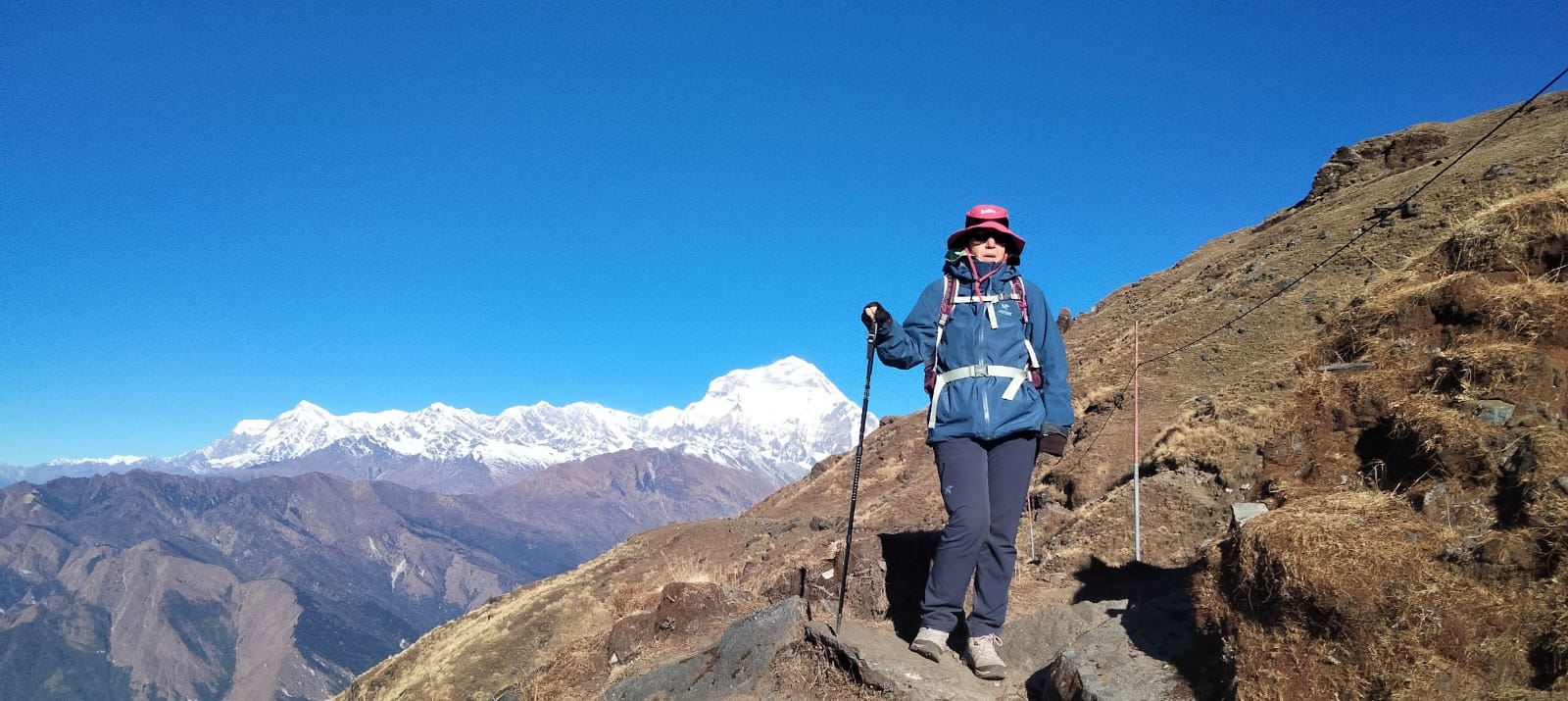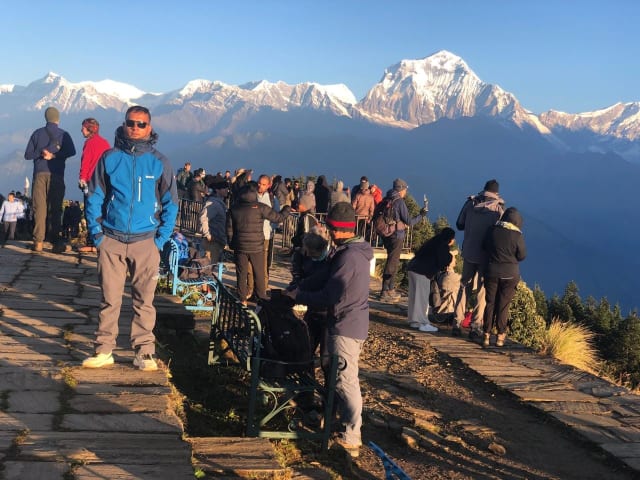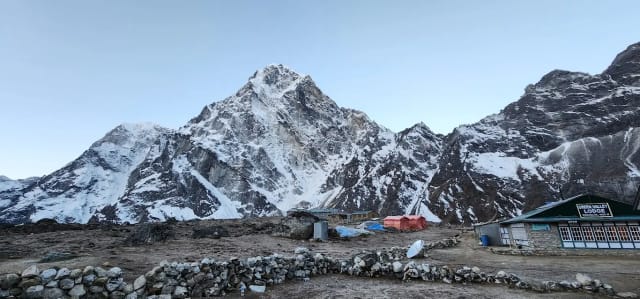


Quick answer: you can trek to Annapurna Base Camp in winter. Early December is often excellent, with clear skies and quiet trails. From mid-December to February, expect deep snow above Deurali, cold nights of about −8 to −12°C at the top, and a real avalanche risk after heavy snowfall. Allow at least two spare days, go with an experienced guide, and be ready to turn back.
Is the Annapurna Base Camp trek open in winter?
 Annapurna Base Camp signboard and prayer flags below Annapurna South
Yes. There is no seasonal closure, and many lodges stay open, though some owners close up and go down to Pokhara or their villages. The trail is occasionally closed for safety after a major snowfall or avalanche. After the January 2020 avalanche, the route stayed shut for about a month.
The reward is real: much quieter trails, sharp mountain views and the Annapurna Sanctuary under snow. But this is a different trek from October's, and it should be planned differently.
December, January and February compared
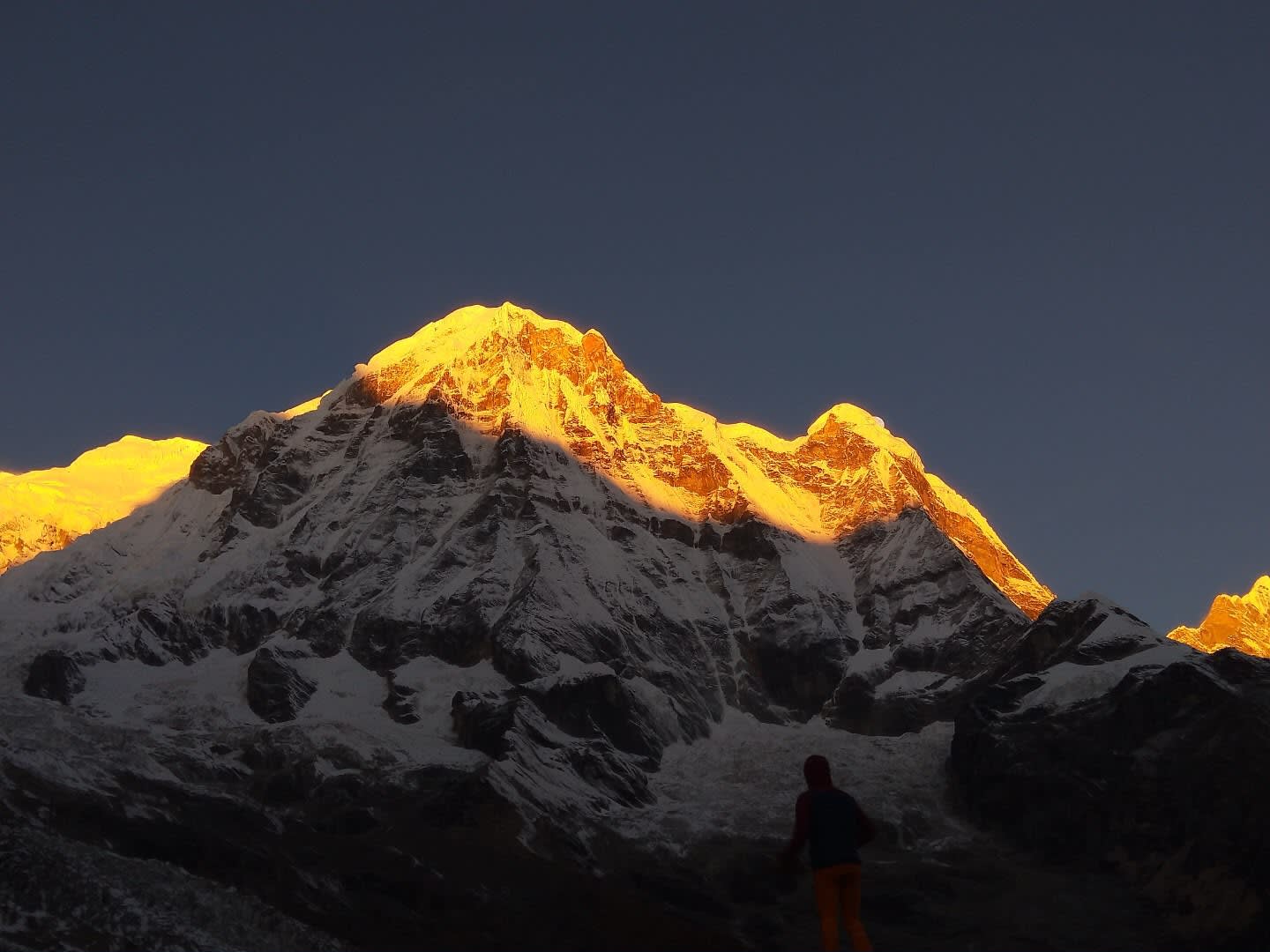
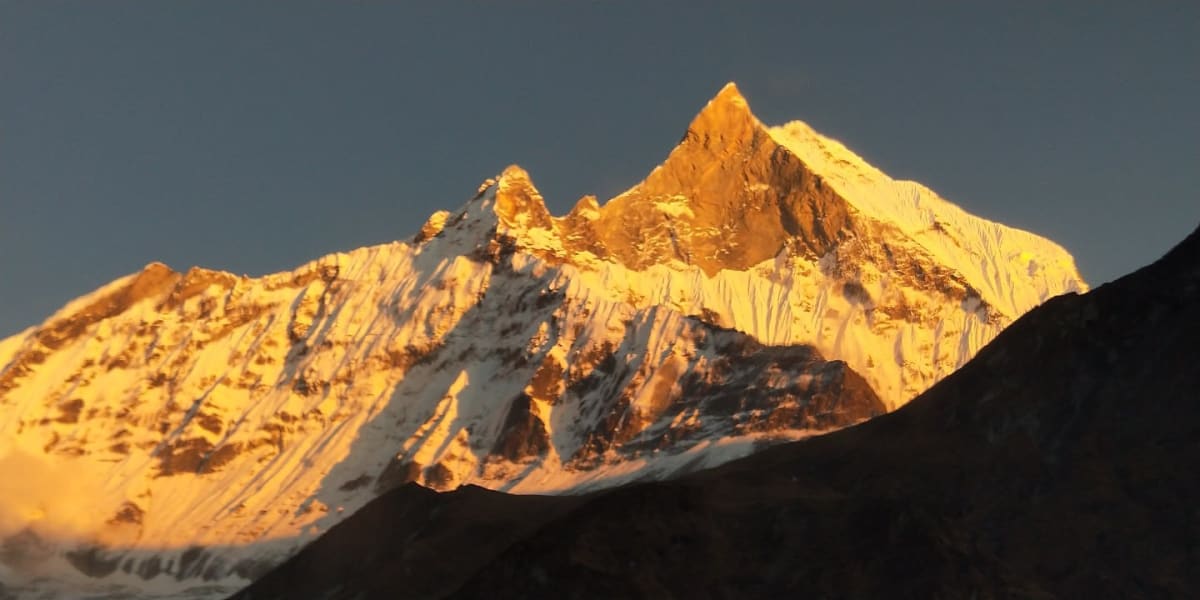 Machhapuchhre (Fishtail) lit by the sunrise
Early December | Mid-December to January | February | |
|---|---|---|---|
Sky | Usually clear | Usually clear between storms | Clear between storms; more snow later in the month |
Snow on the trail | Light, mostly above MBC | Often deep above Deurali | Often deep above Deurali |
Night at ABC | About −8°C | About −12°C | Similar to January |
Crowds | Quiet | Very quiet | Very quiet |
Avalanche concern | Low unless a big storm hits | Real after heavy snow | Real after heavy snow |
Our view | The best winter window | Only with spare days and a flexible plan | Only with spare days and a flexible plan |
Temperatures on the trail
Sources vary, so treat these as planning ranges. Wind makes them feel colder.
Section | Daytime | Night |
|---|---|---|
Lower villages (Ghandruk, Chhomrong, Sinuwa) | 3 to 12°C | 2 to −2°C |
Himalaya Hotel and Deurali | around freezing to 5°C | below freezing |
Machhapuchhre Base Camp and ABC | around 0 to 5°C | −8 to −12°C, sometimes colder |
Avalanche risk: what happened and where
This is the question most winter guides skip, and the one you should ask.
On 17 January 2020, after heavy snowfall, an avalanche struck the trail between Hinku Cave and Deurali (about 3,230m), below Machhapuchhre Base Camp. Four South Korean trekkers and three Nepali guides were buried. Rescue teams were forced back by snow reported to be up to 12 metres deep, and bodies were still being recovered more than three months later. Many other trekkers in the area were airlifted out, and the route closed for around a month.
The narrow valley between Himalaya Hotel, Hinku Cave, Deurali and Machhapuchhre Base Camp runs under steep slopes that collect snow. In a normal dry December it is an ordinary walk. After a big storm, it can be the most dangerous stretch of trail in the region.
How to manage the risk:
- Ask before you go up. At Chhomrong and Deurali, ask lodge owners, other guides and the checkpost about recent snowfall and the trail ahead.
- Wait after heavy snow. Avalanche danger is generally highest during and just after a storm. Waiting a day or two in a lodge is the normal, correct decision.
- Cross the section early in the morning, and do not stop to rest under the slopes.
- Do not rush to finish. After the 2020 avalanche, local tourism leaders warned that pressure to finish quickly invites accidents, and they called for separate winter itineraries.
- Turn back without regret. The views from Chhomrong and Sinuwa are still worth the trip.
How long the trek takes in winter
A normal Annapurna Base Camp trek takes about a week on the trail. With deep snow, the Kathmandu Post reports that it takes at least 10 days, because each day is shorter and slower. Plan for that.
Our two routes:
- 13-day Annapurna Base Camp trek: goes via Ghorepani and Poon Hill, so you acclimatise and see the big views before the Sanctuary. This is the better winter choice, because you can stop at Poon Hill and still have had a great trek.
- 9-day Annapurna Base Camp short trek: faster and direct. Good for early December if you are fit, but with less room for delays.
Add at least two spare days to either one in winter.
Teahouses and food in winter
Most lodges on this route keep operating, but some close, and the ones that are open up high have few rooms and little fuel. Rooms are unheated, and water freezes at MBC and ABC. Ask your guide to confirm by phone which lodges are open before you go above Chhomrong. Expect a warm dining room, simple food, and an early night.
What to pack for ABC in winter
- A four-season sleeping bag, comfort-rated to about −15 to −20°C
- A down jacket, thermal layers, warm hat and insulated gloves
- Waterproof boots with room for warm socks, and gaiters for deep snow
- Microspikes and trekking poles for icy steps
- Sunglasses: snow glare at the base camp is intense
- A headlamp with spare batteries, kept warm overnight
Our trekking packing list covers the rest.
Is it safe to trek ABC in winter?
In settled weather with a guide who knows the route, it is a reasonable trek for fit people. The danger is specific: heavy snow on the avalanche section, slips on ice, and cold with altitude. Make sure your travel insurance covers helicopter evacuation up to at least 4,500m, and read up on preventing altitude sickness.
Winter is not a good time for your first ever trek to ABC if you are nervous about snow or have fixed flight dates with no spare days.
Better winter alternatives in the Annapurna region
If the forecast looks bad, or you want less risk, these stay out of the avalanche section:
- Poon Hill trek: 3,210m, easy to moderate, with huge views. Our beginner's guide covers it in detail.
- Khopra Danda trek: up to 3,660m on a quiet ridge facing Dhaulagiri and Annapurna South.
- Mardi Himal trek: good in early December, but the ridge above High Camp can be blocked later. See the difficulty guide.

Frequently asked questions
Can you trek to Annapurna Base Camp in December?
Yes. Early December is one of the best windows of the year, with clear skies and few people. From mid-month, snow and cold increase, so build in spare days.
Is there snow at Annapurna Base Camp in winter?
Yes. From around mid-December to February, snow usually lies at Machhapuchhre Base Camp and ABC, and can be deep above Deurali.
How cold is Annapurna Base Camp in January?
Daytime is around 0 to 5°C in sun, and nights are about −12°C, sometimes colder.
Is there avalanche danger on the Annapurna Base Camp trek?
Yes, after heavy snowfall, mainly between Himalaya Hotel and Machhapuchhre Base Camp. The January 2020 avalanche near Deurali buried seven people. Check conditions locally and wait after storms.
Are teahouses open in winter on the ABC trek?
Many are, though some close. Availability is lowest at the upper lodges, so have your guide confirm before going above Chhomrong.
How many days do I need for ABC in winter?
Plan for about 10 days on the trail if there is deep snow, plus at least two spare days.
Is Annapurna Base Camp better in winter or autumn?
Autumn is easier and safer. Winter is quieter. For most trekkers, October, November or early December is the best balance.
Written by Krishna Ghimire, Senior Himalayan Specialist at Nature Heaven Treks & Expedition. Last updated November 2026.
See dates and full inclusions for our 13-day Annapurna Base Camp trek.