


Makalu Base Camp Trek Highlights
- Trek to the base of Mount Makalu (8,485m) the 5th highest mountain in the world at an altitude of c. 4,870 m.
- Cross the dramatic Shipton La (4,200m) and Keke La (4,170m) passes which are the gateways into the remote Barun Valley.
- Explore the pristine Makalu Barun National Park, one of the most biodiverse of the Himalayan protected areas.
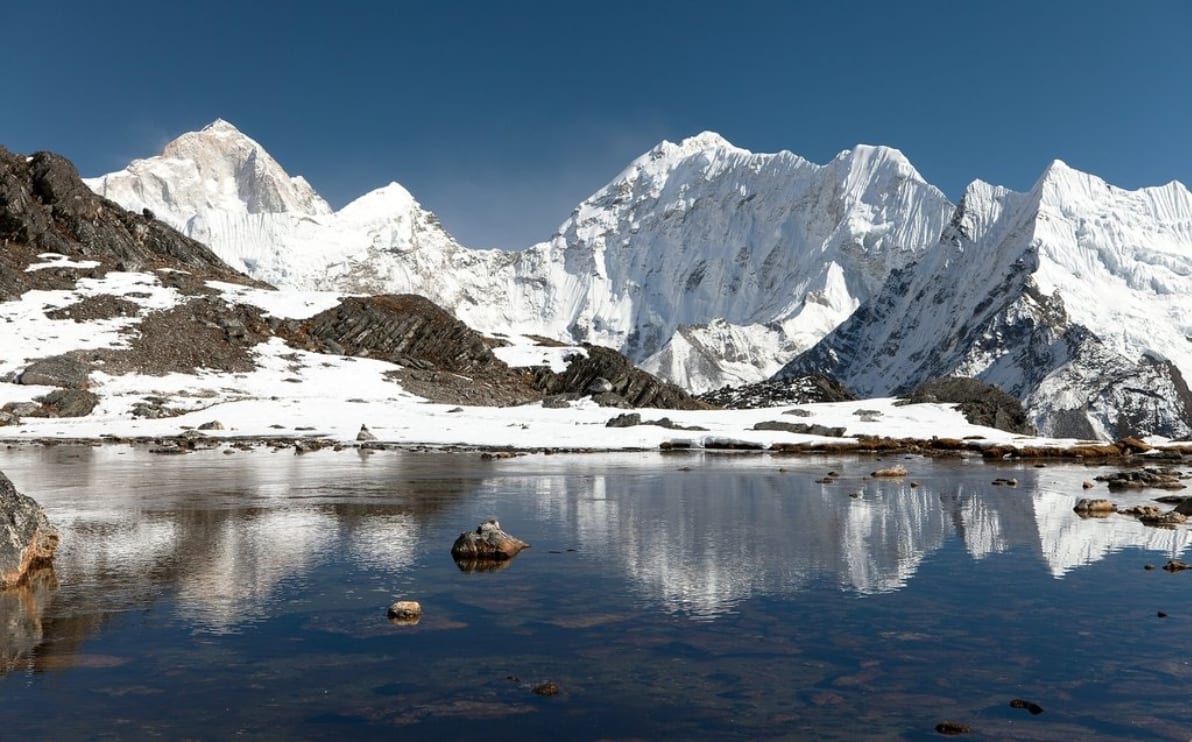
- Enjoy the full glory of Makalu, Chamlang, Baruntse, Lhotse and the rather rare Kangshung (east) face of Everest.
- Just walk through one of the last areas of genuinely unspoilt forest in Nepal, from the subtropical jungle right up through to the high alpine.
- Discover the remote villages of Num, Seduwa and Tashigaon which are home to the Rai and Sherpa communities of eastern Nepal.
- Visit Khongma Danda, a pretty acclimatisation ridge with magnificent views of Makalu and Kanchenjunga.
- Trek through the beautiful high pastures of Yangle Kharka and Langmale Kharka (surrounded by waterfalls and glaciers).
- Visit the Barun Glacier and Barun Pokhari close to base camp, with the option of continuing on to the old Swiss Base Camp viewpoint.
- Experience real solitude on one of Nepal's less visited long treks, way off the beaten tracks of the Everest and Annapurna treks.
- Encounter rich wildlife habitat including the red panda, musk deer and over 400 bird species within the national park.
- Complete one of the most genuine and satisfying base camp treks in the Nepal Himalaya.
Makalu Base Camp Trek Overview
The Makalu Base Camp Trek (21 days) is one of the most rewarding of the off the beaten track wilderness treks in Nepal. It takes you right up to the base of the world's 5th highest mountain (Makalu). The trek is through the incredibly biodiverse Makalu Barun National Park and takes you from the lush tropical lowlands through the pristine rhododendron forests all the way up to the high altitude passes and into a spectacular alpine sanctuary which is literally surrounded by 8000m peaks.
The adventure kicks off with a flight to Tumlingtar in the Arun River valley and then a drive to Num which is the trekking start. The trek descends to the Arun River and then climbs steadily through Seduwa and Tashigaon (the last permanent Sherpa settlement) to the high ridge of Khongma Danda which is an important acclimatisation stop with superb views of Makalu and Kanchenjunga.
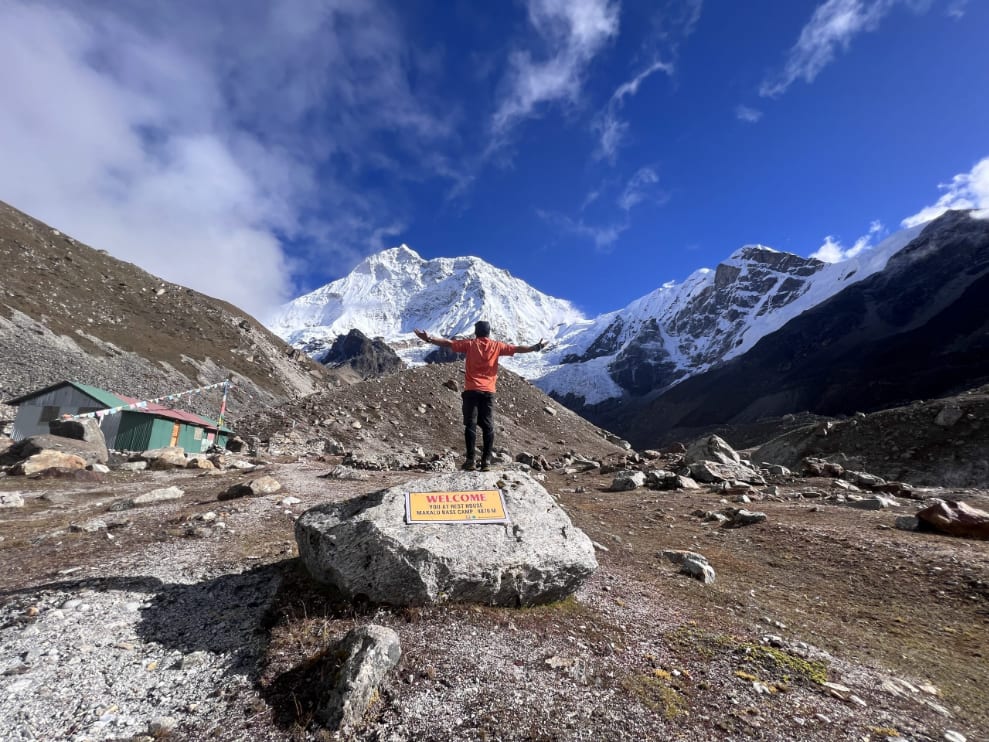
Beyond Khongma Danda the trek crosses the Shipton La and Keke La into the very remote Barun Valley. You descend through the alpine pastures at Dobate, Yangle Kharka and Langmale Kharka before finally arriving at Makalu Base Camp at 4,870 m. The view from here is absolutely superb with Makalu’s south face, Chamlang, Baruntse, Lhotse and the very rarely seen Kangshung face of Everest all within easy view. You can also go on to explore the Barun Glacier, Barun Pokhari and the old Swiss Base Camp.
The return trip takes exactly the same spectacular route back through the Barun Valley and over the high passes to Tashigaon, Seduwa, Num and then back to Tumlingtar for the flight to Kathmandu. There are dedicated acclimatization days at Khongma Danda and at Makalu Base Camp itself to cope with the huge altitude gain. Best times to go are spring (March to May) with the rhododendron forests in full bloom down in the lower valleys and autumn (September to November) when the weather is most stable and the mountain views are at their very best.
Whether you're after the Makalu Base Camp trek cost, the itinerary, the difficulty level or indeed the best time of year to go, it's one of the most genuine and adventurous off the beaten track treks in the Nepal Himalaya.
Kathmandu to Tumlingtar
Fly and Drive to the Trailhead
The trek starts with a short flight from Kathmandu to Tumlingtar in the Arun River valley of eastern Nepal, then a several hour drive through Khadbari and Chichila to Num where the trek proper begins.
Returning from the Trek
After the trek we retrace our steps back to Num and head to Tumlingtar for the return flight to Kathmandu. Flights between Kathmandu and Tumlingtar can be weather dependent so we would recommend a flexible schedule and our itinerary includes a free day in Kathmandu to allow for any delays.
A Remote Teahouse Trek
The Makalu Base Camp trek is now a well established teahouse trek with teahouses along most of the route. The facilities do get a bit more basic in the higher reaches of the Barun Valley, around Yangle Kharka, Langmale Kharka and at base camp itself.
Makalu Base Camp Trek Online Briefing
After receiving your booking deposit and required documents, Nature Heaven Treks and Expedition will arrange a personalized online briefing via WhatsApp and Email. We will explain your trek itinerary, packing list, Everest trekking weather, altitude preparation, and answer all your questions. Our expert team ensures you are fully prepared, confident, and ready for an unforgettable trekking adventure in Nepal.
Makalu Base Camp Trek Photo Gallery

Plan Your Makalu Base Camp Trek Dates
Pick Your Start Date
Click any date below to select your departure day. The calendar will automatically highlight your full 21-day trip window. Use the arrows to browse months.
Makalu Base Camp Trek Itinerary
Upon your arrival at Tribhuvan International Airport in Kathmandu, you will be warmly welcomed by the Nature Heaven Trek team. After completing immigration, baggage collection, and customs formalities, you will be assisted with a comfortable transfer to your hotel.
During the drive, you will get your first glimpse of Kathmandu’s lively streets, traditional architecture, and vibrant local atmosphere. Once at the hotel, you can check in, freshen up, and take some time to relax after your journey.
Later, you will receive a brief orientation about your upcoming adventure, including the itinerary, travel arrangements, and important practical information. You will also have an opportunity to meet your trekking team and clarify any last-minute questions.
The remainder of the day is free for rest and relaxation. Depending on your arrival time and energy level, you may take a short walk around the nearby area and enjoy your first experience of Kathmandu.
What is Included in This Package
Transportation
- Domestic flights between Kathmandu and Tumlingtar
- Ground transportation from Tumlingtar to Num and from Num back to Tumlingtar
- Private airport pick-up and drop-off service in Kathmandu
Accommodations
- Teahouse and guesthouse accommodation throughout the trek
- 1 night’s hotel accommodation in Kathmandu on a bed-and-breakfast basis (after the trek)
Food & Drinks
- Full-board meals (breakfast, lunch, and dinner) during the trek
- Daily seasonal fresh fruits where available
- Water purification tablets for safe drinking water
- Welcome and farewell dinners in Kathmandu
Guide & Porter
- Government-licensed, experienced, English-speaking trekking guide
- 1 assistant guide for groups above 6 trekkers
- First-aid medical kit carried by the guide
Permits & Fees
- Makalu Barun National Park entry permit
- Trekkers’ Information Management System (TIMS) card
- All applicable local and government taxes
Other Service Inclusions
- Basic medical kit and oxygen saturation (oximeter) monitoring
- Assistance with emergency rescue coordination (covered by your travel insurance)
- Company T-shirt and cap
- Sleeping bag and down jacket (on a per-trekker basis if needed)
- Free luggage storage at our Kathmandu office during the trek
What is Excluded from This Package
International Travel
- International flight tickets to and from Nepal
Guide & Porter Tips
- Hotel stays in Kathmandu before the trek
- Extra nights in Kathmandu or Tumlingtar due to early arrival, late departure, or flight delays
Food & Drinks
- Lunches and dinners in Kathmandu (except the welcome and farewell dinners)
Guide & Porter Tips
- Tips for guides and porters (recommended but not mandatory)
Personal Expenses & Gear
- Nepal tourist visa on arrival at Tribhuvan International Airport
- Personal travel insurance covering high-altitude trekking and emergency helicopter evacuation (mandatory)
- Snacks, bottled water, tea/coffee, soft drinks, alcohol, and hot showers
- Wi-Fi, phone calls, and battery charging fees
- Extra porter charges (if required)
- Souvenirs and shopping items
- Personal trekking clothing and equipment
Other Exclusions
- Any services not specifically mentioned in the “Included” section
Required Equipment List
Head and Face Essentials
Upper Body Clothing
Handwear
Lower Body
Footwear
Backpack, Support & Sleeping Gear
Electronics & Important Documents
Toiletries & Personal Care Items
Medications & First Aid
Optional Items
Makalu Base Camp Trek — Important Trip Info
Your Makalu Base Camp Trek begins with your arrival in Kathmandu, the bustling capital of Nepal and the gateway to the Himalayas. Most international travelers land at Tribhuvan International Airport.
Upon arrival, our team will warmly welcome you and assist with airport transfers, trek documentation, and final preparations. Because flights to Tumlingtar can occasionally be delayed by weather, we recommend arriving at least one day before departure to allow time for rest, gear checks, and a thorough pre-trek briefing.
Before and after your trek, you will stay in a comfortable hotel in Kathmandu, typically in Thamel, the city’s popular tourist hub known for its trekking shops, restaurants, and lively atmosphere. During the trek itself, accommodation is in simple teahouses, with facilities becoming more basic in the remote, higher sections of the Barun Valley.
Mount Makalu (8,485m), the fifth-highest mountain in the world, lies in far-eastern Nepal, close to the border with Tibet, and is protected within the Makalu Barun National Park, one of the most ecologically diverse conservation areas in the Himalaya, spanning altitudes from subtropical valleys to high alpine peaks.
Major Geographical Highlights
• Makalu – 8,485 meters, the fifth-highest mountain in the world.
• Makalu Base Camp – approximately 4,870 meters, set below the dramatic south face of the mountain.
• Shipton La and Keke La – high passes at 4,200m and 4,170m respectively, connecting Khongma Danda to the Barun Valley.
• Barun Glacier and Barun Pokhari – dramatic glacial features near base camp, with the option to continue to the historic Swiss Base Camp viewpoint.
• Chamlang and Baruntse – striking peaks visible throughout much of the upper trek.
As a remote trek through a national park with limited infrastructure, a professional guide is essential for navigation, safety, and logistics.
• Route Navigation – guides know the demanding, multi-pass route through the remote Barun Valley.
• Altitude Monitoring – they monitor your health and recognize early signs of altitude sickness on the higher sections.
• Emergency Support – in case of illness, injury, or bad weather, guides coordinate immediate assistance and evacuation if necessary.
• Cultural Insights – learn about the traditions of the Rai and Sherpa communities of the Arun valley and Barun region.
• Logistical Management – guides handle permits, accommodation, and daily operations throughout this remote trek.
Teahouses along the lower and middle sections of the trek offer a reasonable variety of dishes, with options narrowing in the more remote, high-altitude settlements of the upper Barun Valley.
Popular Food Options
• Dal Bhat, the most common and recommended trekking meal
• Noodle soups, fried rice, and pasta
• Potatoes, eggs, and seasonal vegetables
• Tea, coffee, and hot lemon or ginger tea
Safe drinking water is available via boiled, filtered, or purified sources throughout most of the trek, supported by purification tablets.
The main challenge on this trek is altitude-related illness, with the route spending many days above 3,500m and crossing several passes above 4,000m before reaching base camp at 4,870m.
Common Symptoms of AMS
• Headache
• Nausea or vomiting
• Dizziness
• Fatigue or weakness
• Loss of appetite
Prevention measures include a gradual ascent profile with dedicated acclimatization days at Khongma Danda and base camp, proper hydration, adequate rest, and prompt reporting of symptoms to your guide.
Spring (March-May)
• Blooming rhododendron forests in the lower valleys
• Clear mountain views
• A popular and rewarding trekking season
Autumn (September-November)
• Stable, dry weather
• Excellent visibility of the peaks
• The most popular season for this trek
Winter and monsoon months bring heavy snow at the high passes or rain, leeches, and limited visibility in the lower forests respectively, and are generally less favorable for this trek.
Trekkers require a Makalu Barun National Park entry permit and a TIMS card. No restricted area permit is required for this trek, making it more straightforward in terms of documentation than some other remote regions of Nepal. All permits are arranged through our office in Kathmandu.
• Sturdy, well broken-in trekking boots suited to long days and varied terrain
• Warm down jacket and cold-rated sleeping bag for the high-altitude sections
• Thermal base layers and windproof, waterproof outer clothing
• Trekking poles, especially useful on the multi-pass crossing days
• Gaiters, useful for possible early or late-season snow on the high passes
• Sunglasses, sunscreen, gloves, and a warm hat
The Makalu Base Camp Trek is rated hard, given its long duration, remote trails, multiple high-altitude pass crossings, and several consecutive long trekking days of 5-7 hours. Regular cardiovascular training, hiking practice with a loaded backpack, and several months of general fitness preparation are strongly recommended.
What our travellers say
“The Manaslu trek is incomparable. It's suitable as a first trek in the Himalayas — plenty of time for acclimatisation and such captivating views that spending time on "altitude sickness" would be a pity. And it's a special pleasure to walk with Krishna. He is a knowledgeable, reliable and brave guide, and a very pleasa…”
Kafle
Senior Himalayan Specialist
“Namaste! I have been guiding in the Himalayas for over 15 years. Contact me directly to customize your itinerary or check live trail conditions.”
Secure Booking System
Your checkout session is secure and encrypted by 256-bit SSL. Associated with TAAN, KEEP, NMA, and registered with Nepal Tourism Board.