

Everest Base Camp Trek Highlights
- Trek to the world-famous Everest Base Camp (5,364m), the gateway to the highest mountain on Earth, Mount Everest.
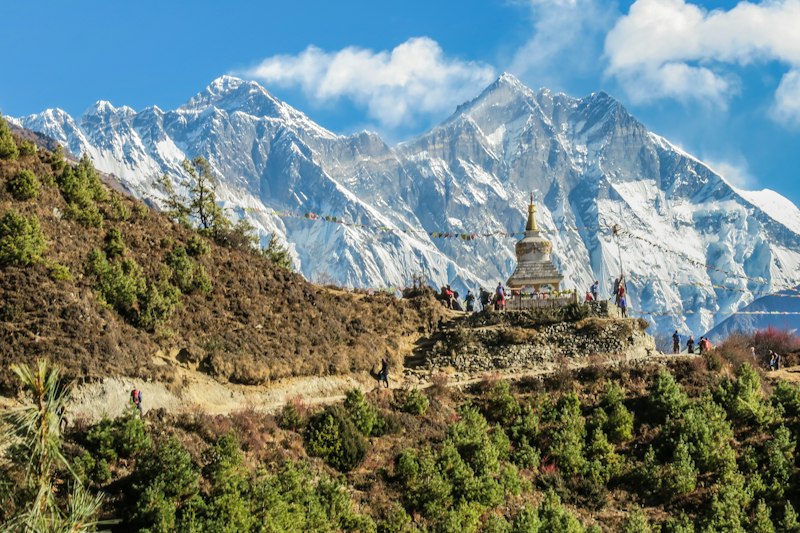
- Enjoy breathtaking panoramic views of Mount Everest, Lhotse, Nuptse, Ama Dablam, Thamserku, and other Himalayan giants.
- Experience the thrilling mountain flight to Lukla, one of the most scenic and adventurous airports in the world.
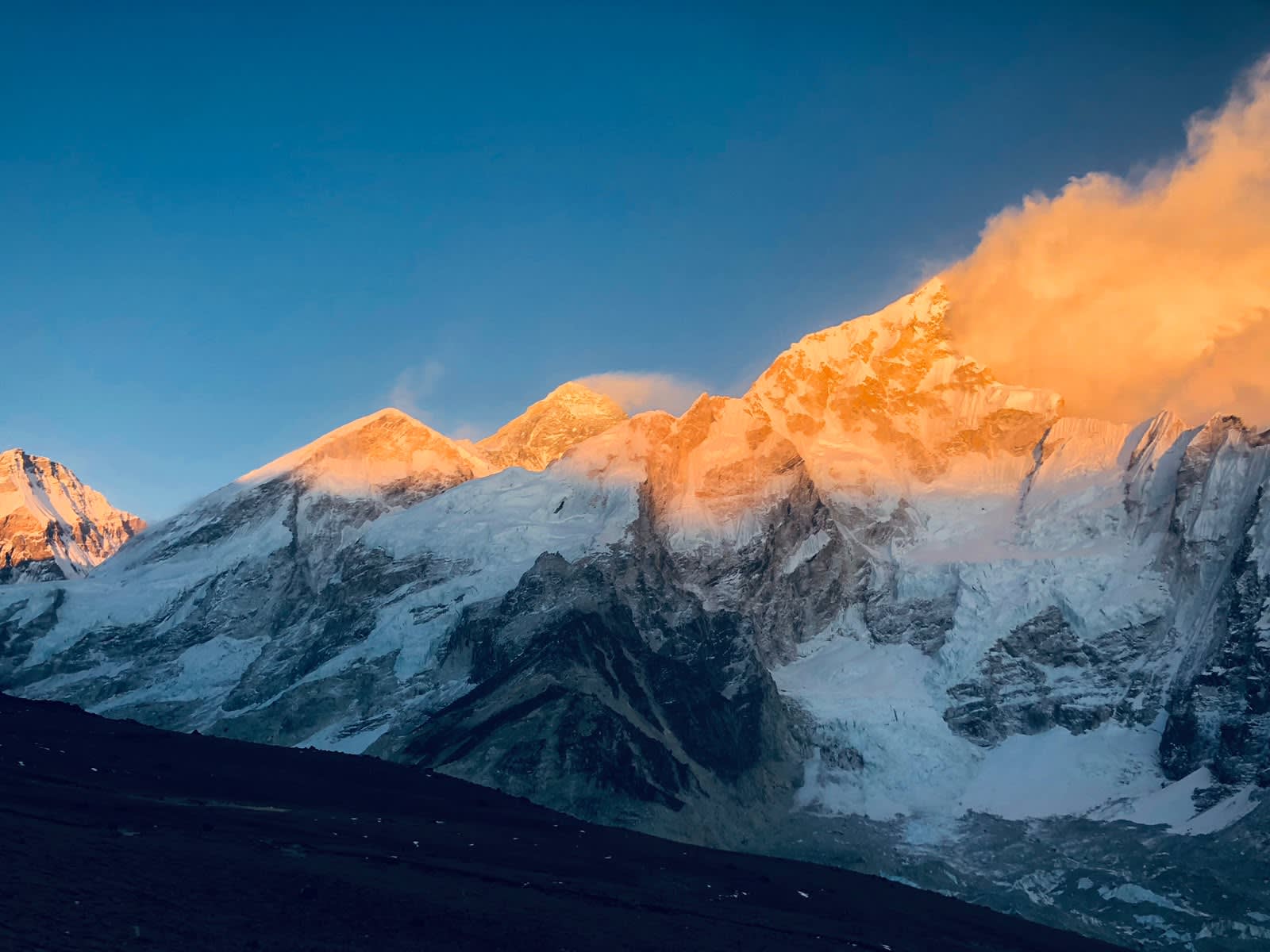
- Hike to Kala Patthar (5,545m), the best viewpoint for sunrise and close-up views of Mount Everest.
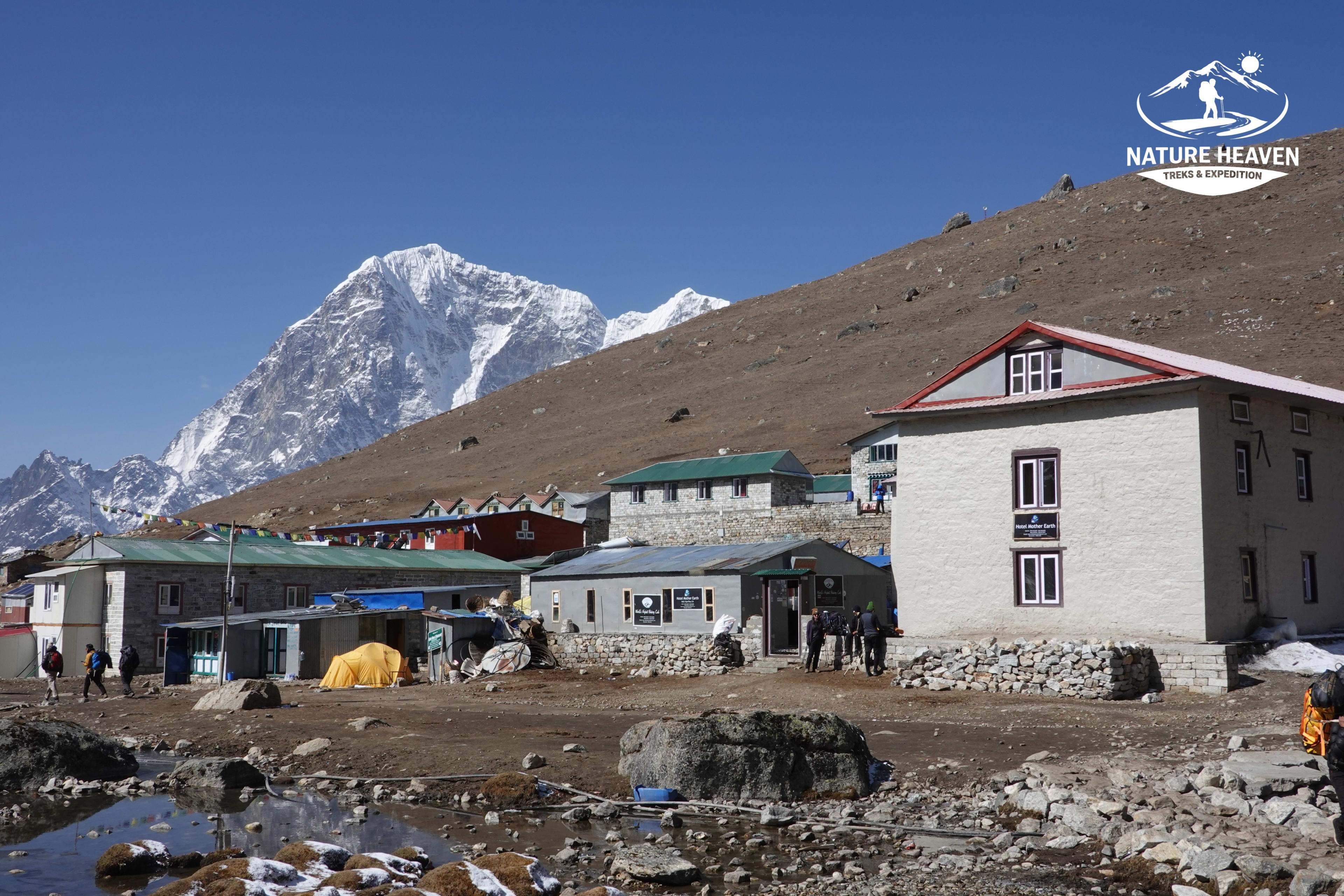
- Explore the vibrant Sherpa villages of Namche Bazaar, Tengboche, Dingboche, and Lobuche.
- Visit the iconic Tengboche Monastery, the largest and most important Buddhist monastery in the Everest region.
- Walk through the stunning Sagarmatha National Park, a UNESCO World Heritage Site rich in flora and fauna.
- Cross spectacular suspension bridges decorated with colorful prayer flags above deep Himalayan valleys.
- Witness the dramatic Khumbu Glacier and Khumbu Icefall, famous landmarks of Everest expeditions.
- Immerse yourself in authentic Sherpa culture, traditions, and warm Himalayan hospitality.
- Discover pristine mountain landscapes, alpine forests, glacial rivers, and high-altitude wilderness.
- Stay in traditional teahouses and experience local mountain life during your Nepal trekking adventure.
- Capture unforgettable photographs of snow-capped peaks, Himalayan sunrises, and Everest Base Camp itself.
- Complete one of the world's most iconic trekking adventures and achieve a lifetime bucket-list accomplishment.
Everest Base Camp Trek Overview
Everest Base Camp Trek (EBC Trek) is one of the most iconic and breathtaking trekking adventures in the world, located in the heart of the Khumbu region of Nepal. This legendary journey takes you to the base of the world’s highest peak, Mount Everest (8,848.86m), offering spectacular Himalayan landscapes, rich Sherpa culture, and unforgettable mountain experiences.
The Everest Base Camp Trek in Nepal is perfect for adventure seekers who want to explore the Himalayas without technical climbing. The trail passes through beautiful Sherpa villages such as Namche Bazaar, Tengboche, Dingboche, and Gorak Shep, providing cultural insights along with dramatic views of Everest, Lhotse, Nuptse, and Ama Dablam.
One of the highlights of the EBC trekking route is reaching Everest Base Camp at 5,364 meters, where climbers begin their expedition to the summit of Everest. Another major attraction is the hike to Kala Patthar (5,545m), the best viewpoint for a close-up sunrise view of Mount Everest.
The Everest Base Camp Trekking package is a bucket-list experience for trekkers worldwide. It combines natural beauty, challenging trails, high-altitude adventure, and the warm hospitality of the Sherpa people. The best seasons for the trek are spring (March–May) and autumn (September–November), when the weather is stable and visibility is clear.
Whether you are searching for Everest Base Camp Trek cost, itinerary, difficulty level, or best time to visit, this trek remains the ultimate Himalayan adventure in Nepal.
Lukla Flight Information
Kathmandu to Lukla Flight.
During the off-peak trekking seasons (January, February, June, July, August, and December), you will take a direct flight from Kathmandu to Lukla. The flight lasts approximately 40 minutes and offers spectacular aerial views of the Himalayan mountains.
Please note that flight schedules are subject to weather conditions, airline operations, and air traffic volume.
Manthali to Lukla Flight
In the peak trekking seasons (March, April, May, September, October, and November), flights to Lukla are typically operated from Manthali Airport in Ramechhap due to increased air traffic at Kathmandu Airport.
To catch the flight, you will depart Kathmandu around 12:30 AM in a shared tourist vehicle for a 4–5 hour drive to Manthali. From there, you will board a scenic 20-minute mountain flight to Lukla.
Optional Helicopter Flight to Lukla
For a more comfortable and time-saving journey, you can choose a direct helicopter flight from Kathmandu to Lukla, avoiding the overnight drive to Manthali.
The helicopter flight provides breathtaking views of the Himalayas and usually accommodates 3–5 passengers. The cost is approximately USD 550 per person on a shared basis
Everest Base Camp Trek Online Briefing
After receiving your booking deposit and required documents, Nature Heaven Treks and Expedition will arrange a personalized online briefing via WhatsApp and Email. We will explain your trek itinerary, packing list, Everest trekking weather, altitude preparation, and answer all your questions. Our expert team ensures you are fully prepared, confident, and ready for an unforgettable trekking adventure in Nepal.
Everest Base Camp Trek Photo Gallery

Plan Your Everest Base Camp Trek Dates
Pick Your Start Date
Click any date below to select your departure day. The calendar will automatically highlight your full 14-day trip window. Use the arrows to browse months.
Trek Experience Video
Everest Base Camp Trek Itinerary
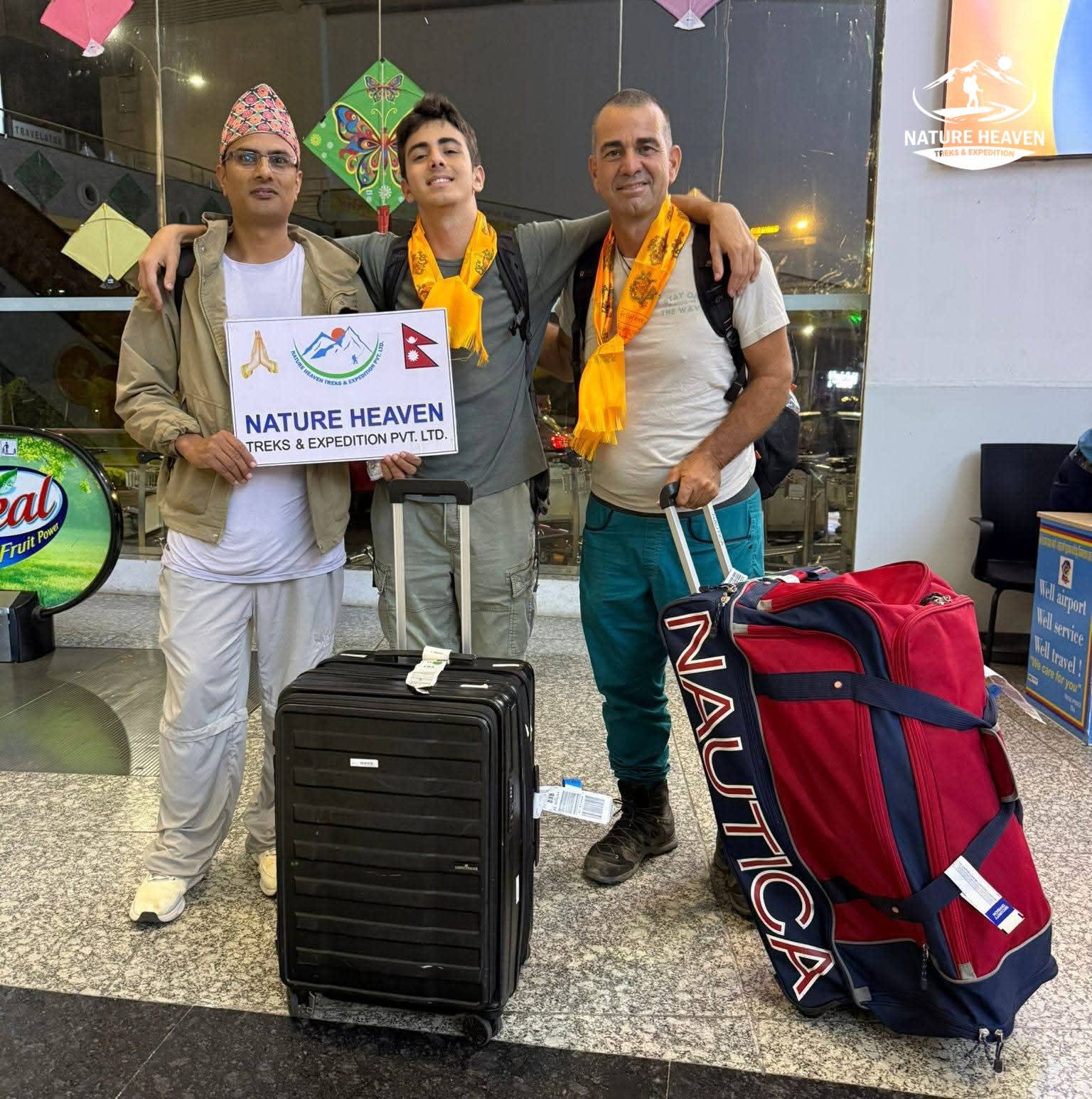
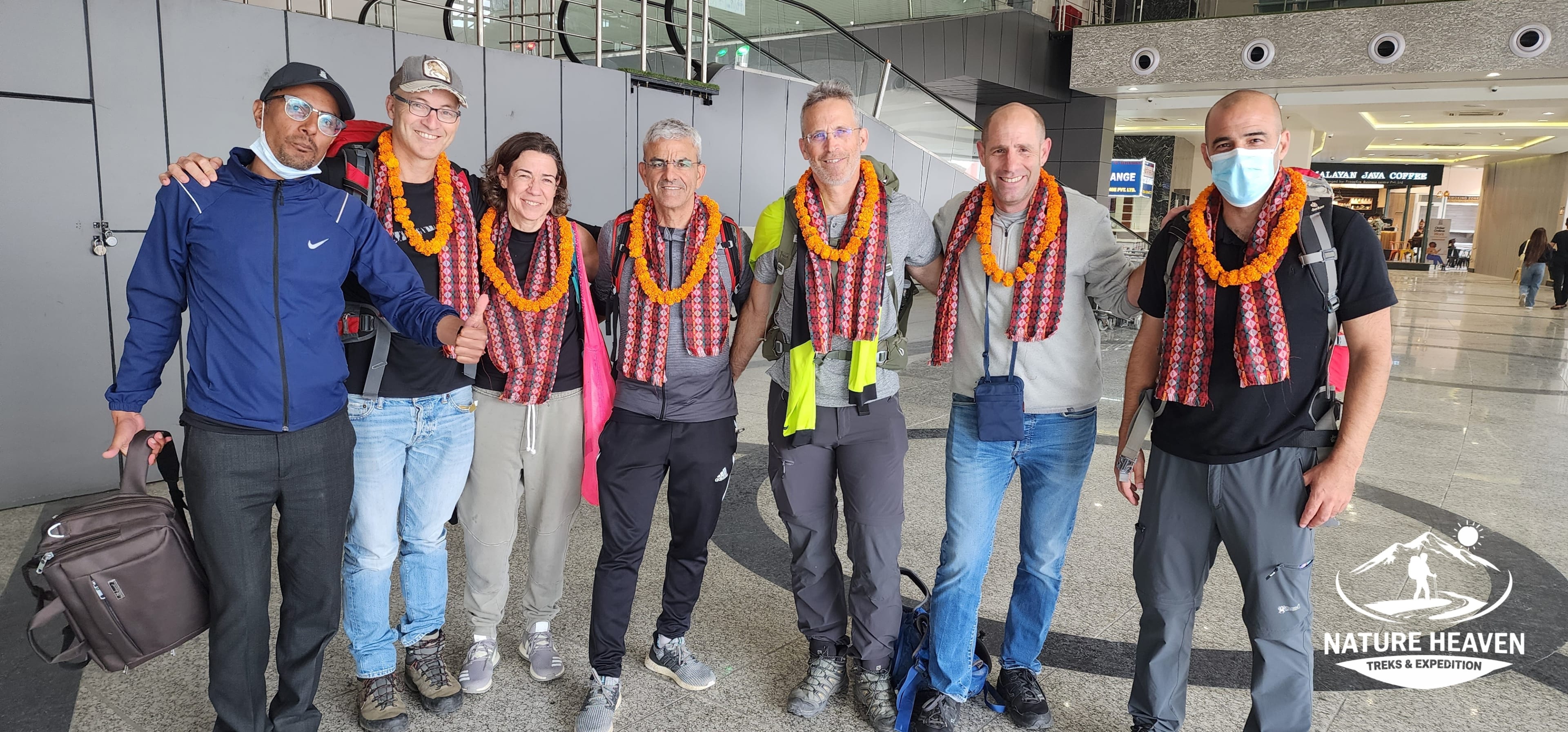
Upon your arrival at Tribhuvan International Airport, Kathmandu (1,300m/4,260ft), a representative from Nature Heaven Treks & Expedition will warmly welcome you and escort you to your hotel in Kathmandu. Our team will assist you with your luggage and help you settle comfortably into your accommodation.
After checking in and taking some time to rest, you will meet your trek leader and fellow team members. Our team will conduct a detailed pre-trek briefing, covering the itinerary, safety guidelines, trekking conditions, necessary preparations, and other important information about your upcoming Everest adventure. This is also an ideal opportunity to ask any questions or discuss any concerns before the trek begins.
You will have time to check your trekking gear, organize your belongings, and arrange any last-minute shopping if needed. If you feel comfortable, you can also explore Thamel, Kathmandu’s vibrant tourist hub, known for its restaurants, cafés, trekking shops, and lively streets.
We recommend arriving in Kathmandu during the morning or daytime whenever possible. An early arrival gives you enough time to rest and recover from your journey, attend the pre-trek briefing, prepare your equipment, and get ready for your early-morning flight to Lukla the following day.




What is Included in This Package
Transportation
- Round-trip flights: Kathmandu/Manthali – Lukla (and return)
- Shared road transfer between Kathmandu and Manthali when required
- Private airport pick-up and drop-off service in Kathmandu
Accommodations
- 13 nights total accommodation during the trek
- 6 nights in Lukla, Phakding (2 nights), and Namche Bazaar (3 nights) in rooms with private attached bathrooms where available
- 7 nights in standard teahouse rooms at Tengboche (2 nights), Dingboche (2 nights), Lobuche, Gorakshep, and Pheriche
Food & Drinks
- Full-board meals (breakfast, lunch, and dinner) during the trek
- 14 breakfasts, 13 lunches, and 14 dinners (one main course per meal)
- Daily seasonal fresh fruits
- Water purification tablets for safe drinking water
- Farewell dinner in Kathmandu after the trek
Guide & Porter
- Licensed, English-speaking trekking guide
- 1 assistant guide for groups above 6 trekkers
- Porter service (1 porter for every 2 trekkers, carrying up to 18 kg total)
Permits & Fees
- Sagarmatha National Park entry permit
- Khumbu Pasang Lhamu Rural Municipality fee
- All applicable local and government taxes
Other Service Inclusions
- Basic medical kit and oxygen saturation (oximeter) monitoring
- Assistance with emergency rescue coordination (covered by your travel insurance)
- Company T-shirt and cap
- Trek completion certificate
- Sleeping bag, down jacket, and duffel bag (shared per two trekkers if needed)
- Free luggage storage at our Kathmandu office during the trek
What is Excluded from This Package
Transportation
- International flight tickets to and from Nepal
Accommodations
- Hotel stays in Kathmandu before and after the trek
- Extra nights in Kathmandu due to early arrival, late departure, or changes in itinerary
Food & Drinks
- All meals (breakfast, lunch, and dinner) in Kathmandu before and after the trek
Guide & Porter Tips
- Tips for guides and porters (recommended but not mandatory)
Personal Expenses & Gear
- Nepal tourist visa on arrival at Tribhuvan International Airport
- Personal travel insurance covering high-altitude trekking and emergency helicopter evacuation (mandatory)
- Snacks, bottled water, tea/coffee, soft drinks, alcohol, and hot showers
- Wi-Fi, phone calls, battery charging fees
- Extra porter charges (if required)
- Souvenirs and shopping items
- Personal trekking clothing and equipment
Other Exclusions
- Any services not specifically mentioned in the “Included” section
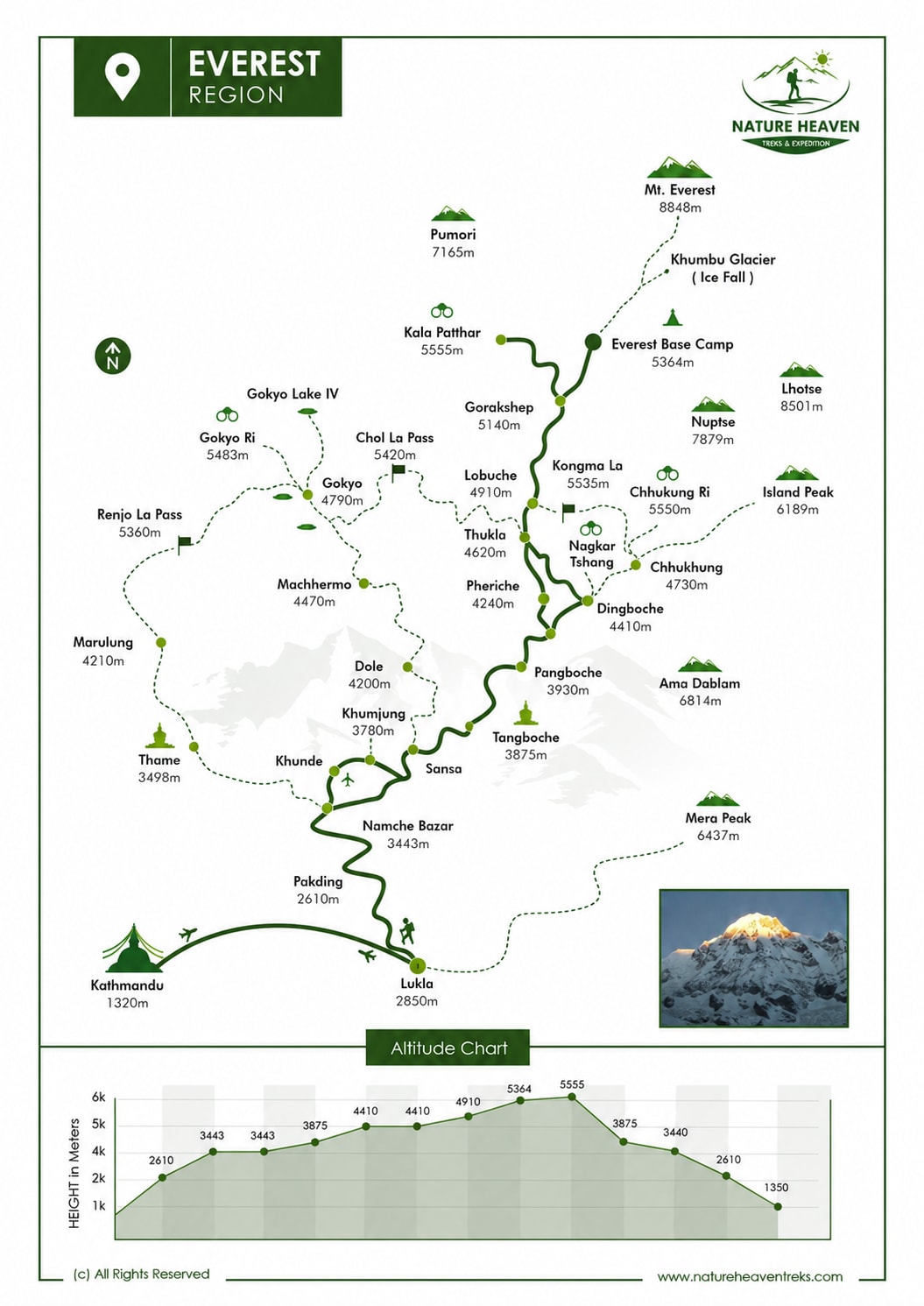
Everest Base Camp Trek Route Map
Required Equipment List
Head & Face Protection
Upper Body Clothing
Handwear
Electronics & Important Documents
Lower Body
Footwear
Backpack, Support & Sleeping Gear
Toiletries & Personal Care Items
Medications & First Aid
Optional Items
Everest Base Camp Trek — Important Trip Info
Arrival in Nepal
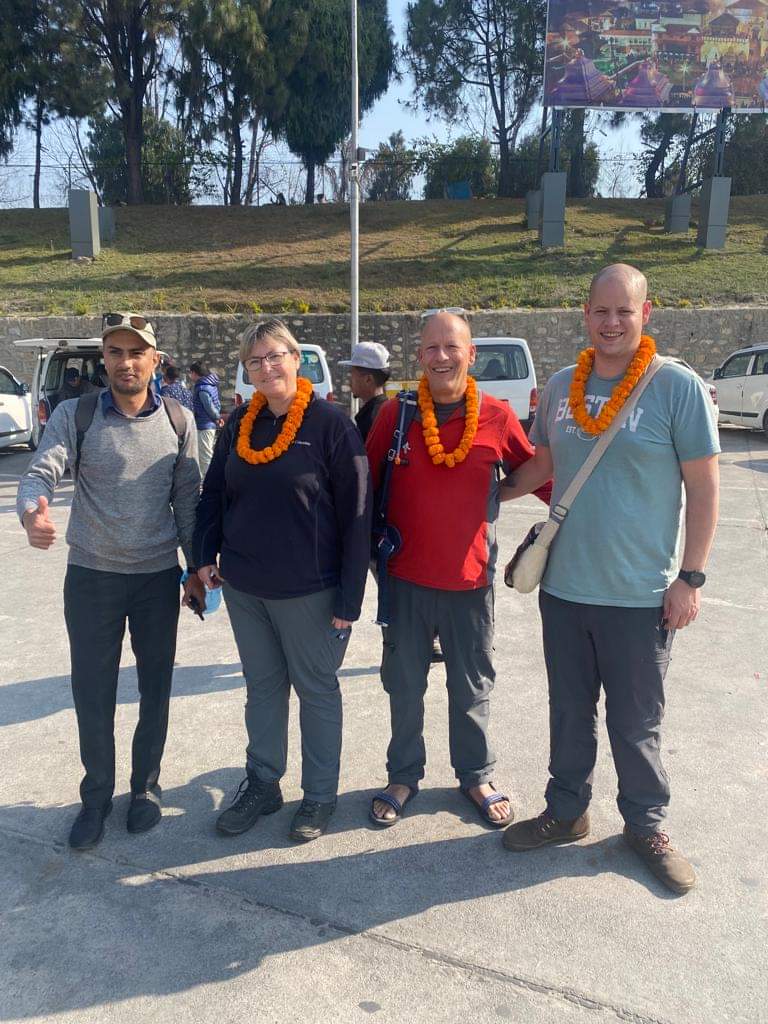
Your Everest Base Camp Trek begins with your arrival in Kathmandu, the bustling capital of Nepal and the gateway to the Himalayas. Most international travelers land at Tribhuvan International Airport, the country's main international airport.
Upon arrival, our team will warmly welcome you and assist with airport transfers, trek documentation, and final trip preparations. Kathmandu offers a fascinating blend of ancient culture, vibrant markets, historic temples, and UNESCO World Heritage Sites, providing the perfect introduction to Nepal before your trekking adventure.
We highly recommend arriving at least one day before your trek departure date. This allows ample time for rest after your international flight, last-minute gear checks, permit verification, and a comprehensive pre-trek briefing to ensure you are fully prepared for your journey to Everest Base Camp.
Starting your adventure in Kathmandu also gives you the opportunity to experience Nepal's rich heritage and mountain culture before heading into the breathtaking Everest region.
Before and after your Everest Base Camp Trek, you will stay in comfortable accommodation in Kathmandu, ranging from budget-friendly guesthouses to boutique and luxury hotels. Most hotels offer modern facilities such as Wi-Fi, private rooms, hot showers, restaurants, luggage storage, and airport transfer services to ensure a comfortable stay.
The most popular area for trekkers is Thamel, Kathmandu’s vibrant tourist hub. Thamel is well known for its trekking gear shops, restaurants, cafés, banks, currency exchange centers, and lively atmosphere. Staying here provides easy access to essential trekking services and cultural attractions before and after your mountain adventure.
Many trekkers choose to arrive in Kathmandu a day or two before the trek to rest, complete final preparations, and explore the city's rich cultural heritage. After returning from Everest Base Camp, a comfortable hotel stay in Kathmandu offers the perfect opportunity to relax, enjoy local cuisine, and celebrate the successful completion of your Himalayan journey.

The history of the Everest Base Camp Trek is closely linked to the exploration of Mount Everest, the world's highest mountain. The Everest region remained largely unknown to the outside world until the early 20th century, when mountaineering expeditions began exploring the Himalayas in search of routes to the summit.
The region gained international recognition following the historic first ascent of Mount Everest on May 29, 1953, by Sir Edmund Hillary of New Zealand and Tenzing Norgay Sherpa of Nepal. Their remarkable achievement inspired adventurers from around the world to visit the Everest region and experience the landscapes, culture, and mountains that made the expedition possible.
As trekking infrastructure gradually developed, trails, teahouses, bridges, and lodges were established throughout the Khumbu region, making the area accessible to trekkers as well as climbers. What was once a route used mainly by mountaineering expeditions evolved into one of the world's most famous trekking journeys.
Today, the Everest Base Camp Trek is considered one of the most iconic trekking adventures on Earth. Every year, thousands of trekkers travel to the Everest region to follow in the footsteps of legendary climbers, experience the unique Sherpa culture, and witness breathtaking views of the Himalayas, including Mount Everest, Lhotse, Nuptse, Ama Dablam, and many other majestic peaks. The trek combines natural beauty, cultural heritage, and a sense of adventure, making it a lifelong dream for outdoor enthusiasts from around the globe.
The Everest region is located in northeastern Nepal within the famous Khumbu Valley, part of the UNESCO-listed Sagarmatha National Park. Home to some of the world's highest peaks, deep valleys, glaciers, and alpine landscapes, the region offers one of the most spectacular mountain environments on Earth.
The geography of the Everest region is dominated by towering Himalayan peaks, glacial rivers, rugged terrain, and high-altitude settlements inhabited by the Sherpa people. As trekkers ascend through the valley, they experience a remarkable transition from lush forests and river gorges to alpine meadows, glacial moraines, and snow-covered mountains.
Major Geographical Highlights
- Mount Everest – 8,848.86 meters (29,031.7 ft), the highest mountain on Earth.
- Lhotse – 8,516 meters, the fourth-highest mountain in the world.
- Nuptse – 7,861 meters, forming the western ridge of the Everest massif.
- Ama Dablam – 6,812 meters, renowned for its striking pyramid-shaped peak.
- Khumbu Glacier – One of the highest glaciers in the world, stretching from the slopes of Everest.
- Khumbu Icefall – A constantly shifting section of the glacier and one of the most challenging parts of Everest climbing expeditions.
The region also features pristine rivers, suspension bridges, alpine forests, and traditional Sherpa villages such as Namche Bazaar, Tengboche, Dingboche, and Lobuche. Together, these geographical wonders create an unforgettable trekking experience and showcase the raw beauty of the Himalayan landscape.
Famous Monasteries Along the Everest Base Camp Route
Among the many cultural treasures of the Everest region, Tengboche Monastery is the largest and most significant Buddhist monastery in the Khumbu Valley. Situated at an altitude of 3,867 meters, the monastery is surrounded by breathtaking Himalayan scenery and serves as an important spiritual center for the Sherpa community.
Established in 1916, Tengboche Monastery has long been a place of worship, meditation, and cultural preservation. It attracts both pilgrims and trekkers seeking to experience the region's rich Buddhist heritage while enjoying spectacular mountain views.
Highlights of Tengboche Monastery
- Ancient Buddhist Traditions – Experience centuries-old spiritual practices that remain an integral part of Sherpa life.
- Daily Prayer Ceremonies – Visitors can observe monks performing traditional Buddhist prayers, chants, and rituals.
- Panoramic Everest Views – Enjoy magnificent views of Mount Everest, Ama Dablam, Lhotse, and other Himalayan peaks.
- Sherpa Cultural Heritage – Gain insight into the traditions, beliefs, and lifestyle of the Sherpa people who have called the Khumbu region home for generations.
For many trekkers, a visit to Tengboche Monastery is one of the most memorable cultural experiences on the Everest Base Camp Trek, offering a unique blend of spirituality, history, and awe-inspiring mountain landscapes.

The Everest region is home to some of the world's most impressive glaciers and high-altitude lakes, creating a breathtaking landscape of ice, rock, and crystal-clear water. These natural wonders add to the region's unique beauty and ecological importance.
Khumbu Glacier
Khumbu Glacier is one of the highest glaciers on Earth and among the most remarkable natural attractions of the Everest region. Originating from the slopes of Mount Everest, the glacier stretches through the upper Khumbu Valley and forms a dramatic landscape of ice formations, rocky moraines, and glacial debris.
As trekkers approach Everest Base Camp, they walk alongside sections of the glacier, witnessing firsthand the immense power and beauty of this high-altitude environment. The glacier also feeds many rivers and water systems throughout the region.
Nearby High-Altitude Lakes
The Everest region is dotted with pristine alpine lakes that reflect the surrounding snow-capped peaks and provide stunning photographic opportunities.
- Gokyo Lakes – A spectacular series of turquoise glacial lakes located in the Gokyo Valley, considered among the highest freshwater lake systems in the world.
- Imja Tsho – A beautiful glacial lake formed by the melting of the Imja Glacier near Island Peak.
- Dudh Pokhari – A sacred lake near Tengboche that holds religious significance for local Buddhist communities.
These pristine Himalayan lakes, combined with towering peaks and vast glaciers, contribute to the extraordinary scenery of the Everest region, making it one of the most spectacular mountain destinations in the world.

The Everest Base Camp Trek takes you into the heart of the world's highest mountain range, offering an unforgettable journey through breathtaking landscapes, rich Sherpa culture, and legendary mountaineering history.
Mount Everest – The Highest Mountain on Earth
Mount Everest stands at an official elevation of 8,848.86 meters (29,031.7 feet), making it the tallest mountain on the planet and the ultimate symbol of Himalayan adventure.
Everest Base Camp Elevation
Everest Base Camp is situated at approximately 5,364 meters (17,598 feet). It serves as the starting point for Everest climbing expeditions and is the primary destination for trekkers seeking a close-up experience of the world's highest peak.
Kala Patthar – The Best Everest Viewpoint
Kala Patthar rises to 5,545 meters (18,192 feet) and is widely regarded as the finest viewpoint in the Everest region. From its summit, trekkers enjoy spectacular panoramic views of Mount Everest, Lhotse, Nuptse, Pumori, and the surrounding Himalayan giants.
A Once-in-a-Lifetime Himalayan Adventure
The Everest Base Camp Trek remains one of the world's most iconic trekking experiences. From ancient Buddhist monasteries and traditional Sherpa villages to towering glaciers, turquoise alpine lakes, and awe-inspiring mountain scenery, every step offers a unique adventure. Reaching Everest Base Camp and witnessing sunrise from Kala Patthar are unforgettable moments that make this trek a dream destination for travelers and mountain enthusiasts from around the globe.
Hiring a professional guide is one of the best ways to ensure a safe, enjoyable, and successful Everest Base Camp Trek. Experienced local guides provide expert knowledge of the region, help manage challenges along the trail, and enhance your overall trekking experience.
Benefits of Trekking with a Professional Guide
- Expert Route Navigation – Guides ensure you stay on the correct trail and efficiently manage daily trekking schedules.
- Altitude Monitoring – They closely monitor your health and recognize early signs of altitude sickness, helping to prevent serious complications.
- Emergency Support – In the event of illness, injury, or adverse weather conditions, guides coordinate immediate assistance and evacuation if necessary.
- Cultural Insights – Learn about the traditions, history, religion, and lifestyle of the Sherpa people and Himalayan communities.
- Logistical Management – Guides assist with accommodation arrangements, transportation, permits, and daily trekking operations, allowing you to focus on enjoying the journey.
With their local expertise, mountain experience, and commitment to your safety, professional guides play a vital role in making the Everest Base Camp Trek more comfortable, informative, and rewarding. Their support helps trekkers confidently explore the spectacular landscapes of the Everest region while gaining a deeper appreciation of its unique culture and heritage.

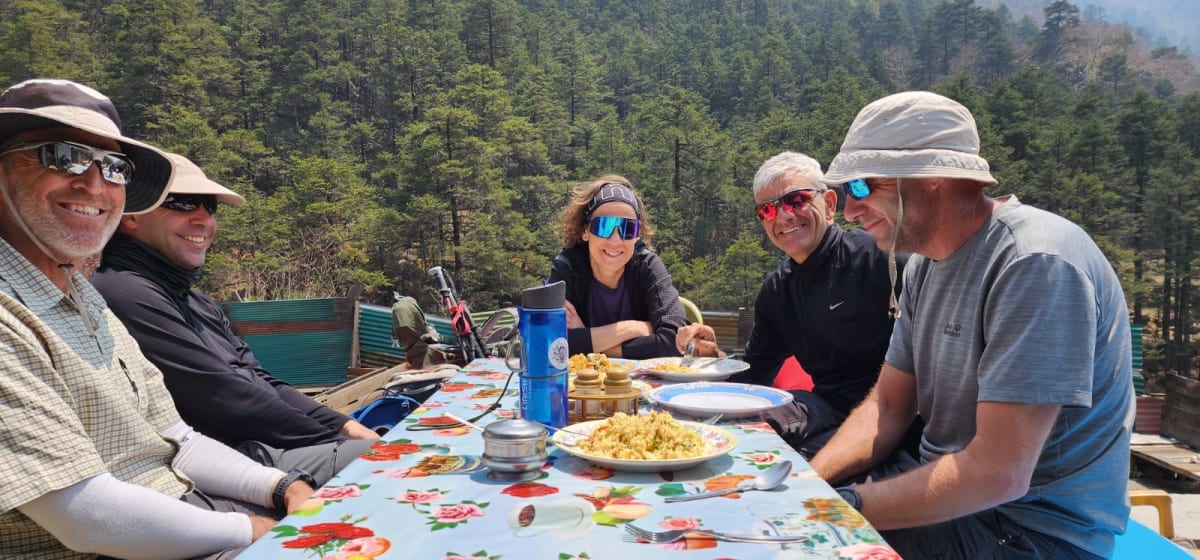
Nutritious and energy-rich meals are readily available throughout the Everest Base Camp Trek, with teahouses offering a variety of local and international dishes to keep trekkers fueled for long days in the mountains.
Popular Food Options
- Dal Bhat (the most common and highly recommended trekking meal)
- Fried rice
- Noodles (vegetable, chicken, or egg)
- Soups (garlic soup is especially popular at high altitude)
- Pasta varieties
- Potatoes (boiled, fried, or mashed)
- Pancakes
- Eggs (boiled, fried, or omelets)
Popular Beverages
- Tea (black, milk, and herbal varieties)
- Coffee
- Hot lemon
- Ginger tea (great for altitude and digestion)
- Hot chocolate
Drinking Water
Safe drinking water is available throughout the trekking route. Trekkers are encouraged to use purified, boiled, or filtered water, which is provided at teahouses along the trail. Staying well-hydrated is essential for proper acclimatization and overall trekking health at high altitude.
With a good variety of meals and warm beverages available at every stop, trekkers can maintain energy, recover well, and enjoy the journey through the Everest region comfortably.
One of the main challenges trekkers face in the Everest region is altitude-related illness, especially Acute Mountain Sickness (AMS), which occurs when the body struggles to adapt to reduced oxygen levels at high elevation.
Common Symptoms of AMS
- Headache
- Nausea or vomiting
- Dizziness
- Fatigue or weakness
- Loss of appetite
- Difficulty sleeping
These symptoms should never be ignored, as they can worsen if ascent continues too quickly.
Prevention and Safety Measures
- Gradual Ascent – Climb slowly to allow your body to adjust to higher altitudes.
- Proper Hydration – Drink plenty of water throughout the day to support acclimatization.
- Adequate Rest – Avoid overexertion and maintain a steady trekking pace.
- Acclimatization Days – Scheduled rest days at key locations help the body adapt safely to altitude changes.
Important Note
Acute Mountain Sickness is preventable in most cases with proper trekking practices. Listening to your body, recognizing early symptoms, and following safe altitude guidelines are essential for a successful and enjoyable Everest Base Camp Trek.
With correct preparation and responsible trekking habits, most trekkers complete the journey safely while fully enjoying the incredible Himalayan experience.
Safety is a top priority while trekking in the Himalayas, and following proper guidelines ensures a smooth and enjoyable journey to Everest Base Camp.
Essential Safety Guidelines
Trek with licensed guides – Always travel with experienced, certified guides for safety, navigation, and support.
Stay hydrated – Drink plenty of water throughout the day to help your body adjust to high altitude conditions.
Maintain a steady pace – Walk slowly and consistently to conserve energy and reduce the risk of altitude sickness.
Follow acclimatization schedules – Respect planned rest days to allow proper adaptation to higher elevations.
Avoid alcohol at high altitude – Alcohol can increase dehydration and worsen symptoms of altitude sickness.
Report symptoms immediately – Inform your guide right away if you experience headache, nausea, dizziness, or any unusual discomfort.
By following these guidelines, trekkers can significantly reduce risks and enjoy a safer, more comfortable experience in the Himalayas. Responsible trekking practices are key to successfully completing the Everest Base Camp journey while fully appreciating its natural and cultural wonders.
Proper acclimatization is essential for a safe and successful journey in the Himalayas, as the risk of altitude-related illness increases significantly above 3,000 meters.
Key Acclimatization Stops
Namche Bazaar (3,440m)
Known as the gateway to the Everest region, Namche Bazaar is the most important acclimatization stop on the trek. Trekkers typically spend an extra day here to adjust to the altitude while exploring nearby viewpoints and villages.
Dingboche (4,410m)
Dingboche is the second major acclimatization point before heading into higher, more challenging elevations. It provides trekkers with another essential rest day to adapt to reduced oxygen levels.
The Golden Rule of Acclimatization
The Everest Base Camp Trek follows the internationally recommended principle:
“Climb high, sleep low.”
This means trekking to a higher altitude during the day and returning to a lower elevation to sleep. This technique helps the body gradually adjust to thinner air and reduces the risk of Acute Mountain Sickness.
By respecting acclimatization rules, maintaining a slow pace, and listening to your body, trekkers greatly improve their chances of completing the Everest Base Camp journey safely and comfortably.
The Everest region is widely regarded as one of the safest high-altitude trekking destinations, thanks to its well-established trails, strong trekking infrastructure, and experienced local support systems.
Throughout the journey, trekkers are supported by knowledgeable guides, clearly marked routes, and a dependable network of teahouses that provide food, lodging, and assistance even in remote areas.
Facilities Available in Most Villages
Lodges and Teahouses – Comfortable accommodation with basic amenities for resting and recovering after each trekking day.
Health Posts – Basic medical facilities are available in key villages for first aid and altitude-related health checks.
Communication Services – Mobile networks and satellite communication options are available in many areas for emergency contact and coordination.
Helicopter Evacuation Services – In case of serious illness or injury, emergency helicopter evacuation can be arranged from higher altitudes when necessary.
With proper preparation, guided support, and responsible trekking practices, the Everest Base Camp Trek remains a safe and well-managed adventure, allowing trekkers to focus on the breathtaking landscapes and cultural richness of the Himalayas.
Kathmandu to Lukla Flight.
During the off-peak trekking seasons (January, February, June, July, August, and December), you will take a direct flight from Kathmandu to Lukla. The flight lasts approximately 40 minutes and offers spectacular aerial views of the Himalayan mountains.
Please note that flight schedules are subject to weather conditions, airline operations, and air traffic volume.
Manthali to Lukla Flight
In the peak trekking seasons (March, April, May, September, October, and November), flights to Lukla are typically operated from Manthali Airport in Ramechhap due to increased air traffic at Kathmandu Airport.
To catch the flight, you will depart Kathmandu around 12:30 AM in a shared tourist vehicle for a 4–5 hour drive to Manthali. From there, you will board a scenic 20-minute mountain flight to Lukla.
Optional Helicopter Flight to Lukla
For a more comfortable and time-saving journey, you can choose a direct helicopter flight from Kathmandu to Lukla, avoiding the overnight drive to Manthali.
The helicopter flight provides breathtaking views of the Himalayas and usually accommodates 3–5 passengers. The cost is approximately USD 550 per person on a shared basis
Carrying the right equipment is key to staying comfortable and safe in the ever-changing Himalayan weather:
Sturdy trekking boots that are well broken-in and suited for rocky, uneven trails
Warm down jacket for insulation at high altitudes
Cold-rated sleeping bag designed for Himalayan temperatures
Thermal base layers for warmth, insulation, and moisture management
Trekking poles to reduce knee strain and improve stability on steep terrain
Waterproof jacket and pants to protect against wind, rain, and snow
With proper preparation, physical fitness, and reliable gear, trekkers can confidently handle the challenges of the Himalayas and fully enjoy the unforgettable journey to Everest Base Camp.
To cope with long trekking days and high-altitude conditions, it’s important to build fitness in advance:
Cardiovascular training such as running, cycling, or swimming to improve stamina
Regular hiking practice, ideally with a backpack to simulate real trekking load
Strength training focusing on legs, core, and back for better stability on steep and uneven terrain
Endurance workouts involving longer-duration activities to prepare for multiple consecutive trekking days
Proper physical preparation helps ensure a safer, smoother, and more enjoyable trekking experience in the Himalayas.
The Everest region experiences strong seasonal variations due to its high-altitude Himalayan environment. Weather conditions can change quickly, so proper preparation is essential for a safe and enjoyable trek.
Spring (March–May)
- Clear mountain views
- Blooming rhododendron forests along the trail
- Moderate and comfortable daytime temperatures
- One of the most popular trekking seasons
Autumn (September–November)
- Stable and dry weather conditions
- Excellent visibility of Himalayan peaks
- Ideal trekking temperatures
- Peak season for Everest Base Camp Trek
Winter (December–February)
- Very cold temperatures, especially at higher altitudes
- Fewer trekkers on the trail
- Snow-covered landscapes offering dramatic scenery
- Some lodges may have limited services
Monsoon (June–August)
- Heavy rainfall in lower elevations
- Lush green hills and vibrant landscapes
- Cloudy conditions with limited mountain views
- Occasional flight delays and trail disruptions
Overall, the best trekking conditions are during spring and autumn when the weather is most stable, visibility is excellent, and trail conditions are safest for reaching Everest Base Camp.
The official currency of Nepal is the Nepalese Rupee (NPR), which is used throughout the Everest region for all local transactions.
Useful Payment Tips
Carry sufficient cash from Kathmandu – It is important to withdraw and exchange money in Kathmandu before starting the trek, as ATM access becomes limited at higher altitudes.
ATM availability – ATMs are available in Kathmandu and in some trekking hubs like Namche Bazaar, but they may not always be reliable or stocked with cash.
Card payments – Credit and debit cards are accepted in major hotels, restaurants, and travel agencies in Kathmandu, but are rarely accepted in mountain lodges.
Cash-based economy in villages – Remote trekking villages operate almost entirely on cash, so trekkers should always carry enough NPR for accommodation, food, hot drinks, and small purchases along the trail.
Proper financial preparation ensures a smooth trekking experience, allowing you to focus on the journey rather than payment challenges in remote Himalayan areas.
To enter the Everest region, trekkers are required to obtain official permits that help manage conservation efforts and support local communities.
Required Permits
Sagarmatha National Park Entry Permit
This permit is mandatory for all trekkers entering the protected Everest region. It helps support conservation of the national park’s unique Himalayan ecosystem, wildlife, and trails.
Khumbu Pasang Lhamu Rural Municipality Permit
This local permit is required for all trekkers traveling within the Khumbu region. The fee contributes directly to local infrastructure development, trail maintenance, and community services.
Important Information
Permit fees are set by the Nepal government and local authorities and may change periodically.
All permits are usually arranged through registered trekking agencies in Kathmandu or directly at official entry points.
Trekkers must carry permits at all times, as they may be checked at multiple points along the route.
Having the correct permits ensures legal entry into the Everest region and supports the conservation of its natural beauty as well as the welfare of local Sherpa communities.
Most international travelers can easily obtain a tourist visa on arrival at Tribhuvan International Airport, making entry into Nepal simple and convenient for Everest Base Camp trekkers.
Available Tourist Visa Options
15 Days Tourist Visa – Ideal for short trips
30 Days Tourist Visa – Most commonly used for trekking itineraries
90 Days Tourist Visa – Best for extended travel in Nepal
Visa Requirements
To obtain a visa on arrival, travelers generally need:
A passport valid for at least 6 months from the date of entry
Recent passport-sized photographs
Completed visa application form (available at the airport or online pre-application system)
Applicable visa fee (payable in major foreign currencies)
Important Notes
Visa extensions are possible in Nepal if travelers wish to extend their stay.
It is recommended to carry some cash in USD or other major currencies for visa payment.
Immigration procedures are usually smooth, but queues can be long during peak trekking seasons.
With simple visa-on-arrival facilities and flexible duration options, Nepal remains one of the most accessible destinations for trekking adventures like the Everest Base Camp Trek.
What our travellers say
“I recently with a group of 5 members went on a 15-day, 10-night trek to Mt. Everest Base Camp with Krishna as my guide together with 3 porters. From start to finish, they took excellent care of me and made sure that safety was always their top priority. They were incredibly attentive and always made sure that I was com…”
Kafle
Senior Himalayan Specialist
“Namaste! I have been guiding in the Himalayas for over 15 years. Contact me directly to customize your itinerary or check live trail conditions.”
Secure Booking System
Your checkout session is secure and encrypted by 256-bit SSL. Associated with TAAN, KEEP, NMA, and registered with Nepal Tourism Board.