


Upper Mustang Trek Highlights
- Explore Lo Manthang, the legendary walled capital of the former Kingdom of Lo, often called the “Last Forbidden Kingdom.”
- Obtain the special Upper Mustang Restricted Area Permit to access one of the last preserved Tibetan Buddhist cultures in the Himalaya.
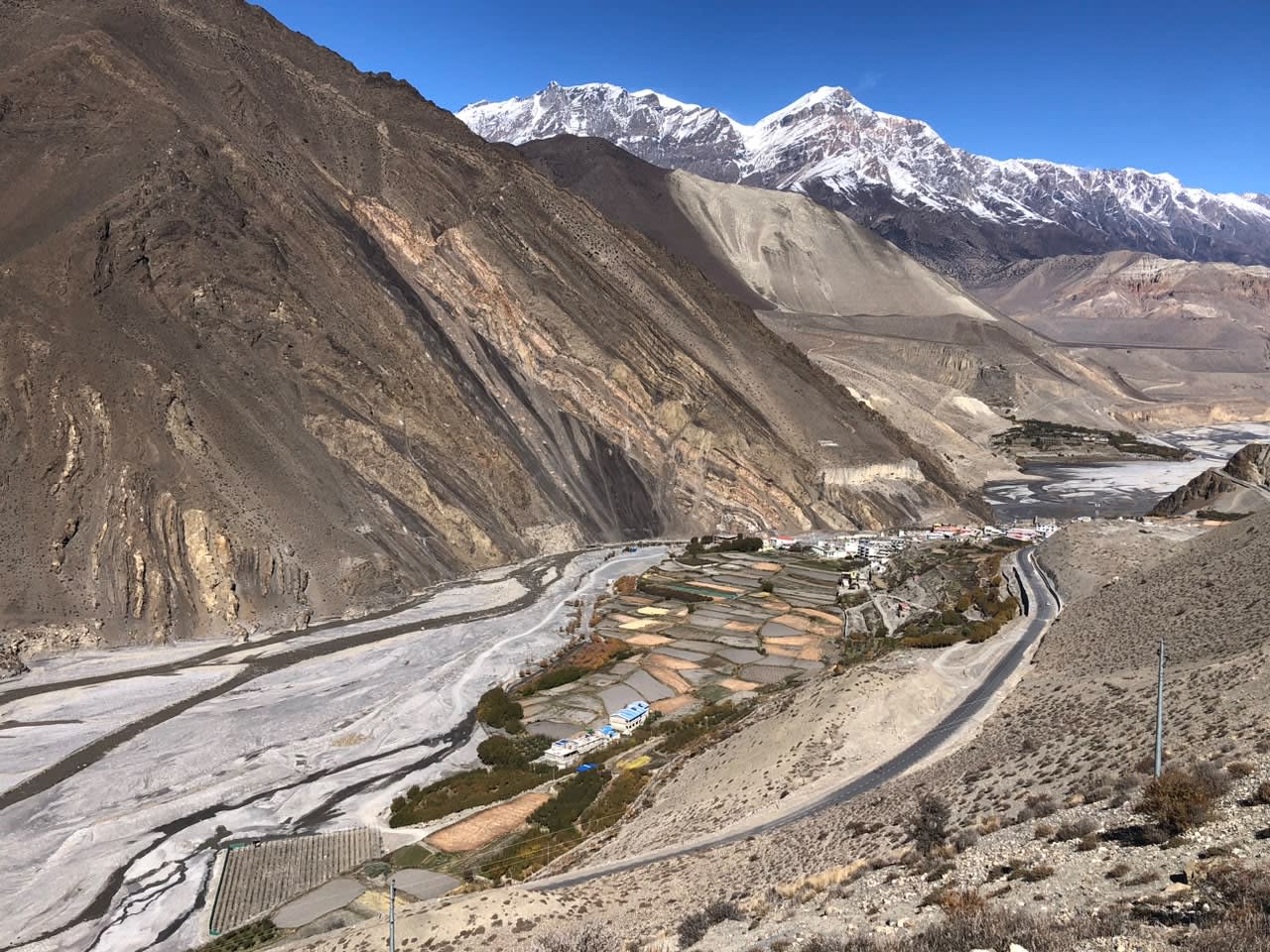
- Trek through a dramatic high-altitude desert landscape of eroded cliffs, deep canyons, and colorful rock formations in the rain shadow of Annapurna and Dhaulagiri.
- Visit ancient cliffside caves and monasteries near Chhoser, some believed to be over 2,000 years old.
- Discover the historic villages of Chele, Syangboche, Ghami, and Tsarang, each with its own monasteries, fortresses, and traditions.
- Walk past the longest mani wall in Mustang near Ghami, carved with centuries-old Buddhist prayers.
- Explore Tsarang, the second-largest settlement in Upper Mustang, home to a five-story dzong and a striking red 16th-century monastery.
- Tour the royal palace, ancient city walls, and the renowned Jampa, Thubchen, and Chode monasteries of Lo Manthang.
- Cross dramatic high passes including Taklam La, Yamda La, Nyi La, and Charang La, with sweeping Himalayan views.
- Enjoy stunning views of Nilgiri, Tilicho, Annapurna I, Bhrikuti, and Damodar Kunda along the route.
- Cross into Kagbeni, the official gateway to Upper Mustang, on the ancient salt-trading route to Tibet.
- Experience a region only opened to foreign trekkers in 1992, still visited by fewer than a thousand trekkers each year.
- Immerse yourself in a living Tibetan Buddhist culture, virtually unchanged by the passage of time.
Upper Mustang Trek Overview
The Upper Mustang Trek is a journey into one of the most remote and culturally preserved corners of the Himalaya, the former Kingdom of Lo. Lying in the rain shadow of the Annapurna and Dhaulagiri ranges on the border with Tibet, Upper Mustang remained closed to foreign visitors until 1992 and remains a restricted area today, helping to preserve its ancient Tibetan Buddhist culture and dramatic, untouched landscapes.
The adventure begins with a scenic drive to Pokhara, followed by a short mountain flight to Jomsom and a trek to the medieval village of Kagbeni, the official gateway to Upper Mustang. From here, the trail follows the old salt-trading route north through Chele, Syangboche, and Ghami, crossing high passes such as Taklam La, Yamda La, and Nyi La, with the landscape becoming ever more dramatic: eroded red cliffs, wind-carved canyons, and ancient cave dwellings cut into the rock face.
The route continues to Tsarang, the historic second capital of Lo with its imposing dzong and richly decorated monastery, before finally reaching Lo Manthang, the walled capital of the Kingdom of Lo. Here, trekkers spend two nights exploring the royal palace, the ancient city walls, and the renowned Jampa, Thubchen, and Chode monasteries, with an optional excursion to the sacred sky caves of Chhoser.
To complete the 11-day itinerary within a manageable timeframe, the return journey from Lo Manthang to Jomsom is made by jeep along the same valley, followed by a flight back to Pokhara and a return drive to Kathmandu. This trek showcases an extraordinary blend of stark desert scenery, deep Tibetan Buddhist heritage, and a true sense of having reached one of the last forbidden kingdoms of the Himalaya. The best seasons are spring (March-May) and autumn (September-November), though as a rain-shadow region, Upper Mustang can also be visited during the summer monsoon when other regions are clouded over.
Whether you are searching for the Upper Mustang Trek cost, itinerary, permit requirements, or best season to visit, this trek offers one of the most culturally rich and visually striking adventures in the Nepal Himalaya.
Transportation & Trek Access Information
Drive to Pokhara and Fly to Jomsom
The trip begins with a scenic 6-7 hour drive from Kathmandu to Pokhara, followed by a short 20-25 minute mountain flight to Jomsom (2,743m), gateway to the Mustang district. Flights operate only in the morning due to strong afternoon winds in the Kali Gandaki valley.
Returning from Lo Manthang
To keep this itinerary within 11 days, the return journey from Lo Manthang to Jomsom is made by private jeep along the same valley road, a journey of approximately 7-8 hours. From Jomsom, a return flight to Pokhara and a drive or flight back to Kathmandu complete the trip. Trekkers with extra time may prefer to walk back via an alternative eastern route, which can be arranged as a 13-14 day extension.
Restricted Area Trekking
Upper Mustang is a restricted area, and all trekkers must travel with a licensed guide and a minimum group size of two, alongside the special Restricted Area Permit.
Upper Mustang Trek Photo Gallery


Plan Your Upper Mustang Trek Dates
Pick Your Start Date
Click any date below to select your departure day. The calendar will automatically highlight your full 13-day trip window. Use the arrows to browse months.
Upper Mustang Trek Itinerary
Welcome to Nepal! Upon your arrival at Tribhuvan International Airport in Kathmandu, you will be warmly welcomed by the Nature Heaven Trek team. Our representative will assist you at the airport and arrange a comfortable transfer to your hotel.
After checking into the hotel, you will have time to rest and recover from your journey. Depending on your arrival time, you may take a short walk around the nearby area and enjoy your first impressions of Kathmandu's lively streets, traditional architecture, temples, and vibrant cultural atmosphere.
Later, you will receive a briefing about your upcoming itinerary, including the day's arrangements, transportation, sightseeing plans, and any preparations required for the journey ahead.
Spend a relaxing evening at the hotel and enjoy your first night in Nepal, preparing for the exciting experiences to come.
What is Included in This Package
Transportation
- Private vehicle transfer from Kathmandu to Pokhara and back (or domestic flight as preferred)
- Pokhara to Jomsom and Jomsom to Pokhara flights
- Private jeep transfer from Lo Manthang back to Jomsom
- Private airport pick-up and drop-off service in Kathmandu
Accommodations
- Teahouse and guesthouse accommodation throughout the trek (twin-sharing)
- 2 night’s hotel accommodation in Pokhara on a bed-and-breakfast basis
- 2 night’s hotel accommodation in Kathmandu on a bed-and-breakfast basis (after the trek)
Food & Drinks
- Full-board meals (breakfast, lunch, and dinner) during the trek
- Daily seasonal fresh fruits where available
- Water purification tablets for safe drinking water
- Welcome and farewell dinners in Kathmandu
Guide & Porter
- Licensed, experienced, English-speaking trekking guide (mandatory for this restricted area)
- 1 assistant guide for groups above 8 trekkers
- Porter service (1 porter for every 2 trekkers, carrying up to 18kg total)
Permits & Fees
- Upper Mustang Restricted Area Permit (USD 500 per person for the first 10 days, plus a daily fee thereafter)
- Annapurna Conservation Area Project (ACAP) entry permit
- Trekkers’ Information Management System (TIMS) card
- All applicable local and government taxes
Other Service Inclusions
- Basic medical kit and oxygen saturation (oximeter) monitoring
- Assistance with emergency rescue coordination (covered by your travel insurance)
- Company T-shirt and cap
- Trek completion certificate
- Sleeping bag and down jacket (on a per-trekker basis if needed)
- Free luggage storage at our Kathmandu office during the trek
What is Excluded from This Package
Transportation
- International flight tickets to and from Nepal
Accommodations
- Hotel stays in Kathmandu before the trek
- Extra nights in Kathmandu or Pokhara due to early arrival, late departure, or changes in itinerary
Food & Drinks
- Lunches and dinners in Kathmandu and Pokhara (except the welcome and farewell dinners)
Guide & Porter Tips
- Tips for guides and porters (recommended but not mandatory)
Personal Expenses & Gear
- Nepal tourist visa on arrival at Tribhuvan International Airport
- Personal travel insurance covering high-altitude trekking and emergency helicopter evacuation (mandatory)
- Snacks, bottled water, tea/coffee, soft drinks, alcohol, and hot showers
- Wi-Fi, phone calls, and battery charging fees
- Extra porter charges (if required)
- Souvenirs and shopping items
- Personal trekking clothing and equipment
Other Exclusions
- Any services not specifically mentioned in the “Included” section
Upper Mustang Trek — Important Trip Info
Your Upper Mustang Trek begins with your arrival in Kathmandu, the bustling capital of Nepal and the gateway to the Himalayas. Most international travelers land at Tribhuvan International Airport.
Upon arrival, our team will warmly welcome you and assist with airport transfers, trek documentation, and final preparations. Because of the special permit required for this restricted region, we recommend arriving at least two days before departure to allow time for permit processing, rest, and a thorough pre-trek briefing.
Before and after your trek, you will stay in comfortable hotels in Kathmandu and Pokhara. In Kathmandu, most trekkers stay in Thamel, the lively tourist hub; in Pokhara, the Lakeside area beside Phewa Lake offers a relaxed setting with beautiful mountain reflections. During the trek itself, accommodation is in simple teahouses and guesthouses, with the most comfortable lodges found in Jomsom, Kagbeni, and Lo Manthang.
Upper Mustang, historically known as the Kingdom of Lo, was an independent kingdom closely tied to Tibet for centuries, founded in the late 14th century by Ame Pal, who built the walled capital of Lo Manthang. The kingdom thrived as a key staging point on the salt-trading route between Tibet and the lowlands of Nepal, and its royal lineage continued in a largely ceremonial role until Nepal’s federal republic was established in 2008.
Closed to foreign visitors until 1992, Upper Mustang remains a restricted area today, a policy that has helped preserve its ancient Tibetan Buddhist culture, architecture, and traditions in a way rarely seen elsewhere in the Himalaya. Still visited by only a few hundred trekkers each year, the region offers an exceptionally authentic glimpse into a living Tibetan Buddhist kingdom.
Upper Mustang lies in the rain shadow of the Annapurna and Dhaulagiri ranges, bordering the Tibetan plateau to the north. The landscape is a high-altitude desert of eroded cliffs, deep canyons, colorful rock formations, and ancient cave dwellings, in stark contrast to the greener valleys found elsewhere in Nepal.
Major Geographical Highlights
• Lo Manthang – 3,840 meters, the walled capital of the former Kingdom of Lo.
• Charang La and Nyi La passes – among the trek’s highest crossings, at 3,870m and 4,010m respectively.
• Chhoser Sky Caves – ancient cliffside caves north of Lo Manthang, some believed to be over 2,000 years old.
• Ghami Mani Wall – the longest prayer wall in the Mustang region, carved with centuries-old Buddhist mantras.
• Kali Gandaki Gorge – one of the deepest river gorges on Earth, forming the southern approach to Upper Mustang.
Lo Manthang, enclosed within ancient mud walls, is home to the former royal palace and three of the region’s most important monasteries: Jampa Lhakhang, one of the oldest in Mustang; Thubchen Gompa, an impressive assembly hall with striking murals; and Chode Gompa, the city’s main monastery. The city also hosts the annual Tiji Festival, a colorful three-day celebration of masked dances performed by monks symbolizing the victory of good over evil.
A licensed guide is a legal requirement for trekking in this restricted region, and is essential for permits, navigation, and cultural interpretation.
• Permit and Checkpost Management – guides handle the Restricted Area Permit and checkpost formalities along the route.
• Route Navigation – guides know the network of trails, passes, and jeep roads through this remote high-desert terrain.
• Cultural Insights – learn about the Tibetan Buddhist traditions, monasteries, and history of the Kingdom of Lo.
• Altitude Monitoring – they monitor your health on the higher passes and around Lo Manthang.
• Logistical Management – guides handle accommodation, transport, and daily operations throughout the trek.
Teahouses throughout Upper Mustang serve a mix of Nepali, Tibetan, and simple international dishes, with the variety generally narrowing in the more remote villages north of Chele.
Popular Food Options
• Dal Bhat, the most common and recommended trekking meal
• Tibetan bread, momos, and noodle soups (thukpa)
• Potatoes, eggs, and seasonal vegetables
• Tea, coffee, and butter tea in the Tibetan style
Safe drinking water is available via boiled, filtered, or purified sources throughout the trek, supported by purification tablets.
The cumulative effect of several days above 3,500m, combined with the high passes en route to Lo Manthang, can cause mild altitude symptoms.
Common Symptoms of AMS
• Headache
• Nausea
• Fatigue
• Dizziness
• Loss of appetite
A gradual ascent profile, proper hydration, and the rest day in Lo Manthang help reduce these risks.Although altitudes on this trek are more moderate than on high-pass treks elsewhere in Nepal,
Spring (March-May) and Autumn (September-November)
• Clear mountain views
• Comfortable daytime temperatures
• The most popular seasons for this trek
Monsoon (June-August)
• Upper Mustang lies in a rain shadow, so it stays largely dry even during monsoon
• A good alternative when other Nepal trekking regions are clouded over
Winter (December-February)
• Cold, with strong winds, especially in the afternoons
• Some high passes may be affected by snow
Trekkers require a Restricted Area Permit (USD 500 per person for the first 10 days, with an additional daily fee for extensions), an Annapurna Conservation Area Project (ACAP) permit, and a TIMS card. The Restricted Area Permit can only be obtained through a registered trekking agency, requires a minimum of two trekkers per group, and must be accompanied by a licensed guide at all times.
• Sturdy, well broken-in trekking boots suited to dry, rocky, and sometimes windy trails
• Warm jacket, fleece, and thermal layers for cold mornings and evenings
• A strong windproof jacket and a dust mask or buff, as Upper Mustang is notably dry and windy
• Sunglasses, sunscreen, and a wide-brimmed hat for the exposed, high-altitude desert terrain
• A lightweight down jacket for the cooler evenings in Lo Manthang
The Upper Mustang Trek is rated moderate, with several consecutive days of walking at altitudes between 3,000m and 4,000m. Regular cardiovascular training and hiking practice for several weeks before departure will help you enjoy the trek comfortably.
What our travellers say
“The Manaslu trek is incomparable. It's suitable as a first trek in the Himalayas — plenty of time for acclimatisation and such captivating views that spending time on "altitude sickness" would be a pity. And it's a special pleasure to walk with Krishna. He is a knowledgeable, reliable and brave guide, and a very pleasa…”
Kafle
Senior Himalayan Specialist
“Namaste! I have been guiding in the Himalayas for over 15 years. Contact me directly to customize your itinerary or check live trail conditions.”
Secure Booking System
Your checkout session is secure and encrypted by 256-bit SSL. Associated with TAAN, KEEP, NMA, and registered with Nepal Tourism Board.