

Everest Base Camp Trek with Chola Pass Gokyo Trek Highlights
- Traverse the iconic Chola Pass (5,420m), linking the serene Gokyo Valley directly to the bustling Everest Base Camp route.
- Reach Everest Base Camp (5,364m) and stand up close to the dramatic Khumbu Icefall.
- Hike to the summit of Kala Patthar (5,555m) for world-famous, close-up panoramic views of Mount Everest at sunrise.
- Discover the emerald-green, high-altitude Gokyo Lakes, nestled amidst towering Himalayan giant peaks.
- Ascend Gokyo Ri (5,357m) to enjoy breathtaking vistas of four 8,000-meter peaks: Everest, Lhotse, Makalu, and Cho Oyu.
- Trek alongside the Ngozumpa Glacier, the longest glacier in the entire Himalayan range.
- Visit ancient Sherpa settlements including Namche Bazaar, Khumjung, and Tengboche to experience mountain culture.
- Explore Tengboche Monastery, the largest and most spiritually significant Buddhist monastery in the Khumbu region.
- Walk through the biodiverse Sagarmatha National Park, a UNESCO World Heritage Site filled with rare flora and fauna.
- Experience a complete high-altitude circuit that combines classic Everest trails with pristine, less-crowded alpine wilderness.
Everest Base Camp Trek with Chola Pass Gokyo Trek Overview
The Everest Base Camp Trek with Chola Pass Gokyo Trek – 19 Days is an ultimate Himalayan expedition designed for adventurers seeking a complete and varied high-altitude experience in the Khumbu region. Combining the classic route to Everest Base Camp with the tranquil beauty of the Gokyo Valley and the thrill of crossing the Chola Pass, this journey delivers unmatched mountain scenery. The trek takes you deep into the heart of Sagarmatha National Park, showcasing dramatic glaciers, turquoise lakes, high alpine passes, and legendary Sherpa culture.
Your journey begins with a thrilling scenic flight from Kathmandu (or Ramechhap, depending on the season) to Lukla, the primary gateway to the Khumbu region. From Lukla, the trail follows the Dudh Koshi River, passing through traditional Sherpa villages, crossing suspension bridges decorated with prayer flags, and ascending through pine and rhododendron forests. Key stops like Namche Bazaar provide essential acclimatization opportunities while offering insight into local life, trading history, and mountain heritage.
As you venture further, the itinerary directs you toward the striking Gokyo Lakes, a collection of pristine glacial lakes set against towering snow-capped peaks. Climbing Gokyo Ri rewards you with panoramic views of Mount Everest, Lhotse, Makalu, and Cho Oyu. You will also trek past the massive Ngozumpa Glacier, experiencing the raw, unyielding power of high-altitude Himalayan geography before preparing for the technical and physical highlight of the circuit: navigating the Chola Pass.
Crossing the high-altitude Chola Pass (5,420m) is a challenging yet deeply rewarding endeavor that requires steady footing across rock, ice, and snow. Bridging the gap between the Gokyo Valley and the main Everest trail, the pass opens into the glacial valleys leading toward Dzongla and Lobuche. This crossing gives trekkers an authentic sense of alpine mountaineering while keeping the route continuously dynamic and engaging.
Reaching Everest Base Camp (5,364m) brings you face-to-face with the legendary Khumbu Icefall and the starting point for summit expeditions. An early morning ascent of Kala Patthar (5,555m) provides the ultimate view of Mount Everest's majestic south face illuminated by the morning sun. The return journey takes you back through landmark villages like Tengboche, home to the region's famous monastery, allowing time to reflect on your physical and spiritual journey through the mountains.
Designed for physically fit trekkers with a spirit of adventure, this 19-day itinerary provides proper acclimatization days to ensure safety and comfort at high elevations. With its blend of technical high-pass crossing, remote alpine lake exploration, and classic base camp trekking, the Everest Base Camp with Chola Pass Gokyo Trek stands as one of Nepal’s most complete and gratifying mountain adventures.
Kathmandu / Ramechhap to Lukla Flight
The trek begins with a thrilling domestic flight to Lukla's Tenzing-Hillary Airport, widely known as one of the most famous mountain airstrips in the world. The flight takes approximately 30–40 minutes from Kathmandu (or 15–20 minutes if flying from Manthali Airport in Ramechhap during peak tourist seasons due to air traffic redirection). Passengers enjoy sweeping aerial views of the Himalayan range, lush river valleys, and terraced mountain hillsides.
Lukla to Kathmandu / Ramechhap Flight
At the conclusion of the trek, you board a return flight from Lukla back to Kathmandu or Ramechhap. This flight offers a final bird's-eye view of the Khumbu region's formidable peaks and deep valleys.
Optional Helicopter Charter
For added convenience, comfort, or to avoid weather-related flight delays at Lukla Airport, optional helicopter charter upgrades are available. Helicopters can fly directly between Kathmandu and Lukla or even carry trekkers from higher points on the trail, such as Gorak Shep or Namche Bazaar, back to Kathmandu.
Everest Base Camp Trek with Chola Pass Gokyo Trek Photo Gallery


Plan Your Everest Base Camp Trek with Chola Pass Gokyo Trek Dates
Pick Your Start Date
Click any date below to select your departure day. The calendar will automatically highlight your full 19-day trip window. Use the arrows to browse months.
Everest Base Camp Trek with Chola Pass Gokyo Trek Itinerary
Welcome to Nepal! Upon your arrival at Tribhuvan International Airport in Kathmandu, located at an altitude of 1,300m (4,260ft), our representative from Nature Heaven Trek will warmly welcome you at the airport and assist you with your transfer to the hotel.
After arriving at the hotel, you can check in, settle into your room, and take some time to rest after your journey. If you feel comfortable, you may also take a short walk around the nearby area and experience the lively atmosphere of Kathmandu.
Your guide will provide a brief introduction to the upcoming itinerary and explain the important details of your trip. You can also use this time to check your trekking equipment and make any necessary preparations.
The rest of the day is free for relaxation. Enjoy your first evening in Nepal, take in the local atmosphere, and get ready for the exciting adventure ahead. Overnight stay in Kathmandu.
What is Included in This Package
Transportion
- Round-trip flights: Kathmandu/Ramechhap – Lukla – Kathmandu/Ramechha
- 15 nights teahouse / lodge accommodation during the trek
- Twin-sharing room allocation throughout the trek
Accommodations
- 3 nights tourist-standard hotel accommodation in Kathmandu on a bed-and-breakfast basis
- 15 nights teahouse / lodge accommodation during the trek
- Twin-sharing room allocation throughout the trek
Food and Drinks
- Full-board meals (breakfast, lunch, and dinner) during the trekking days
- Fresh seasonal fruit after dinner during the trek
- Tea or coffee served with main meals on the trail
- Welcome and farewell dinners in Kathmandu
Guide & Porter
- Government-licensed, English-speaking, experienced high-altitude mountain guide
- Assistant guide(s) for larger group sizes
- Porters to carry luggage (1 porter per 2 trekkers, max limit 18–20kg per pair)
- All staff insurance, salary, food, accommodation, and equipment
Permits and Fees
- Sagarmatha National Park Entry Permit
- Pasang Lhamu Rural Municipality Local Entry Fee
- Trekker Information Management System (TIMS) card / Local registration
- All local government taxes and service charges
Safety and Support
- Comprehensive first-aid medical kit carried by the guide
- Pulse oximeter to monitor oxygen levels and heart rates daily
- Emergency rescue coordination service
- Company duffel bag and souvenir trekking map
- Certificate of completion at the end of the trek
What is Excluded from This Package
Transportation
- International airfare to and from Nepal
- Extra transport costs resulting from flight delays or route variations outside the itinerary
Accommodations
- Extra hotel nights in Kathmandu due to early arrival, late departure, or Lukla flight delays.
- Single supplement charges for individual rooms (if requesting private single accommodation rather than twin-sharing).
- Additional lodge or teahouse stay expenses outside the standard 19-day itinerary due to unexpected delays or route alterations.
Food and Drinks
- Lunch and dinner in Kathmandu (except welcome/farewell dinners)
- Bottled water, mineral water, soft drinks, energy drinks, and alcoholic beverages
- Personal snacks, chocolates, and hydration powders
Personal Expenses
- Nepal entry tourist visa fees
- Personal travel and medical insurance (must cover high-altitude trekking up to 5,600m and helicopter evacuation)
- Personal trekking gear, clothing, and sleeping bags
- Hot showers, Wi-Fi usage, and device charging fees at mountain teahouses
- Laundry services and personal shopping
Guide and Porter
- Tips for mountain guides, assistant guides, and porters
Other Exclusions
- Costs arising from unexpected events like bad weather, landslides, flight cancellations, or political strikes
- Any other services not specified in the "Included" list
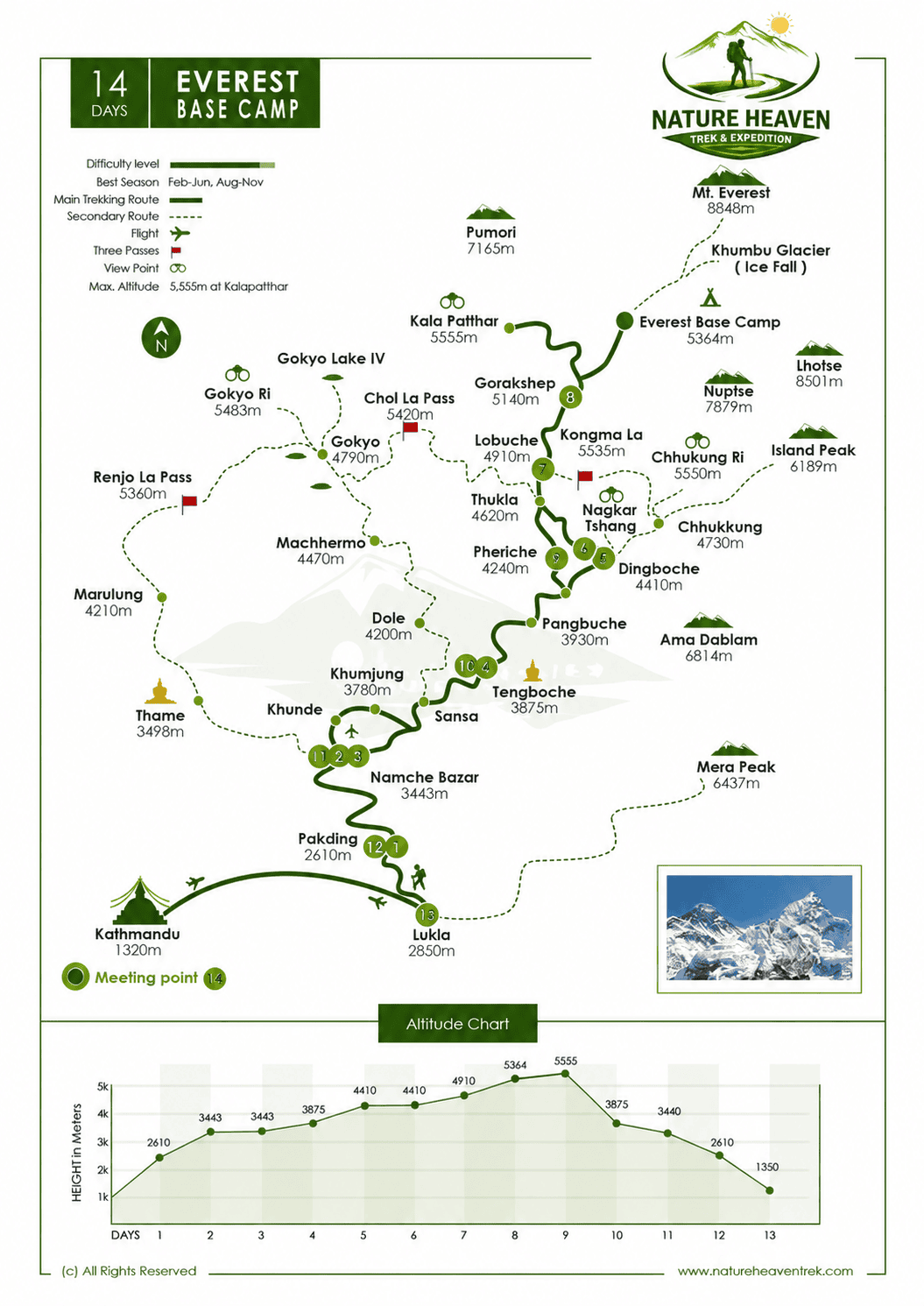
Everest Base Camp Trek with Chola Pass Gokyo Trek Route Map
Required Equipment List
Clothing & Layers
Footwear & Trail Gear
Bags & Sleep System
Head, Hands & Eye Protection
Hardware, Hygiene & Medical
Documents & Administrative Essentials
Snacks, Nutrition & Mental Comforts
Everest Base Camp Trek with Chola Pass Gokyo Trek — Important Trip Info
Your trek begins in Kathmandu, Nepal's capital. Upon landing at Tribhuvan International Airport, our representative will meet you outside the arrival terminal and escort you to your hotel. We advise arriving at least a day before the trek start date to allow ample time for equipment checks, resting, and pre-trip briefings.
In Kathmandu, you will stay in tourist-standard hotels located close to popular areas like Thamel. These hotels feature modern amenities such as attached bathrooms, Wi-Fi, air conditioning, and full-service dining.
The Khumbu region is the historic home of the Sherpa people, who migrated from Tibet several centuries ago. Traditionally reliant on yak herding, high-altitude agriculture, and trans-Himalayan trade, the region shifted dynamically toward mountaineering and trekking following the successful 1953 ascent of Mount Everest by Sir Edmund Hillary and Tenzing Norgay Sherpa.
Teahouses along the trail offer diverse and nourishing meals designed to keep your energy up at high elevations.
Popular Food Options
- Dal Bhat (steamed rice, lentil soup, seasonal vegetable curry, and pickles)
- Noodle Dishes (Thukpa, chow mein, fried noodles)
- Momo (steamed or fried dumplings filled with vegetables or meat)
- Pasta & Pizza (available in larger villages like Namche and Lukla)
- Breakfast Items (Oatmeal, porridge, pancakes, eggs, chapati, Tibetan bread)
Popular Beverages
- Herbal Teas (Lemon, ginger, honey tea, mint tea)
- Milk Tea & Black Tea
- Instant Coffee & Hot Chocolate
Drinking Water
Boiled water or filtered water is available for purchase at teahouses. We recommend using reusable water bottles paired with purification tablets or UV water purifiers to avoid plastic waste.
High elevation introduces the risk of Acute Mountain Sickness (AMS). Acclimatization days and conservative ascent profiles are integrated into the itinerary to keep you safe.
Common Symptoms of AMS
- Persistent headache
- Nausea or vomiting
- Dizziness and lightheadedness
- Loss of appetite and fatigue
- Insomnia or disturbed sleep
Prevention Measures
- Ascend slowly and follow your guide's pace
- Drink 3 to 4 liters of water daily
- Maintain adequate calorie intake
- Avoid alcohol and tobacco products at high altitudes
- Notify your guide immediately if you notice symptoms
- Always follow your head guide's instructions
- Walk on the inside edge of mountain trails when passing yaks or mules
- Wear appropriate layers to protect against sudden temperature drops
- Keep your daypack stocked with essential gear, water, and warm clothes
Altitude Acclimatization
The golden rule of high-altitude trekking is: "Climb high, sleep low." Scheduled rest days in Namche Bazaar and Gokyo allow your body time to adjust to decreasing oxygen levels naturally.
Accommodation during the trek consists mainly of local family-run teahouses. These provide simple but comfortable places to rest after a long day of walking and also offer meals and warm communal spaces.
As the trail reaches higher elevations, facilities become more basic. Nevertheless, teahouses provide the essential services required by trekkers, including sleeping rooms, dining areas, meals, and access to drinking water.
Teahouse Facilities
- Twin-bed rooms with basic mattresses, pillows, and blankets.
- Common dining halls heated by central wood or yak-dung stoves.
- Shared toilet facilities, including squat or Western-style toilets.
- Hot showers available for an additional small fee, using solar or gas-heated systems.
- Device charging stations in communal areas for a small fee.
Flights between Kathmandu or Ramechhap and Lukla operate using twin-engine STOL (Short Take-Off and Landing) aircraft. Lukla is the main air gateway for trekking in the Everest region and provides access to the trekking routes leading toward the Khumbu valleys.
During the spring and autumn peak trekking seasons, flights may be rerouted through Ramechhap Airport. Ramechhap is approximately a 4–5 hour drive from Kathmandu and is used to help manage air traffic congestion during busy trekking periods.
- Footwear: Sturdy, broken-in trekking boots with good ankle support
- Clothing: Thermal base layers, fleece jacket, insulated down jacket, waterproof/windproof shell pants and jacket
- Hands & Head: Warm gloves, lightweight inner gloves, sun hat, warm beanie
- Gear: 30–40L daypack, 4-season sleeping bag (-15°C rated), trekking poles, UV sunglasses, headlamp
- Spring (March–May): Clear skies, blooming rhododendrons, stable weather, and pleasant daytime temperatures.
- Autumn (September–November): Excellent visibility, crisp mountain air, and dry conditions. This is an ideal season for trekking.
- Winter (December–February): Extremely cold conditions at high elevations with heavy snow on high passes. Chola Pass may close periodically.
- Monsoon (June–August): Frequent rain, leeches at lower elevations, and cloudy skies. There is also a high risk of flight delays at Lukla.
Weather conditions can influence trekking conditions, visibility, and transportation, particularly at higher elevations and during the winter and monsoon seasons.
The local currency is the Nepalese Rupee (NPR). ATM availability becomes limited after leaving Namche Bazaar, so trekkers should carry sufficient Nepalese cash from Kathmandu.
Cash may be needed for personal expenses, snacks, hot showers, Wi-Fi, and tips. Carrying smaller denominations can also make payments easier at teahouses and along the trekking route.
All required permits and local entry requirements should be completed before heading out on the trail. These include the Sagarmatha National Park Permit and the Pasang Lhamu Local Entry Fee.
Your licensed trekking agency arranges the required permits prior to the trek, helping ensure that the necessary documentation is ready before you enter the trekking area.
- Visa on Arrival: Most nationalities can obtain a Tourist Visa upon arrival at Tribhuvan International Airport in Kathmandu.
- Visa Duration: Tourist visas are available for 15, 30, or 90 days.
- Passport Validity: Your passport must have at least 6 months of validity remaining from your arrival date.
- Visa Application: Travelers need to complete the required visa application procedures upon arrival.
- Visa Fee: The applicable visa fee must be paid before completing the immigration process.
- Immigration: After completing the visa formalities, travelers can proceed through immigration and enter Nepal.
- Travel Documents: Make sure your passport and other necessary travel documents are prepared before arriving in Nepal.
- Important Note: It is recommended to check the visa requirements applicable to your nationality before traveling to Nepal.
What our travellers say
“The Manaslu trek is incomparable. It's suitable as a first trek in the Himalayas — plenty of time for acclimatisation and such captivating views that spending time on "altitude sickness" would be a pity. And it's a special pleasure to walk with Krishna. He is a knowledgeable, reliable and brave guide, and a very pleasa…”
Kafle
Senior Himalayan Specialist
“Namaste! I have been guiding in the Himalayas for over 15 years. Contact me directly to customize your itinerary or check live trail conditions.”
Secure Booking System
Your checkout session is secure and encrypted by 256-bit SSL. Associated with TAAN, KEEP, NMA, and registered with Nepal Tourism Board.