

Bardiya National Park Jungle Safari Highlights
- Explore Bardiya National Park, the largest and most pristine national park in Nepal's Terai lowlands, covering 968 square kilometers of untouched wilderness.
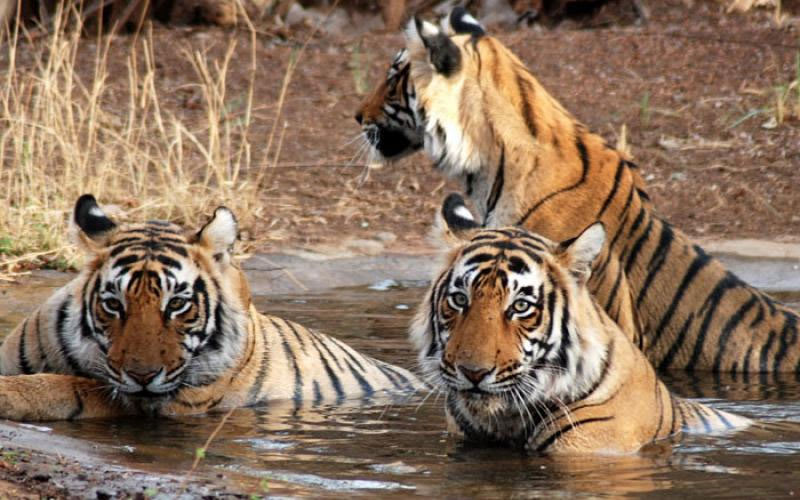
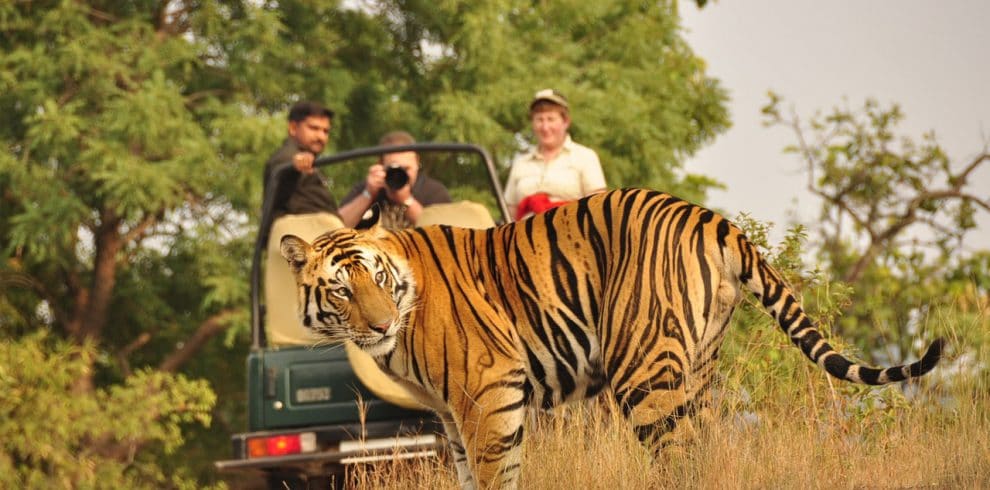
- Enjoy the best chance anywhere in Nepal of spotting the elusive Royal Bengal tiger in its natural habitat.
- Search for the endangered greater one-horned rhinoceros grazing in the park's grasslands and riverine forests.
- Look out for wild Asian elephants, which roam Bardiya in some of the largest free-ranging herds in the country.
- Spot the rare Gangetic river dolphin in the waters of the Karnali and Geruwa rivers.
- Observe gharial and mugger crocodiles basking on the riverbanks, and visit the Crocodile Breeding Center at Thakurdwara.
- Discover a birdwatcher's paradise with more than 400 recorded bird species, including the endangered Bengal florican and sarus crane.
- Venture deep into the park's core area on an exciting full-day jeep safari.
- Experience the jungle on foot during a guided nature walk led by experienced, licensed naturalist guides.
- Immerse yourself in the fascinating culture of the indigenous Tharu people with a village tour and traditional stick-dance performance.
- Watch a spectacular sunset over the Geruwa River as the jungle comes alive with evening birdsong.
- Walk through a remarkable mosaic of habitats, from towering sal forest and open grasslands (phantas) to riverine forest and oxbow lakes.
- Escape the crowds and enjoy a far quieter, wilder safari experience than the more visited Chitwan National Park.
- Stay in a comfortable Tharu-style jungle lodge close to the park headquarters at Thakurdwara.
- Enjoy a safari suitable for all ages and fitness levels, from families to seasoned wildlife photographers.
Bardiya National Park Jungle Safari Overview
The Bardiya National Park Jungle Safari is a 3-day wildlife adventure into the largest and least-disturbed national park in Nepal's Terai lowlands. Tucked away in the far west of the country, on the eastern bank of the mighty Karnali River, Bardiya protects 968 square kilometers of sal forest, savannah grassland, and riverine jungle, and is widely regarded as the best place in Nepal to see the Royal Bengal tiger in the wild.
The journey begins with your arrival at Thakurdwara, the small Tharu village beside the park headquarters, reached either by a short flight from Kathmandu to Nepalgunj followed by a scenic drive, or by an overland journey along the East-West Highway. After settling into your jungle lodge, the first day introduces you to the area with a guided walk through the traditional Tharu village, a visit to the Crocodile Breeding Center, and a memorable sunset over the Geruwa River.
The second day is devoted entirely to the jungle. An early start takes you deep into the park's core area by safari jeep, passing through dense sal forest and open grasslands where tigers, rhinos, wild elephants, and swamp deer are regularly sighted. A guided jungle walk and time spent quietly waiting at riverside vantage points give you the best possible chance of unforgettable wildlife encounters, while the Karnali and Geruwa rivers offer sightings of Gangetic dolphins and basking crocodiles. In the evening, a traditional Tharu cultural program brings the day to a lively close.
On the final morning, an early birdwatching walk showcases some of the park's 400-plus bird species before breakfast, after which you begin your onward journey, either back to Kathmandu or on to your next destination in Nepal. Unlike busier safari destinations, Bardiya remains genuinely wild and uncrowded, offering an authentic jungle experience where you may go hours without seeing another vehicle.
The best months to visit are from October to early April, when skies are clear and wildlife congregates around water sources, while the hot months of March to May offer the very highest chances of tiger sightings. Whether you are searching for the Bardiya National Park safari cost, itinerary, best season, or wildlife-spotting chances, this 3-day package offers one of the most rewarding wildlife experiences in the whole of South Asia.
Transportation & Park Access Information
Transportation & Park Access Information
Getting to Bardiya by Air
The quickest way to reach Bardiya is a 1-hour domestic flight from Kathmandu to Nepalgunj, the largest city in the western Terai. From Nepalgunj Airport, a comfortable private drive of around 2-3 hours brings you to Thakurdwara, the gateway village beside the park headquarters, crossing farmland, forest, and small Tharu settlements along the way.
Getting to Bardiya Overland
For travelers who prefer to see more of the country, Bardiya can also be reached overland from Kathmandu or Pokhara along the East-West (Mahendra) Highway. The drive takes approximately 12-14 hours from Kathmandu, and many visitors choose to break the journey with an overnight stop in Lumbini, Nepalgunj, or Pokhara. Tourist buses and private vehicles are both available.
A Lodge-Based Safari
Unlike a trekking itinerary, this safari is based at a single comfortable jungle lodge in Thakurdwara for the duration of your stay. All park activities, including jeep safaris, jungle walks, village tours, and river excursions, begin and end at the lodge, allowing you to enjoy the wilderness by day and relax in comfort each evening.
Bardiya National Park Jungle Safari Photo Gallery
Plan Your Bardiya National Park Jungle Safari Dates
Pick Your Start Date
Click any date below to select your departure day. The calendar will automatically highlight your full 3-day trip window. Use the arrows to browse months.
Bardiya National Park Jungle Safari Itinerary
Upon arrival at the international terminal, our representative will greet you and transfer you to your hotel by private vehicle. After checking in and resting, head out to explore Kathmandu’s iconic highlights, including the historic Kathmandu Durbar Square and the majestic Boudhanath Stupa, join the Nature Heaven Treks team for a welcome dinner in the vibrant streets of Thamel, featuring a full briefing for your upcoming jungle safari.
What is Included in This Package
Transportation
- Private airport pick-up and drop-off service in Kathmandu
- Fly Ticket Kathmandu to Nepalgunj and Kathmandu
- Private transfer between Nepalgunj Airport (or the Ambassa highway junction) and your lodge in Thakurdwara
- All ground transportation for park activities, including the full-day jeep safari
Accommodations
- 2 nights' accommodation at a comfortable Tharu-style jungle lodge/Similar in Thakurdwara
Food & Drinks
- Full-board meals (breakfast, lunch, and dinner) throughout the safari
- Packed lunch and drinking water during the full-day jungle safari
- Daily seasonal fresh fruits where available
- Welcome drink upon arrival at the lodge
Guide & Crew
- Licensed, experienced, English-speaking naturalist guide for all park activities
- Assistant guide for jungle walks and larger groups, in line with park safety regulations
Permits & Fees
- Bardiya National Park entry permits for all included activities
- Jeep safari and jungle walk activity fees
- Crocodile Breeding Center entry fee
- All applicable local and government taxes
Other Service Inclusions
- Tharu village tour and traditional cultural dance program
- Basic medical kit carried by your guide
- Assistance with emergency coordination (covered by your travel insurance)
- Free luggage storage at our Kathmandu office during the safari
What is Excluded from This Package
Transportation
- International flight tickets to and from Nepal
- Domestic flights between Kathmandu and Nepalgunj (available on request at additional cost)
- Overland tourist bus or private vehicle transfers from Kathmandu or Pokhara (available on request)
Accommodations
- Hotel stays in Kathmandu, Nepalgunj, or elsewhere before and after the safari
- Extra nights in Bardiya due to flight delays, road conditions, or changes in itinerary
Food & Drinks
- Meals outside the safari period
- Bottled and alcoholic beverages, soft drinks, and snacks at the lodge
Guide & Staff Tips
- Tips for guides, drivers, and lodge staff (recommended but not mandatory)
Personal Expenses & Gear
- Nepal tourist visa on arrival at Tribhuvan International Airport
- Personal travel insurance covering wildlife safaris and emergency evacuation (mandatory)
- Wi-Fi, phone calls, laundry, and battery charging fees
- Camera and video fees where applicable
- Souvenirs and shopping items
- Personal clothing and equipment
Other Exclusions
- Optional activities such as Karnali River rafting or extended birdwatching tours
- Any services not specifically mentioned in the “Included” section
Bardiya National Park Jungle Safari — Important Trip Info
Your Bardiya National Park Jungle Safari begins with your arrival in Nepal, most commonly at Tribhuvan International Airport in Kathmandu. From Kathmandu, Bardiya is reached either by a short domestic flight to Nepalgunj followed by a 2-3 hour drive, or by an overland journey along the East-West Highway.
Our team will assist with all transfers, permits, and final arrangements. We recommend arriving in Nepal at least one day before your safari begins, to allow time for rest and, where needed, to connect comfortably with your domestic flight to Nepalgunj.
Throughout the safari you will stay at a comfortable jungle lodge in Thakurdwara, the small Tharu village beside the park headquarters. Lodges in Bardiya are typically built in the traditional Tharu style, with mud-and-thatch or brick cottages set in leafy gardens, private bathrooms, mosquito nets, fans, and home-cooked meals. Staying so close to the park boundary means wildlife such as deer, wild boar, and countless birds are often seen right from the lodge grounds, and elephants occasionally pass nearby.
The forests of Bardiya were once the private hunting reserve of Nepal's ruling families, and the area was first given formal protection in 1976 as the Royal Karnali Wildlife Reserve. It was renamed the Royal Bardiya Wildlife Reserve shortly afterwards and, following an expansion to include the Babai River valley, was declared Royal Bardiya National Park in 1988. After Nepal became a republic, it took its present name, Bardiya National Park.
Since the 1980s and 1990s, the park has been at the heart of some of Nepal's most celebrated conservation successes. One-horned rhinoceroses were translocated here from Chitwan to establish a second viable population, and decades of anti-poaching work with local communities have helped Bardiya's tiger population grow into one of the healthiest in the country. Together with the adjoining Banke National Park, Bardiya now forms part of a vast tiger conservation landscape, and the surrounding buffer zone is managed in partnership with the indigenous Tharu communities who have lived alongside these forests for generations.
Bardiya National Park lies in the Bardiya District of far-western Nepal, on the eastern bank of the Karnali River and roughly 500km west of Kathmandu. Covering 968 square kilometers, it is the largest national park in the Terai, bounded by the Karnali River to the west, the Siwalik (Churia) hills to the north, and the Babai River valley running through its eastern half. Around 70% of the park is covered in sal forest, with the remainder a mosaic of grassland, savannah, and riverine forest, all lying at a low elevation of roughly 150-1,440 meters.
Major Geographical Highlights
• Karnali River – one of Nepal's largest rivers, forming the park's western boundary and home to Gangetic dolphins and gharial crocodiles.
• Geruwa River – a branch of the Karnali flowing past Thakurdwara, a prime area for tiger, elephant, and dolphin sightings.
• Babai Valley – a remote, wildlife-rich river valley in the heart of the park, central to Bardiya's rhino and tiger recovery.
• Phantas – open grassland clearings scattered through the forest, offering some of the best wildlife viewing in the park.
• Siwalik (Churia) Hills – the forested hill range forming the park's northern boundary, rising to around 1,440 meters.
• Thakurdwara – the gateway village and park headquarters, home to the Crocodile Breeding Center and the surrounding Tharu community.
Bardiya is a genuinely wild national park inhabited by tigers, rhinos, wild elephants, and crocodiles, and park regulations require all visitors to be accompanied by licensed guides inside the park. A professional naturalist guide transforms the experience in every way.
• Safety in the Jungle – guides are trained to read animal behavior and keep a safe distance from tigers, rhinos, and wild elephants at all times.
• Expert Wildlife Tracking – they read pugmarks, alarm calls, and fresh signs, dramatically increasing your chances of memorable sightings.
• Emergency Support – guides coordinate immediate assistance in case of illness, injury, or unexpected wildlife encounters.
• Cultural Insights – learn about the traditions, history, and daily life of the indigenous Tharu communities of the buffer zone.
• Logistical Management – guides handle permits, park entry formalities, activity timings, and daily arrangements so you can simply enjoy the wilderness.
Meals during the safari are prepared at your lodge in Thakurdwara using fresh, mostly locally grown ingredients, with a packed lunch provided on the full-day jungle safari. Lodges offer a mix of Nepali, Tharu, Indian, and Western dishes.
Popular Food Options
• Dal Bhat (the classic Nepali meal of rice, lentils, vegetables, and pickles)
• Traditional Tharu dishes, including fish and locally grown vegetables
• Fried rice, noodles, pasta, and curries
• Eggs, toast, pancakes, and porridge for breakfast
• Tea, coffee, fresh lemon soda, and seasonal fruit juices
Safe drinking water is provided at the lodge and during all park activities via boiled, filtered, or purified sources.
Unlike a high-altitude trek, the main health considerations in Bardiya relate to the hot lowland climate, insects, and wildlife safety rather than altitude.
Key Health Considerations
• Mosquitoes – use repellent and sleep under the mosquito nets provided; consult your doctor about malaria precautions, particularly for monsoon-season visits.
• Heat and sun – drink plenty of water, wear a sun hat, and use sunscreen, especially between March and May.
• Wildlife safety – always follow your guide's instructions, keep quiet on jungle walks, and never approach or feed wild animals.
• Food and water hygiene – eat freshly cooked food and drink only boiled, filtered, or purified water.
Your guide carries a basic medical kit at all times, and the nearest hospitals are located in Gulariya and Nepalgunj.
Autumn & Winter (October-February)
• Pleasant, dry days with clear skies
• Cool, occasionally foggy mornings, ideal for birdwatching
• The most comfortable season for safari activities
Spring & Early Summer (March-May)
• Hot, dry weather with temperatures often above 35°C
• Wildlife concentrates around rivers and waterholes
• The very best season for tiger sightings
The monsoon months (June-September) bring heavy rain, high rivers, and lush vegetation; parts of the park become inaccessible and wildlife viewing is more difficult, so this season is generally less favorable for a safari.
All visitors require a Bardiya National Park entry permit, which is checked at the park entrance and must be accompanied by a licensed guide for all activities inside the park. Separate fees apply for jeep safaris and certain optional activities. Permit fees are set by the Nepal government and may change periodically; all permits for your included activities are arranged by our team, so you simply need to carry your passport.
• Lightweight, breathable clothing in neutral jungle colors (green, khaki, brown; avoid bright colors and white)
• Comfortable closed walking shoes for jungle walks
• Sun hat, sunglasses, and high-SPF sunscreen
• Insect repellent containing DEET or a similar active ingredient
• Binoculars and a camera with a zoom lens for wildlife viewing
• A light fleece or jacket for cool winter mornings and evenings
• Reusable water bottle and a small daypack
This safari is graded easy and is suitable for almost all ages and fitness levels, including families with children and older travelers. The jungle walks are conducted at a gentle pace on flat lowland terrain, typically lasting two to four hours with plenty of stops for wildlife viewing, while jeep safaris involve no walking at all. A basic level of general fitness and the ability to walk comfortably for a few hours in warm weather are all that is required; no special training is necessary.
What our travellers say
“The Manaslu trek is incomparable. It's suitable as a first trek in the Himalayas — plenty of time for acclimatisation and such captivating views that spending time on "altitude sickness" would be a pity. And it's a special pleasure to walk with Krishna. He is a knowledgeable, reliable and brave guide, and a very pleasa…”
Kafle
Senior Himalayan Specialist
“Namaste! I have been guiding in the Himalayas for over 15 years. Contact me directly to customize your itinerary or check live trail conditions.”
Secure Booking System
Your checkout session is secure and encrypted by 256-bit SSL. Associated with TAAN, KEEP, NMA, and registered with Nepal Tourism Board.