

The traditional religions and spiritual culture of Nepal shape almost everything you'll see here, from the butter lamps in a Kathmandu courtyard to the chariots rolling through Patan. If you're a traveller or student trying to understand how faith actually works in this Himalayan country, this guide is for you. We'll cover Nepal's religious make-up, how Hindu and Buddhist traditions overlap, indigenous Kirat beliefs, the most important sacred sites, and the festivals worth planning a trip around. We'll finish with practical etiquette so you can visit with respect.
Nepal's Religious Landscape at a Glance
Ask most people what religion Nepal follows and you'll hear "Hindu and Buddhist." That's true, but it's only part of the story. In the 2021 census, Hinduism accounted for roughly 81% of the population and Buddhism about 8%. Islam, Kirat, Christianity, Prakriti (nature-based faith), Bon, Jainism, Sikhism and Baháʼí are also recorded. Nepal became a secular state under its 2015 constitution, but religion still runs through public life. It shows up in holidays, wedding dates, architecture and even the names of places.
The main point is that Nepali spirituality is layered, not divided. A family may visit a Hindu temple in the morning and spin prayer wheels at a stupa in the evening, and few people see a conflict in that.
How Hinduism and Buddhism Blend in Nepal
Nowhere is this clearer than the Kathmandu Valley. UNESCO lists its seven monument zones as a World Heritage Site and highlights the coexistence of Hinduism, Buddhism, animist rituals and Tantrism.
Take Swayambhunath, the hilltop stupa most visitors call the Monkey Temple. It is a Buddhist stupa, yet Hindu families come to pray at the small shrines around it, including one to Harati, the goddess of smallpox. At Changu Narayan, a Vishnu temple, Buddhist Newars also take part in ceremonies. Among Newars, a single family may follow rituals from both traditions depending on the occasion.
The best way to see this is to visit both Pashupatinath (Hindu) and Boudhanath (Buddhist) on the same day, then compare how people worship each. If you'd like a guided version, our Kathmandu Valley cultural tour covers both.
Hinduism in Nepal: Shiva, Shakti and Everyday Devotion
Most Nepali Hindus honour a wide circle of deities, including Shiva, Vishnu, Ganesh, Krishna and the many forms of the Goddess (Shakti). Shiva holds special importance because Nepal is his land in popular belief, and temples like Pashupatinath draw pilgrims from across South Asia.
Worship (puja) is simple and personal. People offer flowers, red tika powder, rice and incense, ring a bell to announce themselves to the deity, and often circle the shrine. Many homes keep a small shrine where the first prayers of the day happen, before breakfast.
Buddhism in Nepal: Stupas, Monasteries and Lumbini
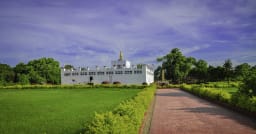
Buddhism has a special claim here, because Lumbini, in the southern plains, is the traditional birthplace of Siddhartha Gautama, the Buddha. UNESCO inscribed the site in 1997. Pilgrims visit the Maya Devi Temple, the sacred pond, and the Ashoka Pillar, an inscribed pillar dating to the 3rd century BCE. Monasteries built by different Buddhist countries line the surrounding monastic zone.
Elsewhere, Buddhism in Nepal leans heavily toward the Tibetan Vajrayana tradition, especially in Sherpa, Tamang and Himalayan communities, alongside the Newar Buddhist tradition of the Kathmandu Valley and a growing Theravada presence. At Boudhanath, one of the largest stupas in the world, walk the kora (clockwise circuit) at dawn. You'll see elderly locals spinning prayer wheels, monks chanting and butter lamps being refilled, and it's a far better introduction than any museum. Our Lumbini tour adds guided meditation and a slower pace.
Kirat and Indigenous Traditions: The Part Most Guides Skip
Long before temples and stupas, Nepal's hill communities practised faiths rooted in land, ancestors and nature. The Kirat peoples of eastern Nepal, mainly Rai, Limbu and Yakkha, follow Mundhum, an oral tradition of origin stories and rituals passed down through priests and shamans. Ancestor veneration is central, and rituals tie families to the specific hills and rivers of their homeland.
A good example is Sakela (also called Ubhauli and Udhauli), a Kirat festival linked to the planting and harvest seasons. Communities dance in circles, imitating birds, farming and hunting, while thanking the earth. In the far north, the pre-Buddhist Bon tradition survives in areas such as Dolpo and Mustang. Across many communities, dhami and jhankri healers still act as spiritual intermediaries, blending ritual, chanting and herbal knowledge.
If you're on the trail in the hills, watch for stone piles, sacred trees and small shrines at river crossings. These are usually active places of worship, not decoration.
Spirituality in Everyday Life
Religion in Nepal is a daily habit more than a weekly event. You'll notice:
- Offerings of flowers, rice and coloured powder left at roadside shrines and stone deities.
- Butter lamps and incense lit at dawn and dusk.
- Bells, prayer wheels and prayer flags, which carry mantras "on the wind."
- Life events, from naming ceremonies and rice-feeding rituals to weddings and funerals, guided by priests and astrologers who choose auspicious dates.
Food is part of it too. Many Hindus avoid beef, some fast on particular days, and festival meals carry religious meaning. Families also fold everyday work into faith. Taxi drivers hang small deities from the mirror, shops open with a quick offering, and travellers pause to touch a shrine before setting off.
Sacred Places You Shouldn't Miss
Pashupatinath (Kathmandu): One of the holiest Shiva temples in the Hindu world, on the banks of the Bagmati River. Only Hindus may enter the main temple, but visitors can watch the evening aarti ceremony and see riverside cremations from the opposite bank. Go with a guide who can explain what you're seeing.
Swayambhunath (Kathmandu): A hilltop stupa, painted with the watchful eyes of the Buddha, sacred to Buddhists and Hindus alike.
Boudhanath (Kathmandu): The centre of Tibetan Buddhism in Nepal, ringed by monasteries and prayer wheels.
Lumbini (Rupandehi): Birthplace of the Buddha and a global Buddhist pilgrimage site.
Muktinath (Mustang): A rare place that both Hindus and Buddhists consider sacred. Hindus revere it as a place of liberation, while Buddhists honour it as well. Pilgrims bathe under 108 water spouts and visit a temple with a natural flame.
Janakpur (Madhesh): Linked to the Ramayana as the birthplace of Sita, with the grand Janaki Mandir as its centrepiece. Thousands visit during Vivah Panchami, which re-enacts the marriage of Ram and Sita.
Major Festivals of Nepal
Festival | When (approx.) | What to expect |
Dashain | Sep-Oct | Nepal's biggest festival, about 15 days. Families reunite, and elders place tika and blessings on younger relatives. |
Tihar | Oct-Nov | The festival of lights, with five days honouring crows, dogs, cows and Laxmi (goddess of wealth), and ending with Bhai Tika between siblings. |
Maha Shivaratri | Feb-Mar | Sadhus and pilgrims gather at Pashupatinath for a night of worship. |
Buddha Jayanti | Apr-May | Celebrates the Buddha's birth, with the largest gatherings at Lumbini and Swayambhunath. |
Indra Jatra | Sep | Newar festival with masked dances and the Kumari's chariot procession in Kathmandu. |
Losar | Feb-Mar | Tibetan-Buddhist New Year in Sherpa, Tamang and Himalayan communities. |
Dates shift each year with the lunar calendar, so check before booking. If you want to time a trip around one, our Best Time to Visit Nepal guide helps you balance festivals with weather.
Newar Traditions and the Living Goddess
The Newars, the original inhabitants of the Kathmandu Valley, created much of the area's temple art and ritual life. Their cities run on a festival calendar (jatras) that includes chariot processions such as Rato Machhindranath in Patan and Bisket Jatra in Bhaktapur. Their courtyards, or bahals, serve as Buddhist monasteries and community spaces at once.
The most famous Newar tradition is the Kumari, a young girl chosen as the living embodiment of the goddess Taleju. She is selected from the Newar Shakya community, lives in a dedicated house on Kathmandu Durbar Square, and appears during festivals like Indra Jatra. The custom is debated and evolving in modern Nepal, but it remains an important part of local tradition. To understand what makes the capital special, see What Is Kathmandu Famous For?
The Himalayas as a Sacred Landscape
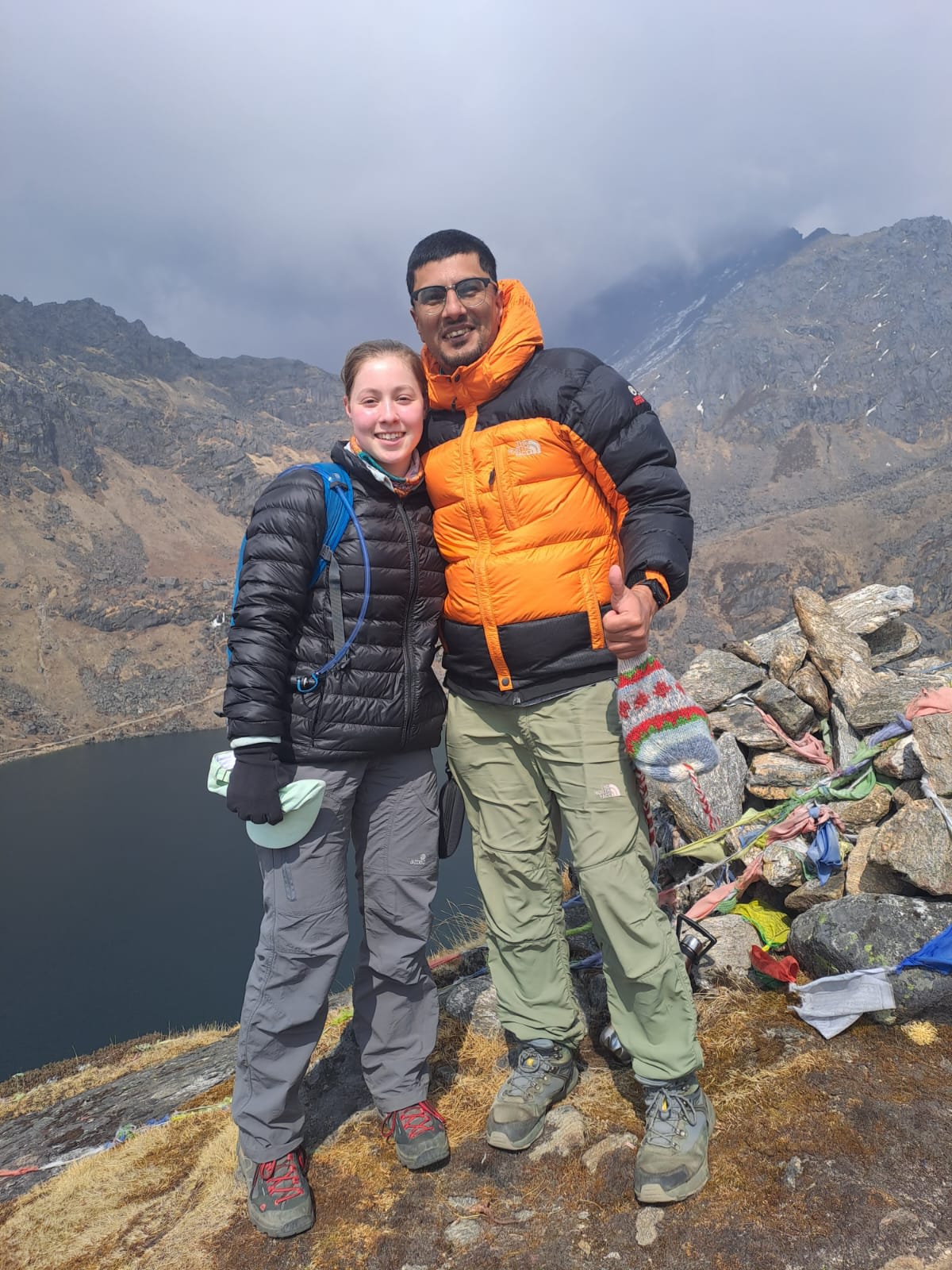
Nepal's geography is deeply tied to its faith. Rivers like the Bagmati and Gandaki are treated as purifying, and lakes such as Gosaikunda draw thousands of pilgrims each August during Janai Purnima. Mountains are often seen as the homes of deities. Not every peak or stream is holy to everyone, so it helps to ask locals which sites matter to them.
For trekkers, this means spiritual sites often sit right on the trail. Passes are marked with prayer flags, and mani walls (stone walls carved with mantras) should always be passed with your left shoulder toward them. If you're planning a walking trip, browse our Nepal trekking tours for routes that pass monasteries and village shrines. For a Himalayan crossing into Tibet, see the Tibet Everest Base Camp tour..
How to Visit Religious Sites Respectfully
- Dress modestly. Cover shoulders and knees.
- Remove shoes before entering temples, and often before entering monasteries.
- Walk clockwise around stupas, prayer wheels and shrines.
- Ask before photographing people, rituals or cremations.
- Don't touch offerings or statues unless invited.
- Respect restrictions. Some Hindu temples, including Pashupatinath's main sanctum, are closed to non-Hindus.
- Avoid pointing your feet at shrines or people, and don't step over offerings.
- Follow your guide's lead, especially during festivals, when crowds are large.
Booking a guide for a Kathmandu Valley World Heritage Sites tour or a Pashupatinath Temple makes these customs much easier to follow.
Conclusion
The traditional religions and spiritual culture of Nepal are best understood by seeing them in action: a morning kora at Boudhanath, an evening aarti at Pashupatinath, a Sakela dance in the eastern hills. Together they show a country where faiths overlap rather than compete. If you'd like to experience it with a local guide, explore our Nepal cultural tour and start planning a journey through Nepal's sacred heritage.
Frequently Asked Questions
What are the traditional religions of Nepal?
Hinduism, Buddhism and Kirat traditions are the main traditional faiths, alongside Bon, shamanic practices and nature-based beliefs.
What is the main religion in Nepal?
Hinduism, followed by about 81% of the population according to the 2021 census. Buddhism is second.
How are Hinduism and Buddhism connected in Nepal?
They share sacred sites, festivals and even deities, especially in the Kathmandu Valley among the Newar community.
What are the most important religious places in Nepal?
Pashupatinath, Boudhanath, Swayambhunath, Lumbini, Muktinath and Janakpur.
What is the biggest festival in Nepal?
Dashain, followed closely by Tihar.
What should tourists know about religious customs?
Dress modestly, remove shoes, walk clockwise around stupas, and ask before photographing.