

Knowing how to prepare for a Himalaya trek is the difference between enjoying the walk into Namche Bazaar and dreading every step of it. This guide is for first-time trekkers: most of you work desk jobs, live far from big hills and have a Nepal trek booked or shortlisted for the next few months. We're a Sherpa-run operator in Thamel, so this is what we tell our own guests. You'll get a trek-by-trek comparison, a 12-week Himalaya trek training plan, a simple at-home readiness test, honest advice on altitude sickness prevention, a trekking gear list for Nepal, and the logistics most blogs skip.
Match your preparation to your trek
Most advice treats "the Himalaya" as one trek. It isn't. Preparing for a week on Poon Hill is a different job from preparing for a 5,400 m pass on day 18 of a circuit. Find your trek below, then train for what it actually demands.
Which trek are you preparing for?
Trek | Highest point | Walking per day | What to train for |
|---|---|---|---|
Poon Hill (7 days) | 3,210 m | 5–6 hrs | Stone staircases up and down; knees and calves |
Langtang Valley (9 days) | approx. 3,870 m (Kyanjin Gompa) | 5–6 hrs | Steady uphill endurance; first taste of altitude |
4,130 m | 5–7 hrs | Long descents on steps; repeated up-and-down days | |
5,545 m (Kala Patthar) | 5–7 hrs | Aerobic base and patience with acclimatisation | |
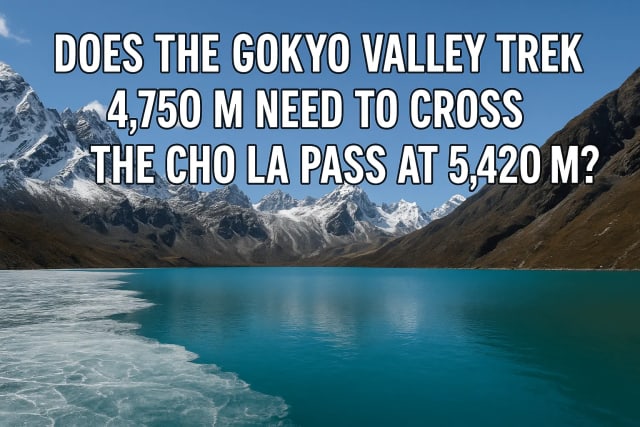
5,357 m (Gokyo Ri) | 5–7 hrs | As EBC, plus a steep summit morning | |
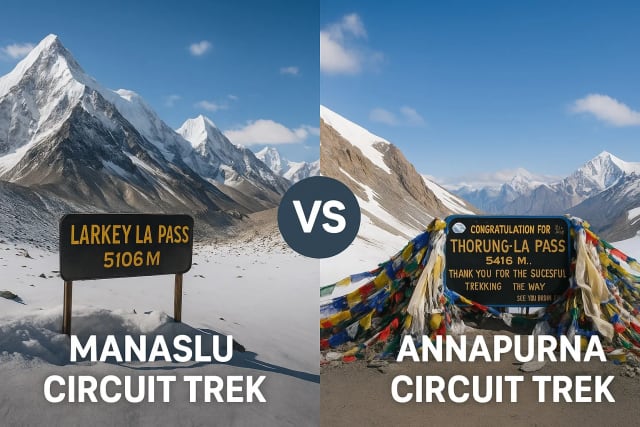
Manaslu and Annapurna Circuit Trek | 5,416 m (Thorong La) | 6–8 hrs, pass days longer | Back-to-back days for 3+ weeks; one very long pass day |
A real example: on Everest Base Camp training, people over-focus on the summit day. The hardest day for most first-timers is actually Phakding to Namche Bazaar (3,440 m). It's around 800 m of climbing and finishes with a long, steep hill. Train for that day and the rest of the trek feels manageable.

Best time to trek in Nepal, and why it changes your packing
Autumn (September to November) brings the clearest views and the busiest trails. Spring (March to May) is warmer, with rhododendrons in bloom and more afternoon cloud. Winter (December to February) is quiet and clear but cold at night, and some high passes can close. The monsoon (June to August) means leeches, landslides and cloud on most routes. If you trek in December, add a heavier sleeping bag and warmer gloves; in May, a lighter fleece and a reliable rain shell. For how Nepal's landscape shapes these seasons, see our guide to Nepal's Geographical Location and Landscape.
12-week Himalaya trek training plan
You don't need to be an athlete. You need legs that can climb for six hours, recover overnight, and do it again tomorrow. Twelve weeks is enough for most healthy adults starting from a basic level of activity. If you're starting from zero, add four weeks at the front.
Weeks | Midweek (2–3 sessions) | Weekend | Pack weight |
|---|---|---|---|
1–4: base | 30–45 min brisk walk, cycle or swim; 1 strength session | 2–3 hr walk on mixed ground | 3–4 kg |
5–8: hills | 45 min stairs or treadmill on 10–15% incline; 2 strength sessions | 4–5 hr hike with 400–700 m of climbing | 5–6 kg |
9–11: trek simulation | 45–60 min stairs with pack; 1 strength session | Two days back-to-back, 5–6 hrs each, 800–1,000 m of climbing | 6–8 kg, in trek boots |
12: taper | Two easy 45 min walks | Rest | Pack your actual trek daypack |
Weeks 1–4: build the base
The goal is consistency, not intensity. Walk to work, take stairs everywhere, and get three or four sessions done each week. This is also when you start wearing your trekking boots, because they need months, not days, to break in.
Weeks 5–8: add hills and weight
Now the climbing starts. If you're in the UK, the Surrey Hills, the Peak District or the Brecon Beacons all give you real ascent within a day trip. Count metres climbed, not kilometres walked. Elevation gain is what you'll feel in Nepal.
Weeks 9–12: back-to-back days, then taper
One big hike proves little. Two in a row shows you how your body recovers, which is the real test on a two-week trek. A weekend on Snowdon is ideal: the Llanberis Path climbs close to 1,000 m, roughly the same as a big day in the Khumbu. In week 12, ease off so you arrive in Kathmandu rested, not sore.
No hills nearby? Stairs, treadmill and step training
City trekkers prepare well with a tower-block stairwell, a stair machine, or a treadmill set to a steep incline. Wear your pack. Walk down the stairs as well as up, because Nepal's descents are where knees complain. Twenty minutes of continuous stair climbing is a good early target; build to an hour.
Strength moves that protect your knees on the descent
Twice a week, do step-ups, lunges, squats, calf raises and slow step-downs from a box. Add planks for your core, since you'll carry a daypack for six hours a day. Finish with ten minutes of stretching. Slow, controlled step-downs are the single most useful exercise for the stone steps above Ulleri on the Poon Hill trail or below Chhomrong on the ABC route.
 How To Prepare for a Himalaya Trek
The "am I ready?" test
Three to four weeks before you fly, try these. If you can do all three, you're ready for most teahouse treks.
- The big day: a 6–7 hour hike with around 1,000 m of climbing, carrying 6–8 kg, finishing tired but not wrecked.
- The next day: a 4–5 hour hike the following morning without stiffness forcing you to stop.
- The stairs: 45–60 minutes of steady stair climbing with your pack, able to hold a short conversation throughout.
If one of these feels out of reach, that's useful information, not failure. Tell your operator. A good one will add an extra acclimatisation day or suggest a better-fitting trek.
Altitude sickness prevention: what actually works
Fitness helps you enjoy the trek. It does not protect you from altitude. Fit marathon runners get acute mountain sickness (AMS) too, often because they walk too fast. Altitude sickness prevention comes down to a slow ascent, rest days and honesty about how you feel.
How acclimatization days are built into a good itinerary
Above about 3,000 m, a well-designed itinerary raises your sleeping altitude gradually and adds a rest day every few days. On the Everest Base Camp route, that means a full day in Namche Bazaar and another in Dingboche. "Rest" days still involve a short hike higher, then a return to sleep lower. Be wary of any itinerary that skips these to save money.
Symptoms to report straight away
Tell your guide about any headache, nausea, loss of appetite, dizziness or unusual tiredness, even if it seems minor. Confusion, loss of balance or breathlessness at rest are emergencies: the treatment is to descend. Drink 3–4 litres of water a day, eat even when you're not hungry, and skip alcohol above about 3,000 m.
Talk to your doctor before you go
See your GP or a travel clinic six to eight weeks before departure. Discuss vaccinations, any existing conditions, and whether altitude medication such as acetazolamide (Diamox) is right for you. That's a medical decision for your doctor, not something to improvise on the trail.
Trekking gear list for Nepal
The right kit is less about expensive brands and more about the right layers and broken-in boots.
The layering system
- Base layer: merino or synthetic thermal top and leggings.
- Mid layer: a fleece plus a down jacket for evenings and early starts.
- Outer layer: a waterproof, windproof shell jacket and trousers.
- Extras: warm hat, sun hat, buff, liner gloves plus insulated gloves, category 3–4 sunglasses, SPF 50 and lip balm.
Boots, socks and your daypack
Buy mid or high-cut boots with ankle support and wear them for at least two months before you fly. Pack four or five pairs of merino trekking socks. Your daypack should be 30–40 litres with a hip belt and hold water, snacks, layers, sun gear and a small first-aid kit.
Buy at home vs hire in Kathmandu
Buy anything that touches your feet or must fit well: boots, socks, base layers, your daypack. Hire or buy in Thamel the bulky items you'll use once: a down jacket, a -10°C sleeping bag, and trekking poles. It saves luggage weight and money, and our team can point you to shops we trust.
Nepal logistics nobody tells you about
Permits and the licensed-guide rule
Every trek needs permits, such as the Sagarmatha National Park permit for Everest or the Annapurna Conservation Area permit. Manaslu is a restricted area with its own permit. Since April 2023, Nepal has required most foreign trekkers to walk with a licensed guide. Rules vary by region and change, so your operator should confirm the current requirements and arrange the paperwork.
Insurance that actually covers you
Standard travel insurance usually doesn't cover trekking at altitude. Look for a policy that names your maximum altitude (cover to 6,000 m is common) and includes helicopter evacuation. Keep the emergency number and policy details with your guide.
Money, charging and Wi-Fi on a teahouse trek
On a teahouse trek, assume it's cash only beyond the main trailhead towns, and ATMs can be unreliable even where they exist. Charging phones, hot showers and Wi-Fi usually cost extra and get pricier the higher you go. Bring Nepali rupees for snacks, drinks, charging and tips, plus a 10,000–20,000 mAh power bank.
Lukla flights and buffer days
Flights to Lukla are weather-dependent and are often delayed. In busy seasons, many depart from Ramechhap, a long drive from Kathmandu. Build at least one buffer day into your plans before your flight home. Domestic mountain flights also have tight baggage limits, so pack light.
Mental preparation: the days that test you
Every trek has a hard day. On the Manaslu and Annapurna circuit, it's often the pre-dawn start for Thorong La: cold, dark and slow. On EBC, it might be a bad night's sleep at Lobuche. Expect those days. Break climbs into 30–45 minute chunks, stop comparing your pace to others, and talk to your guide when you're struggling. Pushing through one hard morning is usually what people remember most proudly.
Your last 72 hours in Kathmandu
- Day 1: Arrive, rest, hydrate. Don't start your trek jet-lagged.
- Day 2: Trip briefing and gear check with your guide. Hire any missing kit in Thamel, change money, and buy a local SIM.
- Day 3: A gentle warm-up like our Kathmandu hiking day tour from Nagarkot to Changu Narayan, then repack your duffel and get an early night.
 How To Prepare for a Himalaya Trek
Five first-timer mistakes we see every season
- New boots. Blisters on Day 2 can end a trek before the mountains appear.
- Rushing the Namche hill. Walk slowly enough to hold a conversation, even if others pass you.
- Training only on flat ground. The descents hurt more than the climbs if you haven't trained them.
- No buffer day. A delayed Lukla flight shouldn't mean a missed international flight.
- Too little cash. Running out above the last ATM means no hot showers and no charged phone.
Conclusion
Now you know how to prepare for a Himalaya trek: pick the right trek, train for 12 weeks, pass the readiness test, respect the altitude and sort the logistics early. The rest is walking. If you'd like a plan built around your fitness and dates, our local Sherpa-run team can design a private, tailor-made trek for you. Send us your dates and your fitness level, and we'll suggest the right route.
Plan your trek
Want to Plan Your Holiday in Nepal?
Tell us your dates and fitness level. A local expert replies within a day with a private itinerary and price.
Frequently Asked Questions
How long should I train for a Himalaya trek?
Around 12 weeks for most healthy adults, or 16 weeks if you're starting from very little activity.
Can a complete beginner trek to Everest Base Camp?
Yes, with consistent training and an itinerary that includes proper acclimatisation days. If you're unsure, start with Poon Hill or Langtang.
Do I need a guide in Nepal?
Most foreign trekkers now need a licensed guide. A local guide also handles permits, lodges and altitude decisions on the trail.
Is there an age limit?
No fixed limit. Fitness, health and a well-paced itinerary matter more than age. Tell your operator about any medical conditions.
What comes after my first trek?
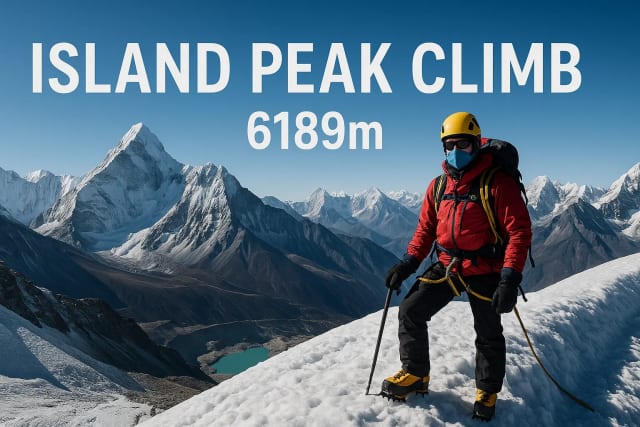
Many trekkers return for a trekking peak such as Lobuche Peak, which combines the EBC trail with a guided climb.