

Key Highlights
Renjo La Pass — a high, wide-open crossing with one of the best panoramas in the Khumbu
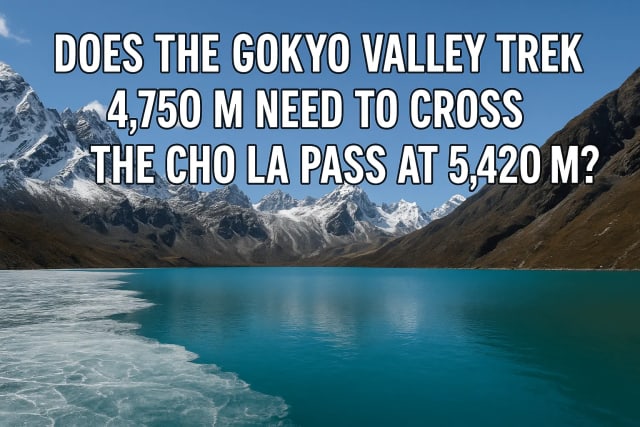
Gokyo Lakes — a chain of turquoise glacial lakes at nearly 4,800 m
Gokyo Ri — arguably rivals Kala Patthar as a viewpoint, with far fewer people
Ngozumpa Glacier — Nepal's longest glacier, walked alongside between Thangnak and Gokyo
Ama Dablam views — visible for much of the trail between Tengboche and Dingboche
Everest, Lhotse, Makalu and Cho Oyu — all visible together from Renjo La on a clear day
Sherpa villages and monasteries — Namche, Tengboche, Khumjung, and Thame
Namche Bazaar — the region's cultural and trading hub
Less-trafficked sections — the Gokyo and Thame sides see noticeably fewer trekkers than the main EBC trail
Everest Base Camp — the foot of the Khumbu Icefall, same trail used by climbing expeditions
Kala Patthar sunrise — the classic close-up Everest photo viewpoint
Cho La Pass — a glaciated crossing linking the EBC side of the valley to Gokyo
What Is the Everest Base Camp Trek with Cho La and Renjo La Passes?
The route sits entirely within Nepal's Khumbu region, inside Sagarmatha National Park. It follows the standard EBC trail as far as Kala Patthar, then breaks away from the usual return path: from Dzongla, it crosses Cho La into Gokyo Valley, connecting the Everest side of the Khumbu with the Gokyo side. After a few days around Gokyo, it crosses Renjo La to descend toward Lungden and Thame, linking Gokyo Valley to the Thame side of the region before rejoining the main trail back to Namche and Lukla.
Cho La's role is structural it's the only practical way to move between the Base Camp trail and Gokyo Valley without backtracking down to lower elevation and back up again. Renjo La plays a similar role on the way out, offering a direct route from Gokyo to Thame instead of retracing the same path. Gokyo Lakes are included because they sit directly between the two passes skipping them would mean an unnecessary detour.
How Is It Different from the Standard Everest Base Camp Trek?
Feature | Standard EBC | EBC with Cho La & Renjo La |
|---|---|---|
Everest Base Camp | Yes | Yes |
Kala Patthar | Usually | Usually |
Gokyo Lakes | No | Yes |
Cho La | No | Yes |
Renjo La | No | Yes |
Difficulty | Challenging | More demanding |
Route | Mainly out-and-back | Circuit/extended route |
 Everest Base Camp Trek with Chola Pass Gokyo Trek -19 Days
Everest Base Camp with Cho La and Renjo La Itinerary
Published itineraries for this route vary by a day or two depending on the operator's pacing — the structure below follows the established Lukla → Namche → EBC → Cho La → Gokyo → Renjo La → Thame → Lukla pattern. Treat it as a representative itinerary and adjust it to match whatever trip you're actually selling.
Day 1: Kathmandu to Lukla and Trek to Phakding
Fly into Lukla's mountainside airstrip, then walk a short, gentle first day down to Phakding to start acclimatizing to the trail.
Day 2: Phakding to Namche Bazaar
A longer climb through pine forest and across the Khumbu's suspension bridges, gaining significant elevation into the Sherpa capital of Namche Bazaar.
Day 3: Acclimatization in Namche Bazaar
A rest day used for a day hike, typically up toward Khumjung or the Everest View Hotel, rather than actual rest.
Day 4: Namche Bazaar to Tengboche
The trail opens up to wide Everest and Ama Dablam views before climbing to Tengboche and its well-known monastery.
Day 5: Tengboche to Dingboche
Dropping through rhododendron forest before climbing again into the drier, more exposed upper valley at Dingboche.
Day 6: Acclimatization in Dingboche
A second rest day, usually spent hiking up Nangkartshang Hill for altitude adaptation and views.
Day 7: Dingboche to Lobuche
A rockier, more open trail along the glacial moraine, passing memorials to climbers lost on Everest.
Day 8: Lobuche to Everest Base Camp and Gorak Shep
The big day walking the Khumbu Glacier's edge into Base Camp itself, then continuing to Gorak Shep for the night.
Day 9: Kala Patthar and Trek to Dzongla
An early climb to Kala Patthar for sunrise views of Everest, then a long trekking day across to Dzongla to position for Cho La.
Day 10: Dzongla to Cho La Pass and Thangnak
The technical high point of the trek crossing Cho La's glacier and scree before descending into Thangnak.
Day 11: Thangnak to Gokyo
A shorter day alongside the Ngozumpa Glacier, arriving at Gokyo village on the shore of its turquoise lake.
Day 12: Gokyo Exploration and Gokyo Ri
A pre-dawn climb up Gokyo Ri for panoramic views, followed by time to explore the wider lake system.
Day 13: Gokyo to Renjo La Pass and Lungden
The second high crossing, dropping from Gokyo over Renjo La and down into Lungden.
Day 14: Lungden to Thame
A gentler day descending into Thame, a quieter Sherpa village with deep mountaineering history.
Day 15: Thame to Namche Bazaar
Rejoining the main trail network back into Namche Bazaar.
Day 16: Namche Bazaar to Lukla
The long final descent back to Lukla.
Day 17: Fly from Lukla to Kathmandu
Weather-permitting flight back to Kathmandu, with a buffer day recommended on either side.
 Everest Base Camp Trek with Chola Pass Gokyo Trek -19 Days
Cho La Pass on the Everest Base Camp Trek
How High Is Cho La Pass?
Cho La sits at approximately 5,420 m, connecting Dzongla (around 4,830 m) to Thangnak (around 4,700 m) on the Gokyo side.
What Is the Cho La Pass Crossing Like?
The approach from Dzongla is steep and rocky, climbing over scree and boulder terrain before reaching a short glacier crossing near the top of the pass — this section can be icy enough to need microspikes depending on recent weather. It's a long day, often 7–8 hours of walking, and conditions on the glacier section can change quickly, so guides generally aim to cross in the morning before afternoon cloud or wind builds.
How Difficult Is Cho La Pass?
It's neither an "easy" nor an "impossible" crossing it's a genuinely technical day that combines altitude, loose rock, and a glacier section, and it demands careful pacing and a guide comfortable with basic glacier travel. Current route descriptions consistently place Cho La as the link between the EBC/Dzongla side of the valley and Gokyo, and it's generally considered the more demanding of the trek's two passes.
Renjo La Pass on the Everest Base Camp Trek
How High Is Renjo La Pass?
Renjo La sits at approximately 5,360 m, slightly lower than Cho La.
What Makes Renjo La Special?
The climb out of Gokyo gives sweeping views back over the lake system, and the summit itself offers a wide-open panorama across to Everest, Lhotse, Makalu, and Cho Oyu — a rare spot where all four appear together. The descent toward Lungden drops into a quieter, more open high-altitude landscape than most of the main EBC trail.
Is Renjo La Difficult?
The climb is long and steep, and the altitude alone makes it demanding, but it doesn't involve glacier travel the way Cho La does, which makes the terrain itself somewhat more straightforward. Weather is still the main variable wind and cloud can close in fast on the exposed summit ridge. Renjo La connects Gokyo Valley to the Lungden/Thame side of the Khumbu, making it the trek's final major obstacle before the return walk to Lukla.
Everest Base Camp Trek with Cho La and Renjo La Difficulty
This route is more demanding than the standard EBC trek, not less. Factors that add to the difficulty:
- Sustained high-altitude trekking across 17+ days
- Long trekking days, particularly on both pass-crossing days
- Steep, sustained ascents and descents on Cho La and Renjo La
- Glacier and icy terrain on the Cho La crossing
- Weather that can shift quickly at altitude
- Several consecutive demanding days with limited rest between them
- A real physical preparation requirement, not just willingness
Who Is This Trek Suitable For?
Trekkers with prior multi-day hiking experience, reasonable cardiovascular fitness, and ideally some previous time spent above 4,000 m. Mental resilience for long, cold days matters as much as physical fitness here.
Who Should Consider the Standard EBC Trek Instead?
First-time high-altitude trekkers, anyone with limited trekking experience, or travelers on a tighter schedule who want Base Camp and Kala Patthar without the added technical demand and extra days of the two passes.
Altitude and Acclimatization
Location | Approx. Elevation |
|---|---|
Kathmandu | 1,400 m |
Lukla | 2,860 m |
Namche Bazaar | 3,440 m |
Dingboche | 4,400+ m |
Lobuche | 4,940 m |
Everest Base Camp | 5,364 m |
Kala Patthar | 5,500+ m |
Cho La Pass | 5,420 m |
Gokyo | 4,700–4,800 m |
Renjo La Pass | 5,360 m |
Acclimatization matters more on this route than on the standard EBC trek because you spend more consecutive days above 4,500 m, including two nights at pass-crossing altitude. The two built-in acclimatization days at Namche and Dingboche aren't buffer for delays they're a required part of a safe itinerary, and skipping or shortening them is one of the more common mistakes trekkers make on this route.
 Everest Base Camp Trek with Cho La and Renjo La Passes
Best Time for Everest Base Camp with Cho La and Renjo La
Spring: March to May
Warming temperatures, rhododendron blooms lower in the valley, and generally moderate conditions on both passes as the season progresses.
Autumn: September to November
The clearest skies of the year and the most popular season for this exact route — expect busier teahouses in return.
Winter: December to February
Cold, with a real chance of fresh snow on both passes that can make crossings significantly harder or occasionally require waiting for conditions to clear.
Monsoon: June to August
Rain, cloud, and slippery trails lower down, plus a higher risk of Lukla flight delays — generally the least suitable season for this route.
Which Season Is Best for Crossing Cho La and Renjo La?
Late autumn and spring offer the most stable combination of visibility and manageable snow conditions on both passes. Winter crossings are possible but weather-dependent; monsoon crossings are generally discouraged due to cloud cover and unstable glacier conditions on Cho La.
Permits Required for the Trek
- Sagarmatha National Park permit — required for park entry, checked at Monjo
- Khumbu Pasang Lhamu Rural Municipality permit — a local entry fee collected in the Lukla/Monjo area
- TIMS — trekkers should confirm current requirements with their operator, since documentation rules for this region are set and occasionally adjusted by local authorities
- Where permits are obtained — typically arranged in Kathmandu or at the park entrance by your trekking company
- What your trekking company handles — most operators arrange all permits as part of the package; confirm this before you book
Regulations and fees for this region do change from time to time, so verify current requirements with your operator or the park authority before finalizing your trip.
What Affects the Trek Cost?
Group size, season, the number of days, and whether you book a private guide versus joining a group all move the price significantly. Peak autumn dates with a small private group generally cost more than a larger group trekking in the shoulder season.
Accommodation and Food During the Trek
You'll stay in a hotel in Kathmandu before and after the trek, then in teahouses the rest of the way — twin-sharing rooms, shared dining areas heated by a central stove, and increasingly basic facilities the higher you climb. Menus are consistent across the route: dal bhat, noodles, soups, Tibetan bread, and tea and coffee, with vegetarian options widely available. Food choice narrows and prices rise the higher you go, since everything above Namche is carried in by porter or yak.
Everest Base Camp with Cho La and Renjo La vs Standard EBC
Factor | Standard EBC | Cho La & Renjo La |
|---|---|---|
Everest Base Camp | ✓ | ✓ |
Gokyo Lakes | Usually no | ✓ |
High passes | No | ✓ |
Trek duration | Shorter | Longer |
Physical demand | High | Higher |
Route variety | Lower | Higher |
High-altitude experience | Important | More important |
Safety Tips for Cho La and Renjo La Trek
- Don't rush acclimatization
- Monitor altitude symptoms in yourself and your group
- Stay hydrated throughout the day, not just at meals
- Follow your guide's instructions, especially on pass-crossing days
- Check weather before attempting either pass
- Start early on pass-crossing days to beat afternoon weather
- Carry appropriate layers even on clear mornings
- Don't cross a pass in unsafe or worsening conditions
- Keep buffer days in your schedule for delays
- Carry travel insurance suitable for high-altitude trekking and rescue
Training for the Everest Base Camp Cho La Renjo La Trek
Start Training 8–12 Weeks Before
Consistency matters more than intensity regular training over two to three months beats a rushed final month.
Cardiovascular Training
Running, cycling, or swimming several times a week builds the base endurance long trekking days demand.
Strength Training
Focus on legs, core, and glutes squats, lunges, and step-ups translate directly to steep ascents and descents.
Stair and Uphill Training
Repeated stair climbs or hill walks with a loaded pack are some of the closest simulations of actual trail conditions.
Practice With a Backpack
Train wearing the pack weight you'll actually carry, so your body adapts to load as well as distance.
Prepare for Long Trekking Days
Build up to back-to-back long walking days in training, since the trek itself has little true rest between demanding sections.
Conclusion
The Everest Base Camp Trek with Cho La and Renjo La Passes combines the classic EBC experience with two genuinely challenging high-altitude crossings and the added reward of Gokyo Valley. It's a bigger undertaking than the standard route more days, more altitude exposure, and two passes that demand real preparation but it delivers a far more complete picture of the Khumbu in return. Choosing the right itinerary, training properly beforehand, and building in buffer days for weather are what separate a smooth trip from a stressful one.
Ready to explore Everest Base Camp, Cho La and Renjo La? Contact our team to discuss itinerary options, availability, and preparation.
Frequently Asked Questions
How many days is the Everest Base Camp Trek with Cho La and Renjo La?
Most itineraries run around 17–19 days from Kathmandu to Kathmandu, depending on the operator's pacing.
How difficult is the Cho La and Renjo La Trek?
More demanding than the standard EBC trek, due to two high-altitude pass crossings, one of which involves glacier terrain.
How high are Cho La and Renjo La?
Cho La is approximately 5,420 m; Renjo La is approximately 5,360 m.
Can beginners do the Everest Base Camp Trek with Cho La and Renjo La?
It's possible with strong preparation, but it's not the ideal first high-altitude trek — the standard EBC route is a gentler introduction.
What is the best month for Cho La and Renjo La?
Late September through November and March through May generally offer the most stable conditions on both passes.
Do I need previous high-altitude trekking experience?
It's not mandatory, but it significantly improves your comfort and safety margin on both pass crossings.
What permits are required for the trek?
A Sagarmatha National Park permit and a Khumbu Pasang Lhamu Rural Municipality fee, plus any current TIMS documentation your operator confirms is required.
What happens if weather prevents crossing Cho La or Renjo La?
Guides will typically wait a day for conditions to improve where the schedule allows, which is why buffer days matter on this route.