

Quick answer: the Mardi Himal trek is a moderate trek. There is no climbing or technical ground, but you gain about 2,700m of altitude in three days, reach 4,500m at Base Camp, and face one long, steep ridge day of 7–8 hours. A reasonably fit beginner can do it; people with bad knees or no hill-walking experience will find the descents the hardest part.
Mardi Himal difficulty at a glance
Grade | Moderate (no technical sections) |
|---|---|
Highest point | Mardi Himal Base Camp, 4,500m (14,764ft) |
Highest sleeping point | High Camp, 3,580m |
Trekking days | 4 days (fast) to 7 days (comfortable, what we recommend) |
Walking per day | 4–6 hours; 7–8 hours on Base Camp day |
Total ascent from Kande | about 2,730m |
Hardest day | High Camp → Base Camp → Badal Danda |
Altitude sickness risk | Low to moderate; real above High Camp |
Guide | Required for foreign trekkers in the Annapurna Conservation Area since April 2023 |
Permits | ACAP (NPR 3,000) + TIMS card |
How difficult is the Mardi Himal trek compared with other Nepal treks?
Mardi Himal sits between the easy Poon Hill trek and the longer Annapurna Base Camp trek. It is shorter than both classic Annapurna routes, but it climbs faster. From Kande (1,770m) you reach High Camp (3,580m) on your second trekking day and Base Camp (4,500m) on the third. The Annapurna Base Camp trek takes about six days to reach a similar height, which gives your body more time to adjust.
Two things make Mardi Himal harder than its length suggests:
- Fast altitude gain. Almost all of the height is gained in three days.
- The ridge above High Camp. The trail narrows, climbs steeply in places and is exposed to wind. In snow or ice it needs care.
- Simple lodges up high. High Camp and Badal Danda are basic and cold at night, so you start the biggest day less rested than you would like.
What makes it easier than Everest Base Camp or the Annapurna Circuit: short days, good teahouses up to High Camp, a quick exit to Pokhara, and a maximum altitude well below the 5,000m-plus passes of the bigger treks.
Mardi Himal trek altitude profile
Figures vary slightly between maps and signboards; these are the ones most guides use.
Stop | Altitude | Notes |
|---|---|---|
Kande (trailhead) | 1,770m | 1.5-hour drive from Pokhara |
Australian Camp | 2,060m | First big view of Machhapuchhre |
Pitam Deurali | 2,100m | Where the Mardi trail leaves the Poon Hill route |
Forest Camp (Kokar) | 2,520m | Night 1 on the trail |
Low Camp | 2,970m | Last point with thick forest |
High Camp | 3,580m | Night 2; above the tree line |
Upper Viewpoint | about 4,250m | Where many 4-day itineraries turn back |
Mardi Himal Base Camp | 4,500m | Turnaround point |
Badal Danda | 3,210m | Night 3 on the way down |
Siding village | 1,885m | Trail end; jeep to Pokhara |
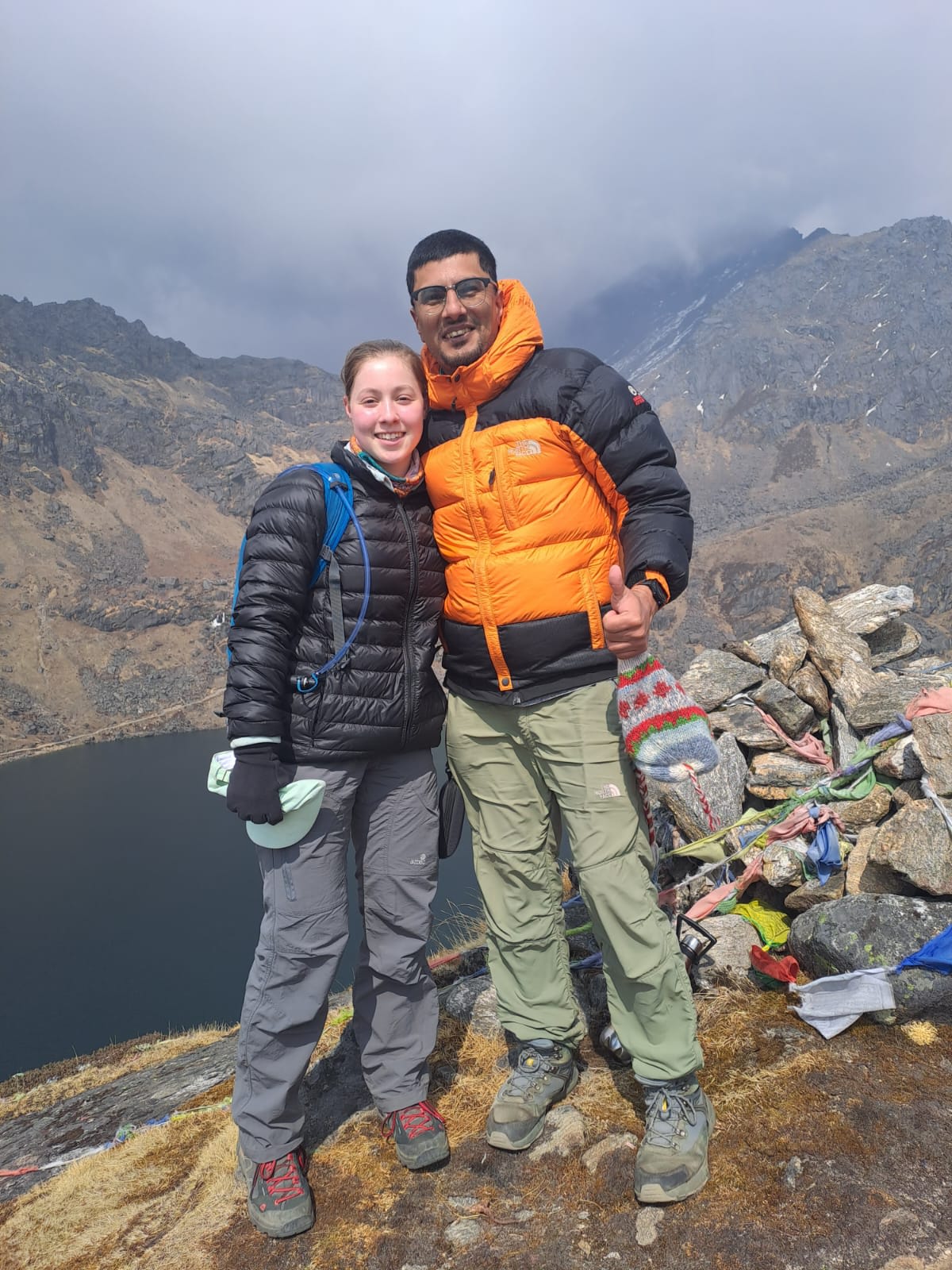
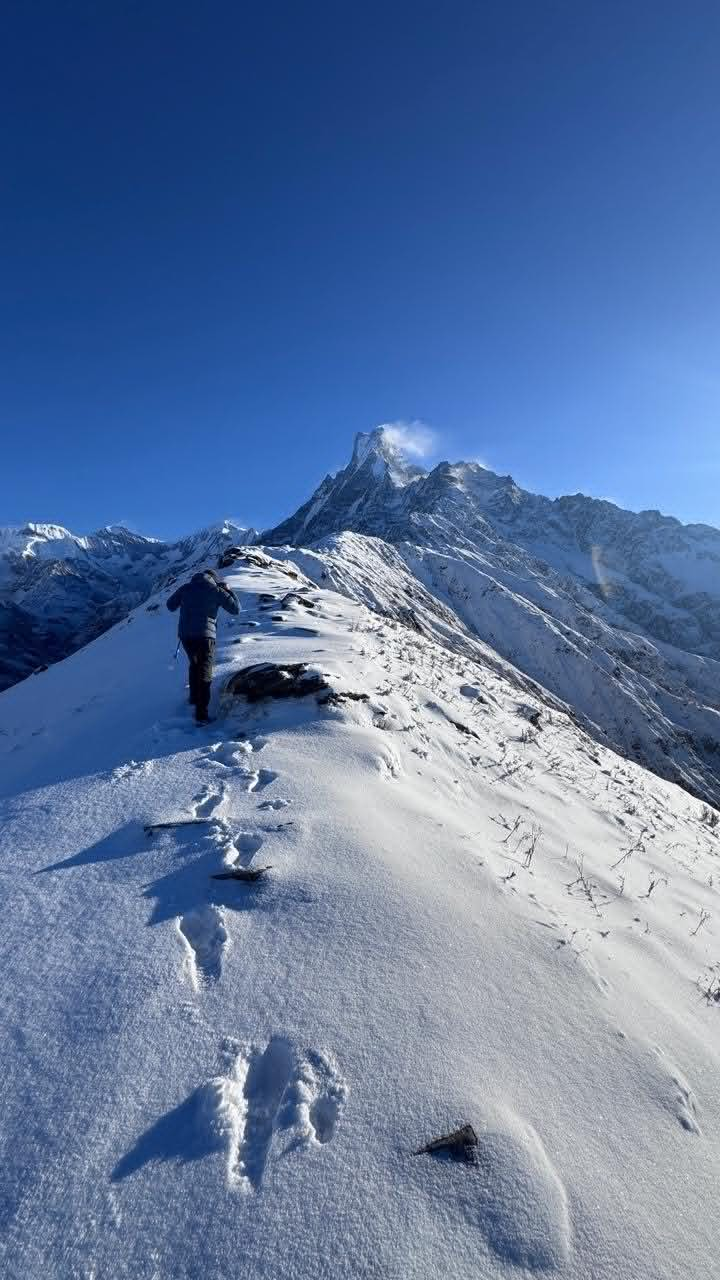 Mardi Himal Trek is an extremely beautiful destination in the Annapurna region.
The important number is not 4,500m. It is the jump from 2,520m (Forest Camp) to 3,580m (High Camp) in one day, a gain of more than 1,000m. That is where most people first feel the altitude.
How hard is each day? (7-day itinerary)
This is the schedule we use on our Mardi Himal trek. Days 1, 2 and 7 are travel days (Kathmandu–Pokhara and back), so the real walking is days 3 to 6.

Day 3, Kande to Forest Camp (2,520m), 5–6 hours, about +750m. Moderate. A steady climb through villages, then rhododendron and oak forest. Stone steps for the first hour. Nobody feels the altitude yet, but the day is longer than people expect.
Day 4, Forest Camp to High Camp (3,580m) via Low Camp, 5–6 hours, about +1,060m. Moderate to hard. The trees thin out after Low Camp and the trail climbs onto the open ridge. The gradient is steeper and the air thinner; this is the day to slow down and drink more.
Day 5, High Camp to Base Camp (4,500m) and down to Badal Danda (3,210m), 7–8 hours and often more, about +920m then −1,290m. Hard. The hardest day. A 4–5am start, a 920m climb along the ridge, 30 minutes at Base Camp, then a 1,300m descent. You are walking at the highest altitude of the trek on the least sleep. Many people stop at the Upper Viewpoint (about 4,250m) when the weather turns, and that is a perfectly good decision.
Day 6, Badal Danda to Siding (1,885m), 4–5 hours, about −1,325m, then a 2-hour jeep to Pokhara. Moderate, hard on the knees. A long descent through forest and farmland. Trekking poles help more here than anywhere else on the trek.
The hardest part: the ridge from High Camp to Base Camp
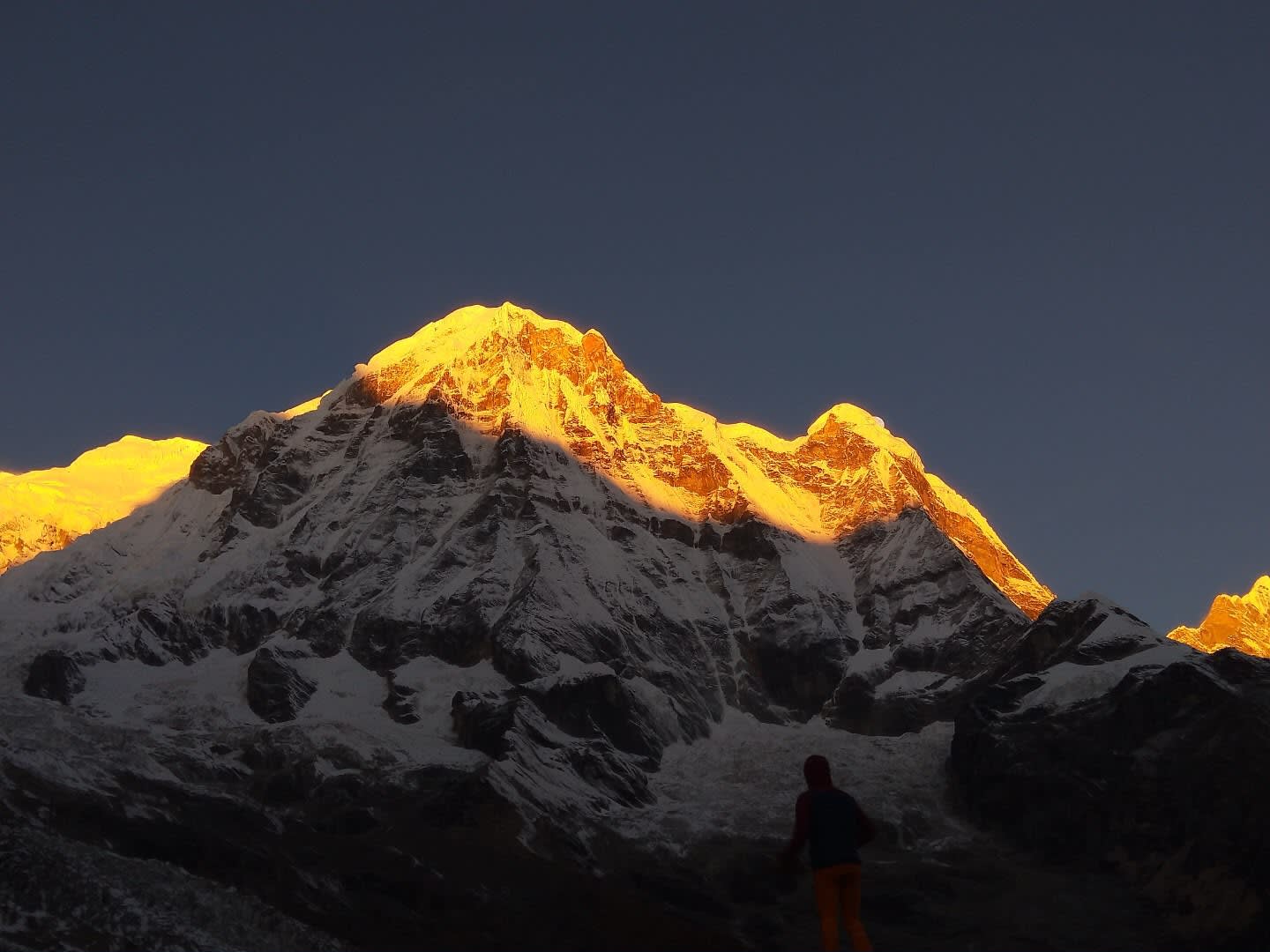
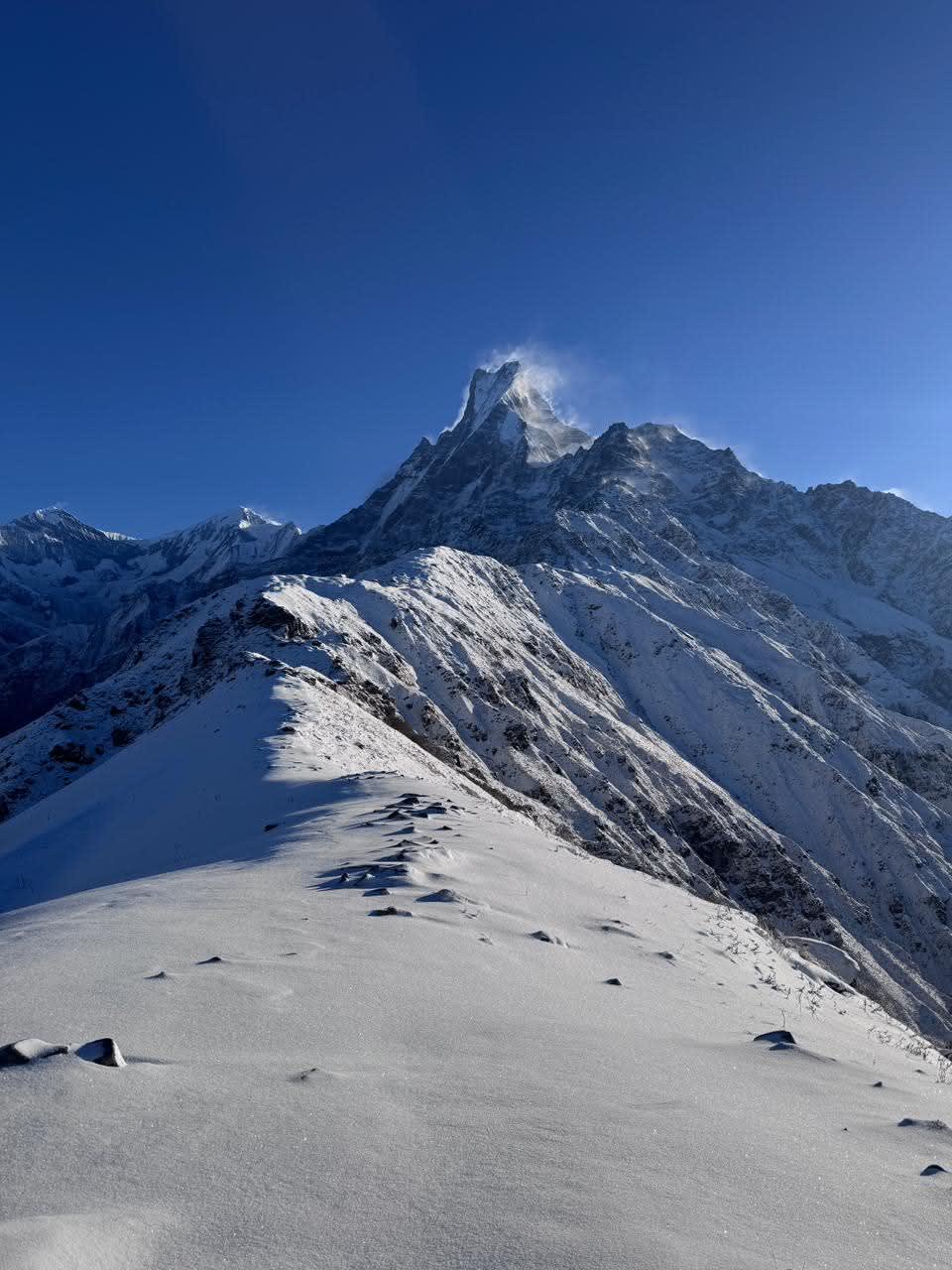 Mardi Himal Trek is an extremely beautiful destination in the Annapurna region.
Above High Camp the trail follows a narrow grassy ridge with drops on both sides. It is not dangerous in dry conditions, and there is no scrambling, but three things make it the toughest section:
- Altitude. You climb from 3,580m to 4,500m in one push, usually before breakfast.
- Wind and cold. The ridge is exposed. Even in October a 5am start means temperatures around or below freezing, and wind chill makes it feel colder.
- Surface. After snowfall (common from late December to February), the ridge becomes icy. Guides sometimes turn groups around at the viewpoint.
If you are nervous about exposure, tell your guide. There is no shame in turning at the viewpoint: the view of Machhapuchhre, Annapurna South and Hiunchuli is almost the same.
Altitude sickness on the Mardi Himal trek
Acute mountain sickness (AMS) can start above about 2,500m, and Mardi Himal takes you to 4,500m within three days of leaving Pokhara. The risk is lower than on Everest Base Camp because you sleep no higher than 3,580m and come down the same day you reach Base Camp. It is not zero.
Watch for a headache that does not go with water and rest, loss of appetite, nausea, dizziness or unusual tiredness at High Camp. The fix is always the same: do not go higher until symptoms clear, and go down if they get worse. Our guides carry a pulse oximeter and check everyone at High Camp. The reading is one signal; how you look, eat and sleep tells them as much.
To lower the risk: walk slowly on Day 4, drink 3–4 litres a day, skip alcohol at High Camp, and choose the 7-day itinerary over the 4-day one. If you have had altitude problems before, read our guide on preventing altitude sickness in Nepal before you book.
Is Mardi Himal a good trek for beginners?
Yes, with two conditions: you can walk uphill for five hours with a daypack, and you give yourself the extra days. Many first-time Himalayan trekkers choose Mardi Himal precisely because it delivers a 4,500m viewpoint without the two-week commitment of the bigger treks.
Beginners usually struggle with the descents, not the climbs. A thousand metres of downhill on tired legs is what causes the sore knees people remember. Poles, a slower pace and the overnight at Badal Danda (rather than rushing to Siding in one day) make a real difference.
Can children or older trekkers do Mardi Himal?
Children: fit children of about 10 and up do this trek regularly with their families. Under about 8, the long days and the altitude at High Camp are too much for most. Children under 10 are exempt from the ACAP fee. Keep the Base Camp day optional: let the family decide at the viewpoint.
Trekkers in their 50s, 60s and 70s: very common on this trail. Age matters less than knee health and fitness. We often add a night at Low Camp for older groups, which turns the 1,000m day into two easier ones.
Fitness and training for Mardi Himal
You do not need to be an athlete. You need to be comfortable walking 5–6 hours on hilly ground, two days in a row. If you can already do that, nothing more is required. If not, four to eight weeks of preparation is enough:
- Two or three walks a week of 1–2 hours, building to one 4–5 hour hill walk at the weekend.
- Stairs or a stepper for leg strength; squats and lunges for the descents.
- Walk in the boots you will trek in, carrying the daypack you will carry.
How the season changes the difficulty
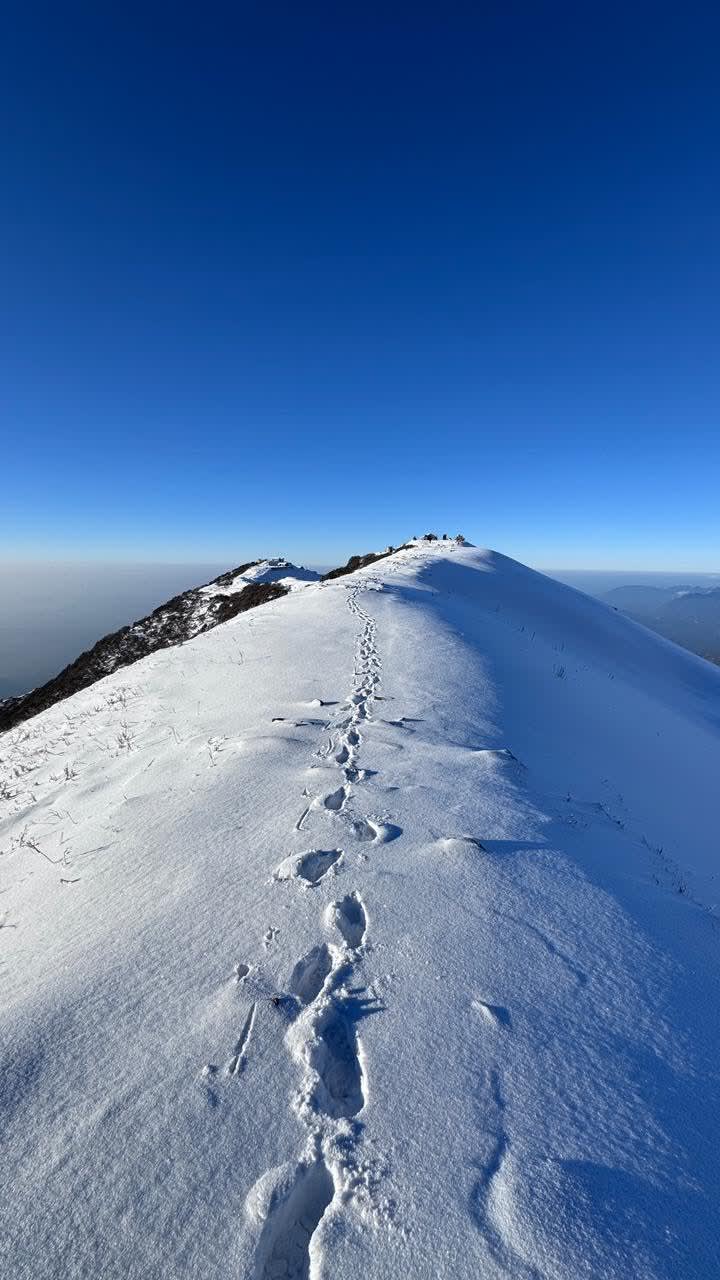 Mardi Himal Trek is an extremely beautiful destination in the Annapurna region.
The same trail is a different trek in January than in October.
Season | Trail conditions | High Camp nights | Difficulty |
|---|---|---|---|
Spring (Mar–May) | Dry, rhododendrons in bloom, some haze in May | around 0°C to −5°C | Moderate |
Monsoon (Jun–Sep) | Mud, leeches in the forest, clouds hide the peaks | mild | Moderate, but poor views |
Autumn (Oct–Nov) | Dry, clearest skies, busiest | −2°C to −8°C | Moderate |
Winter (Dec–Feb) | Snow and ice above High Camp from late Dec | −8°C to −15°C | Moderate to hard |
Winter deserves a note because more people are asking about it. December is often clear and quiet, with cold nights and a dusting of snow on the ridge. By January and February snow can close the trail above High Camp for days, and teahouses at High Camp sometimes shut. A December trek is realistic with a four-season sleeping bag and a guide who knows the ridge; January and February need flexibility about turning back.
Spring brings its own reward: the lower trail passes through some of the best rhododendron forest in Nepal, in full colour from March to April.
Mardi Himal vs Poon Hill vs Annapurna Base Camp
Poon Hill | Mardi Himal | Annapurna Base Camp | |
|---|---|---|---|
Highest point | 3,210m | 4,500m | 4,130m |
Trekking days | 3–4 | 4–7 | 7–11 |
Longest day | 5 hours | 7–8 hours | 6–7 hours |
Altitude sickness risk | Very low | Low–moderate | Moderate |
Crowds | Busy | Quiet | Busy in season |
Difficulty | Easy | Moderate | Moderate |
If you want the easiest introduction, choose the Poon Hill trek. If you have ten days and want to stand inside the Annapurna Sanctuary, choose Annapurna Base Camp. If you want the biggest view for the fewest days, and you are happy with one hard day, Mardi Himal is the one.

Permits, the guide rule, and what makes the trek easier
Two permits are needed: the Annapurna Conservation Area Permit (ACAP, NPR 3,000 for foreign nationals, roughly USD 22) and a TIMS card (NPR 1,000 through an agency, NPR 2,000 for independent trekkers). Both are arranged by your agency before you leave Pokhara. Current fees and rules are on our trekking permits page.
Since 1 April 2023, the Nepal Tourism Board requires foreign trekkers in national parks and conservation areas, including the whole Mardi Himal trail, to trek with a licensed guide. In practice this makes the trek safer rather than harder: the guide sets the pace, reads the weather on the ridge and decides when the viewpoint is far enough.
Three choices that reduce the difficulty more than anything else:
- Take the 7-day itinerary, not the 4-day one. The extra nights are where acclimatisation happens.
- Hire a porter. Carrying 5kg instead of 12kg changes the ridge day completely.
- Trek in October–November or March–April. Dry trail, no ice, warmer nights.
Gear that makes Mardi Himal easier
You do not need expedition kit, but four items change the experience: broken-in boots with ankle support, trekking poles for the 1,300m descent, a sleeping bag rated to −10°C for High Camp, and a proper down jacket for the 5am ridge walk. Our full list is on the Nepal trekking packing list.
Frequently asked questions
Is the Mardi Himal trek harder than Poon Hill?
Yes. Mardi Himal goes 1,300m higher (4,500m against 3,210m), has a 7–8 hour summit day and a narrow ridge section. Poon Hill is an easy 3–4 day walk on well-made trails.
Is the Mardi Himal trek harder than Annapurna Base Camp?
Day for day, Mardi Himal is slightly harder because the altitude gain is compressed into three days and the Base Camp day is longer. Over the whole trip, ABC is more tiring simply because it is twice as long.
Can you do Mardi Himal without a guide?
Not legally as a foreign trekker. Since April 2023 a licensed guide is required in Nepal's national parks and conservation areas, which includes the Mardi Himal trail inside the Annapurna Conservation Area.
How many days do you need for Mardi Himal?
Four trekking days is the minimum if you turn at the viewpoint. We recommend four walking days plus two travel days from Kathmandu (7 days in total), which includes Base Camp and a gentler descent.
What is the highest altitude on the Mardi Himal trek?
Mardi Himal Base Camp at 4,500m. The highest place you sleep is High Camp at 3,580m.
Is the Mardi Himal ridge dangerous?
Not in good weather. Above Low Camp the trail runs along a ridge with steep drops on both sides, but it is a walking path, not a scramble. In fog, strong wind, rain or ice the guide slows the group down or turns it around.
Do I need trekking poles for Mardi Himal?
Strongly recommended. The two descents of roughly 1,300m each are the part most people's knees remember.
Is Mardi Himal safe in December?
Early to mid-December is usually fine: clear, cold and quiet. From late December into February, snow and ice on the ridge above High Camp can stop you reaching Base Camp. Go with a guide, carry a warm bag, and be ready to stop at the viewpoint.
Written by Krishna Ghimire, senior trekking guide at Nature Heaven Treks & Expedition. Last updated 30 October 2026.
Ready to see Machhapuchhre up close? Check dates and prices for our 7-day Mardi Himal trek.